Let's be honest: attracting families to your private school in 2025 is about as easy as getting middle schoolers to put down their phones during lunch. In an era where parents have unprecedented options and increasingly sophisticated decision-making processes, schools that rely solely on traditional marketing are being left behind faster than last year's TikTok trends.
But here's the thing: while your competitors are still sending glossy brochures into the void, you have an opportunity to transform your digital presence into an enrollment-generating machine. The secret weapon? Strategic content frameworks that align perfectly with how modern parents actually make educational decisions for their children.
Whether you're a marketing director struggling to show ROI, a principal trying to maintain enrollment numbers, or an administrator working with limited resources, this guide will provide you with practical, proven frameworks to elevate your school's content strategy from "occasionally we post something" to "we're the educational authority in our market."

Written By: Adam Bennett | September 01, 2025
Adam is the president and founder of Cube Creative Design and specializes in private school marketing. Since starting the business in 2005, he has created individual relationships with clients in Western North Carolina and across the United States. He places great value on the needs, expectations, and goals of the client.
Picture this: You've spent weeks crafting a beautiful marketing report filled with impressive metrics—website traffic up 25%, Instagram followers doubled, email open rates soaring. You're ready for your board presentation, confidence high. Then it happens. A board member interrupts with the question that makes your stomach drop: "But how many actual enrollments did this generate, and what was our return on investment?"
Cue uncomfortable silence.
If this scenario feels painfully familiar, you're not alone. According to a report from ITSMA/Vision Edge Marketing, a staggering "74% of marketers are unable to identify the impact their marketing has on their organization." For private schools specifically, this disconnect can be even more pronounced as marketing teams work to translate digital metrics into language that resonates with board members who may have a limited marketing background.
The truth? School boards don't care about most of the metrics marketing directors obsess over. They care about enrollment, revenue, and sustainability—full stop. This article will help you bridge that gap by focusing on the digital marketing metrics that school boards actually care about and how to present them effectively.
Written By: Adam Bennett | August 27, 2025
Adam is the president and founder of Cube Creative Design and specializes in private school marketing. Since starting the business in 2005, he has created individual relationships with clients in Western North Carolina and across the United States. He places great value on the needs, expectations, and goals of the client.
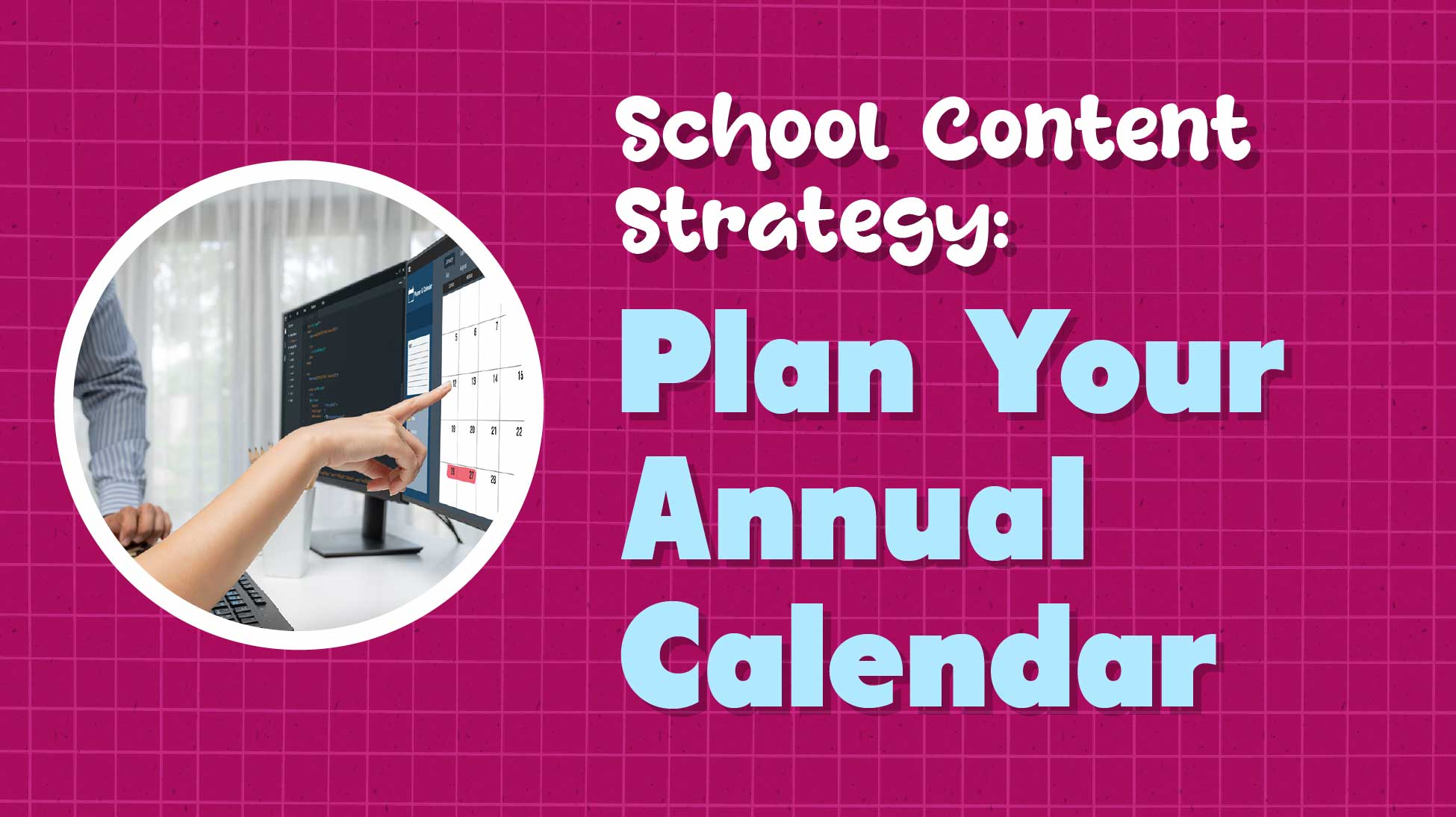
- A year-round editorial calendar aligns marketing efforts with academic cycles, transforming your approach from reactive to proactive.
- According to research from the National Association of Independent Schools, approximately 52% of private schools rate their digital marketing efforts as only "somewhat effective." Strategic content planning can change that. Education Marketing Group found in their 2024 survey that schools with documented content strategies were twice as likely to report "highly effective" marketing outcomes.
- Effective calendars should incorporate admissions cycles, seasonal search trends (which show significant spikes in January and August according to Google Trends data), and key decision points in the parent journey.
- Collaborative tools like Google Sheets facilitate team coordination and maintain a central content repository that all departments can access.
- A study by the Content Marketing Institute revealed that educational institutions using strategic content calendars see an average 37% increase in engagement metrics and reduce content creation time by approximately 26%.
Written By: Adam Bennett | August 25, 2025
Adam is the president and founder of Cube Creative Design and specializes in private school marketing. Since starting the business in 2005, he has created individual relationships with clients in Western North Carolina and across the United States. He places great value on the needs, expectations, and goals of the client.
You check your Google Ads dashboard again and wince. Another month, another $3,000 spent, and your admission inquiry form has collected a grand total of... eight submissions. Three of which came from current parents who couldn't find the lunch menu.
If you're nodding in painful recognition, you're not alone. As a K-12 private school marketing director in 2025, you're caught in an impossible bind: board members expecting enrollment growth, budget constraints tightening by the semester, and digital advertising costs climbing faster than your tuition rates.
Here's the painful truth most agencies won't tell you: most school PPC campaigns hemorrhage money faster than your ancient gymnasium roof during a thunderstorm. Every wasted click represents another prospective family you could have reached—another seat that might remain empty next fall.
But what if your Google Ads could actually deliver what they promised?
Imagine transforming your PPC campaigns from budget drains into your admission team's most reliable source of qualified families. Where every dollar invested returns measurable results: campus tours scheduled, applications submitted, and ultimately, new students enrolled.
In this guide, you'll discover:
- How to build strategic foundations that prevent wasted spend before you create a single ad
- The exact keyword strategy that cuts through the noise to reach parents actively searching for schools like yours
- Campaign structures that maximize budget efficiency across different grade levels and programs
- Ad copy techniques that speak directly to parents' aspirations and concerns
- Landing page optimizations that convert expensive clicks into actual inquiries
- Analytics approaches that track what truly matters—not just clicks, but enrolled students
In 2025's hypercompetitive educational landscape, effective PPC isn't about throwing money at Google and hoping parents notice you. It's about strategic precision that transforms digital marketing from a necessary expense into a predictable enrollment driver.
Let's make every marketing dollar work as hard as you do.
Written By: Adam Bennett | August 20, 2025
Adam is the president and founder of Cube Creative Design and specializes in private school marketing. Since starting the business in 2005, he has created individual relationships with clients in Western North Carolina and across the United States. He places great value on the needs, expectations, and goals of the client.