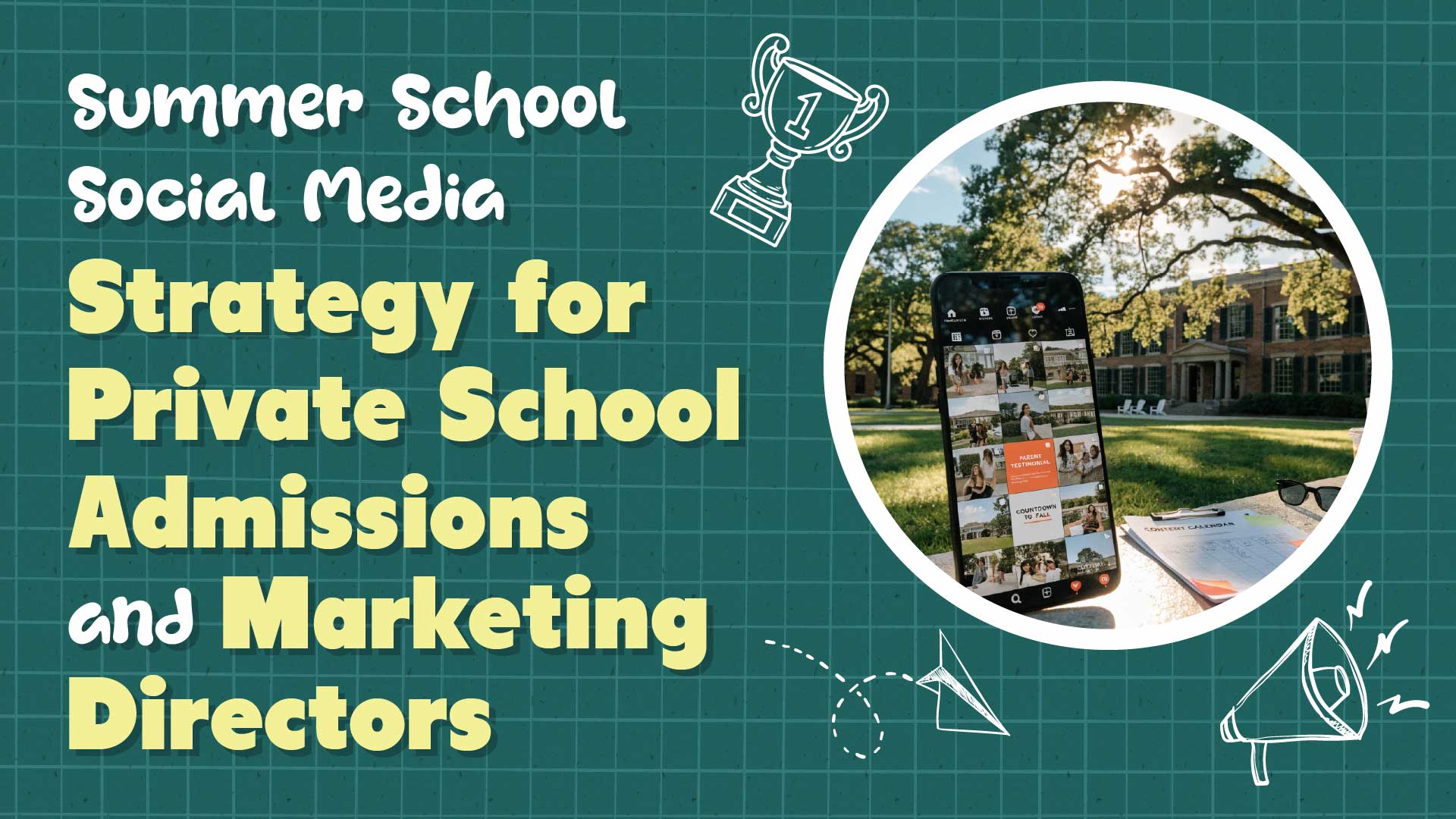
Every June, a school marketing team quietly checks out. The final school day happens, the faculty scatter, and the Instagram account goes from three posts a week to one post every three weeks. And every August, that same team wonders why back-to-school inquiries feel softer than last year. For private school admissions teams, the summer social lull is not a vacation; it is a visibility problem. The families researching right now are the ones who will start tours in September.
This guide is for a Director of Admissions and Marketing at a college-prep school serving 400-800 students with tuition between $18,000 and $35,000 and a marketing budget of $50,000-$250,000. It covers why summer social matters, the content pillars that carry a school through the quiet season, platform-specific tactics, a week-by-week calendar framework, the user-generated content strategies that work for schools, the metrics that actually matter, the paid social plays worth running between June and August, and the tools that make the whole thing sustainable with a small team.

Written By: Adam Bennett | May 07, 2026
Adam is the president and founder of Cube Creative Design and specializes in private school marketing. Since starting the business in 2005, he has created individual relationships with clients in Western North Carolina and across the United States. He places great value on the needs, expectations, and goals of the client.
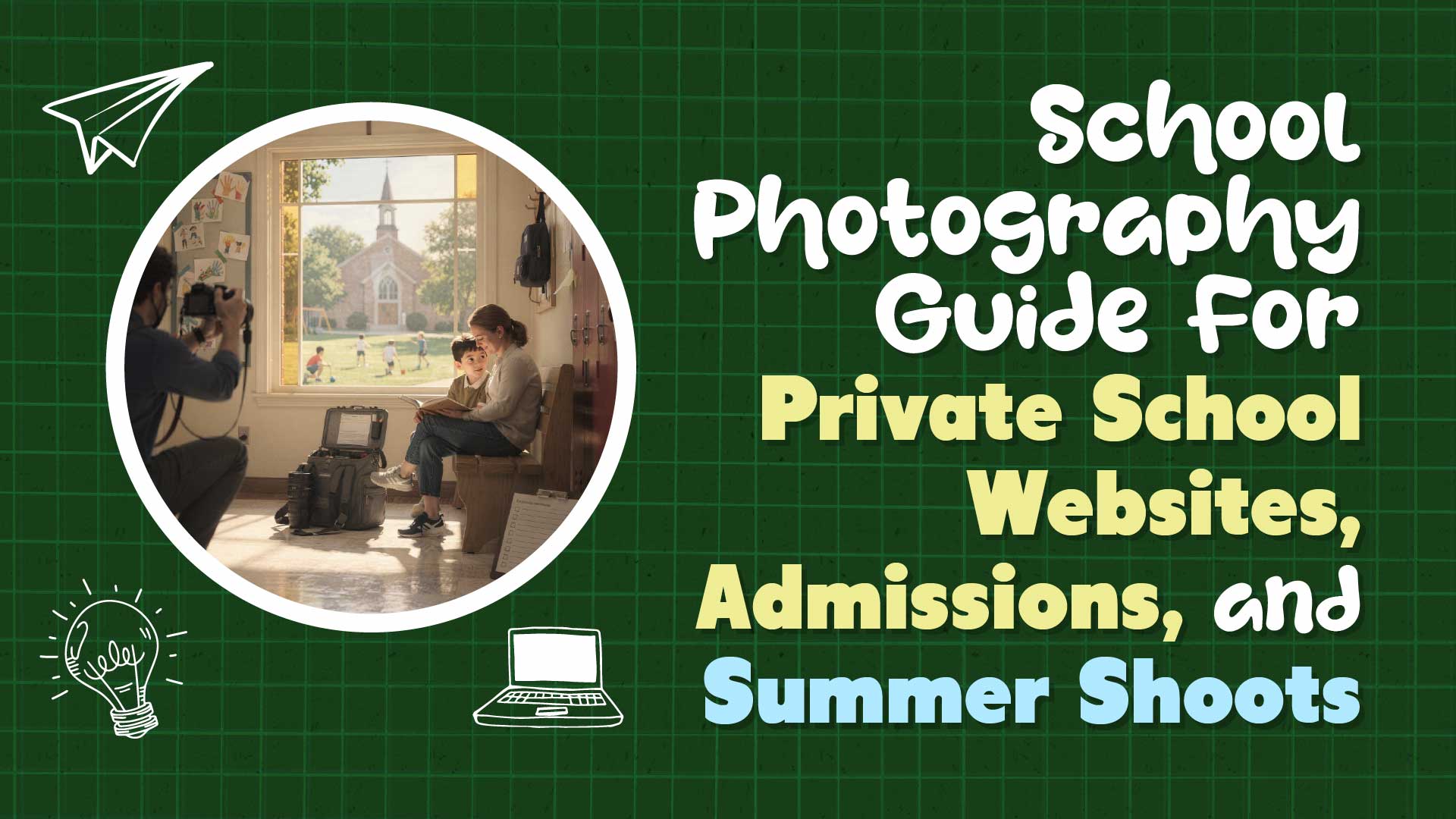
There is a particular kind of school website photo that every parent recognizes instantly: a student in a crisp uniform, perfect hair, smiling at a textbook they are definitely not reading, bathed in a light so soft it can only come from a stock library. Parents do not pause on that photo. They scroll past it. That single missed moment is why faith-based and independent schools spend thousands on enrollment marketing and still wonder why inquiry forms stay flat.
This guide is for principals and marketing coordinators at small private schools, especially faith-based K-8 institutions serving 150 to 200 students with a marketing budget in the $25,000-$50,000 range. It covers why photography is the highest-leverage content decision on a school website, how to plan a campaign-ready shot list, the consent and privacy rules you cannot skip, what professional photography actually costs in 2026, when DIY with a smartphone works, how to organize your photo library so it stays useful, and how to time shoots around the academic calendar. The goal is simple: photos that make the right families pause, picture their own child on your campus, and pick up the phone.
Written By: Adam Bennett | May 06, 2026
Adam is the president and founder of Cube Creative Design and specializes in private school marketing. Since starting the business in 2005, he has created individual relationships with clients in Western North Carolina and across the United States. He places great value on the needs, expectations, and goals of the client.
A brick-and-mortar school has a lobby, a front desk, a few brochures, and a campus tour that the building does most of the work for. A virtual academy has exactly one lobby, and it is the homepage on a prospective parent's phone at 9:47 p.m. For any private virtual academy, mobile-first school website design is not a best practice; it is the product. If the mobile experience is slow, hard to read, or cluttered, the parent never makes it into the classroom experience at all.
This guide is written for a Director of a K-12 virtual academy serving 250-500 students nationwide, with tuition between $8,000 and $15,000 and a marketing budget in the $50,000-$75,000 range. It covers the mobile traffic reality for school websites, the Core Web Vitals targets that affect Google rankings and conversions, the UX patterns that work on small screens, the conversion challenges specific to virtual schools, the mobile accessibility requirements you cannot skip, and the analytics setup that keeps mobile performance visible every month.
Written By: Adam Bennett | May 05, 2026
Adam is the president and founder of Cube Creative Design and specializes in private school marketing. Since starting the business in 2005, he has created individual relationships with clients in Western North Carolina and across the United States. He places great value on the needs, expectations, and goals of the client.
If you are a Head of School running a private K-12 serving 260 students, you are probably not losing sleep over web accessibility. You should be. Web accessibility has moved from an IT footnote to a compliance risk with real teeth, and most private schools are still underinvested. The April 24, 2026 DOJ deadline for Title II entities has raised enforcement visibility across the sector, and legal counsel for independent schools now treat WCAG 2.1 AA as the operational standard for every school website, regardless of religious affiliation or size.
This guide is for a Head of School making decisions about a 260-student college-prep K-12 private school with a marketing budget in the $30,000-$75,000 range. It covers the legal frameworks that actually apply to your school, the technical standards you have to meet, the lawsuits and settlements shaping the enforcement landscape, the audit process, the CMS-specific challenges, the cost of remediation, and the governance model that keeps the site compliant after launch. It is written to give you the analysis you need to talk to counsel, the board, and your marketing and IT teams with confidence.
Written By: Adam Bennett | May 04, 2026
Adam is the president and founder of Cube Creative Design and specializes in private school marketing. Since starting the business in 2005, he has created individual relationships with clients in Western North Carolina and across the United States. He places great value on the needs, expectations, and goals of the client.