use Joomla\CMS\Uri\Uri;

Think about our archway and the wall we are trying to get through. With all the noise and distractions, what is another way we can break on through and get to the right people? Email marketing!

Written By: Chad J. Treadway | May 08, 2020
Chad is our Chief Smarketing Officer. He will help you survey your small business needs, educating you on your options before suggesting any solution. Chad is passionate about rural marketing in the United States and North Carolina. He also has several certifications through HubSpot to better assist you with your internet and inbound marketing.
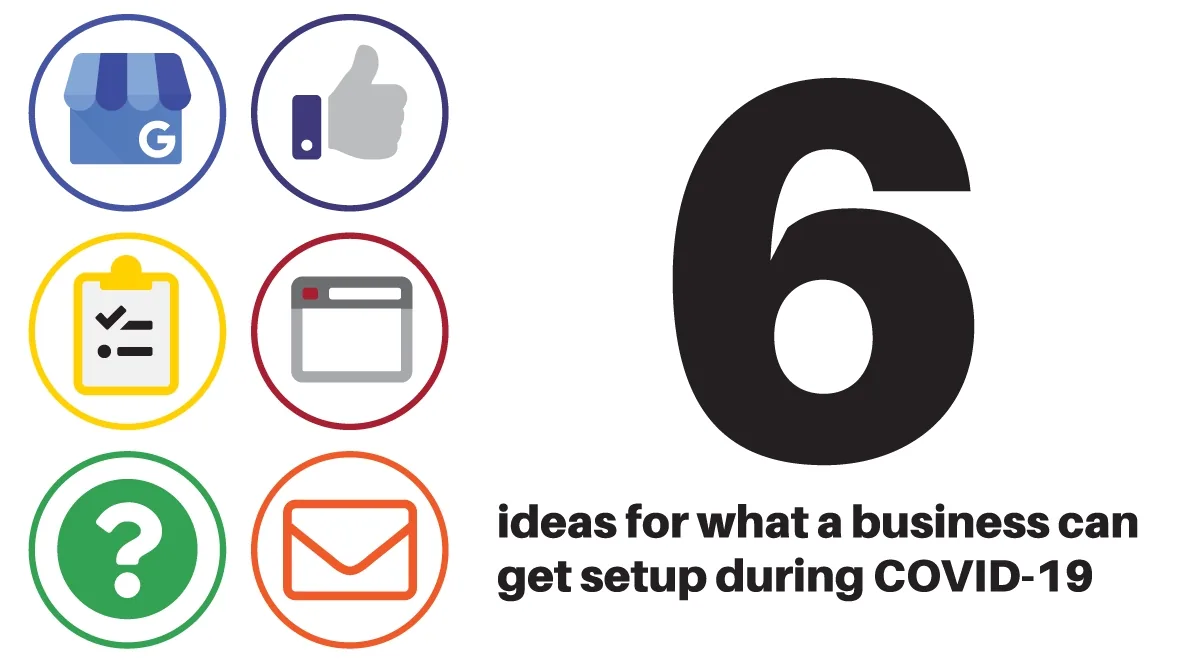
Let's face it the COVID-19 pandemic has taken many businesses by surprise. Many businesses are temporarily closed, or employees are working from home.
While many things may be out of your control, there are six things that businesses can get set up and do right now!
If you need help with any of the items on this list, except for the honey-do-list (we are maintaining social distancing), reach out and let us help you. We are here and able to guide you and provide additional information on how to help you survive and even grow your business.

1. Own Google Business
First, Google your business. On the side, you should see your information. If your business doesn't show up on the right side, go to Google My Business and set it up.
Be sure to also make sure all the information is up-to-date.
2. Set Up Website
This should be clean, professional, and the most current information. Your website should cover the 5 W's (who, what, when, where, why, and how) about your business.
3. Social Media
There are tons of social media platforms out there. We are not saying to be active on all of them, but pick one that you feel will help you get your message out to the world.
You should have the basic information from Google and your website listed.
4. Know Your Logo
We know that you know your name, but your logo is what makes you different from another business across the world with your same name. A reliable logo maker can help you create a distinctive design that truly represents your brand. You should have versions in PDF and JPG at a minimum.
5. Think About Projects You Haven't Had Time To Do
We all have that honey-do list that we just can not find time to get done. Now is the perfect time to get that painting project or shelves hung.
When customers come back into your business or store, it will be a pleasant surprise for them.
6. Consider An Email List
Email is one of the easiest ways to get information out to a lot of people at once. This is an excellent way to share with the community about sales, new merchandise, and events coming up for your business.

Written By: Adam Bennett | May 04, 2020
Adam is the president and founder of Cube Creative Design and specializes in private school marketing. Since starting the business in 2005, he has created individual relationships with clients in Western North Carolina and across the United States. He places great value on the needs, expectations, and goals of the client.

In a couple of previous posts, I have talked about pillar pages, blogging, and backlinks. In this post, I plan to discuss the three main types of landing pages, and how they are yet another stone in the archway, we are ultimately building. The three types are marketing landing pages, search engine optimized landing pages, and geographic landing pages.
Marketing Landing Pages vs. SEO Landing Pages vs. Geographic Landing Pages
Similarities between the three
All the types of landing pages are simply pages on your websites. Like any other page on your website, landing pages are there to provide value and information to a searcher or user. According to Seth Godin, a landing page is optimized specifically to encourage 1 of 5 actions:
- Get a visitor to click (to go to another page, on your site or someone else's)
- Get a visitor to buy
- Get a visitor to give permission for you to follow up (by email, phone, etc.). This includes registration of course.
- Get a visitor to tell a friend
- Get a visitor to learn something, which could even include posting a comment or giving you some sort of feedback
Frequently, a landing page may or may not have a menu or navigation; it will be super clean and focus on one topic or one keyword phrase.
Differences between the three

Marketing Landing Page
A marketing landing page is going to be used in conjunction with some type of campaign. These will usually be an internet marketing campaign such as email, social and/or pay per click ads, or display ads. The page exists to help track and capture the traffic from these sources and get the user to do one of the five actions above.
Search Engine Optimized (SEO) Landing Pages
SEO landing pages, as then name implies, are highly optimized for search engines and user intent. Google strives to serve the most relevant content to what a searcher is searching for, and an SEO landing page can help with that.
Geographic Landing Pages
A geographic landing page, geo targeted landing page or local landing page as they are sometimes called are all a variation of an SEO landing page. Where an SEO landing page will focus on one keyword or keyword phrase, the geographical as the name implies will include a geographical location. They are designed for local search or when a user is searching for the keyword or keyword phrase in combination with the "near me," "city," or zip code determined by Google.
What’s the desired outcome?
According to Search Metrics, user intent, or search intent is the "goal or intention an internet user has when entering a search term into a search engine." Unofficially, because Google keeps the algorithm a closely guarded secret, much like that of the recipe of Coca-Cola, WD-40, or KFC 11 herbs and spices. Those in the industry do feel like it is a ranking factor and maybe even more so than individual keywords.
Here are a few tips and tricks to help you optimize your landing pages
1. Focus on content
You want to focus on one keyword or keyword phrase and the topic around it. Google is smart; it can tell the difference between cars as in automobiles, cars the movie, or the band the Cars, based on the context of the page and the website. This will also allow you to put more keywords into headings and links.
A big word of caution, do not keyword stuff trying to get a higher ranking. Google says it is “the practice of loading a webpage with keywords or numbers in an attempt to manipulate a site's ranking in Google search results. Often these keywords appear in a list or group, or out of context (not as natural prose).”
Some examples are:
- Listing all the cities, communities in your state, or the states you service and want to rank for.
- Repeating the same words or phrases so often that it sounds unnatural, for example: We sell custom kitchen cabinets. Our custom kitchen cabinets are handmade. If you're thinking of buying a custom kitchen, please contact our custom kitchen craftsmen.
In other words, you want to have good, well-written content that actually brings value to the user and content the user can understand. Google has gotten really smart, and with its latest major update (BERT), can understand words and phrases much like a toddler does.
2. Links
In every community, there is that one neighborhood where all the streets look the same, the roads twist and turn, and it is easy to get lost in them. In my neck of the woods that is subdivision is Lynnwood. Just like it is easy to get lost there, Google wants to get lost in your website as well. It wants to see links to relevant pages within your site.
As much as Google wants to get lost in your site, you also need to provide a way out by linking to content on other websites. For a moment, let's look back at how Google was started. It was started by Larry Page and Sergey Brin, both in graduate school. Think back to the days when you had to write a research paper or term paper. You had to have a bibliography to show that you had done your research and not just copied it word for word. Google had the same mentality when they stated as your teacher or professor in that they like to see those citations and links so they can go check out those pages.
The links help you, and it helps them. In the academic world, nothing is better than getting cited in someone else's work. Thus the dawn of the backlink, I plan to cover backlinks in a future post because they are that important!
3. Page Headings and Subheadings
One of the most significant advantages of landing pages is that you can make your internal linking strategy utilize the same keywords in your anchor text, page headings, and subheadings.
I may have keywords in my headings, such as red shut off valves, blue shutoff valves, and yellow shutoff valves. In the body text, I may have links to water shutoff valves and gas shutoff valves. What this means is I can capture on keyword search phrases and longtail keyword phrases such as red water shutoff valves, blue water shutoff valves, and yellow gas shutoff valves.
4. Tracking
While tracking your visitors can be done through Google Analytics and its good for a high level and basic approach. If you want more information on how your users are interacting with the information on your website and when they are coming back, by installing a tracking script such as one from HubSpot will help you gain more insight into your visitors and their journey.
For smaller sites, this may not be as important, but as your site grows or if you are doing some type of off-site marketing, PPC, email, or social, then this is a must! If you would like more information feel free to reach out. We would be happy to help you!
5. Page length: Short enough to keep it interesting but long enough to cover the subject
There is considerable debate on how long a piece of content on a website should be. One study says it should be 2000 words or more. While others say, it should be shorter, between 600 - 800 words. While the debate rages on, I like to take a cue from my senior English teacher, Mrs. Nichols, "It should be like a woman's skirt, long enough to cover the subject but short enough to keep it interesting."
While that may sound a bit crude, it is the honest truth, and you can use it in your own writing. In the digital age we live in, we skim more than we read word for word. We scan for the keywords, and we are looking for the answers to our question(s). Use headlines and bullet points to make it easier and don't ramble on and on just trying to hit a certain number of words. It doesn't do you any favors in both the eyes of the user or that of Google.
6. Keep the pages fast
We live in a fast-paced world, long gone are the days of dial-up where we had to wait minutes to get online, and we would wait patiently for a page to load. According to a statistic put out by Kissmetrics, 47% of people expect pages to load in less than two seconds, and 40% will abandon it after three seconds.
7. Share your pages on social
While social media may or may not be a direct ranking factor, there is evidence that traffic to your site isn’t going to hurt. Be sure to build sharing your pages into your social media strategy.
Conclusion
As we continue to build our archway, you can use marketing landing pages, search engine optimized landing pages, and geographic landing pages to really bolster your the power of your website.
If you find yourself being overwhelmed and in need of help, feel free to contact us and we will be glad to help you better understand your content strategy and how landing pages can be incorporated.
Written By: Chad J. Treadway | April 28, 2020
Chad is our Chief Smarketing Officer. He will help you survey your small business needs, educating you on your options before suggesting any solution. Chad is passionate about rural marketing in the United States and North Carolina. He also has several certifications through HubSpot to better assist you with your internet and inbound marketing.
We have all been there, the Manic Monday! While we can"t help you get to work on time, we wanted to share six positive and notable facts about Monday and 88 famous quotes to help you get through the day.
Written By: Chad J. Treadway | April 27, 2020
Chad is our Chief Smarketing Officer. He will help you survey your small business needs, educating you on your options before suggesting any solution. Chad is passionate about rural marketing in the United States and North Carolina. He also has several certifications through HubSpot to better assist you with your internet and inbound marketing.

Going back to our arch analogy, directly across from blogging are backlinks. A basic description of what a backlink is would be a link from one website to another.
Written By: Chad J. Treadway | April 20, 2020
Chad is our Chief Smarketing Officer. He will help you survey your small business needs, educating you on your options before suggesting any solution. Chad is passionate about rural marketing in the United States and North Carolina. He also has several certifications through HubSpot to better assist you with your internet and inbound marketing.

In a previous post, I have talked about pillar pages and topic clusters and how they are one of the first stones in the arch we will ultimately build to help you break through all the noise today's consumers and buyers go through. Blogging adds another one of those stones in the arch.
Written By: Chad J. Treadway | April 15, 2020
Chad is our Chief Smarketing Officer. He will help you survey your small business needs, educating you on your options before suggesting any solution. Chad is passionate about rural marketing in the United States and North Carolina. He also has several certifications through HubSpot to better assist you with your internet and inbound marketing.

Imagine an archway opening through a wall.
The wall is all the noise and distractions that prevent people from finding your business. While your website helps to create an opening, there are several other stones that help support your marketing efforts needed to help build the arch opening.
Notwithstanding, everything has to start with a foundation, for the purpose of these series of blogs we are going to start with the topic clusters and pillar pages.
Written By: Chad J. Treadway | April 08, 2020
Chad is our Chief Smarketing Officer. He will help you survey your small business needs, educating you on your options before suggesting any solution. Chad is passionate about rural marketing in the United States and North Carolina. He also has several certifications through HubSpot to better assist you with your internet and inbound marketing.

It's an unprecedented time in the world as a global pandemic has forced some businesses to be hit hard and others not as much. Life has changed and we are all creating a new "normal."
We don't know exactly what will happen in the future, as many things are out of our control. Our first instinct is to cut expenses and anticipate the worst. These are valid and practical feelings as we manage payroll, mortgages, taxes, credit, and our families.
I'd like to offer some arguments that marketing is not something to suspend right now. In fact, there are many reasons why marketing should take the forefront of your resources.
Written By: Adam Bennett | March 23, 2020
Adam is the president and founder of Cube Creative Design and specializes in private school marketing. Since starting the business in 2005, he has created individual relationships with clients in Western North Carolina and across the United States. He places great value on the needs, expectations, and goals of the client.
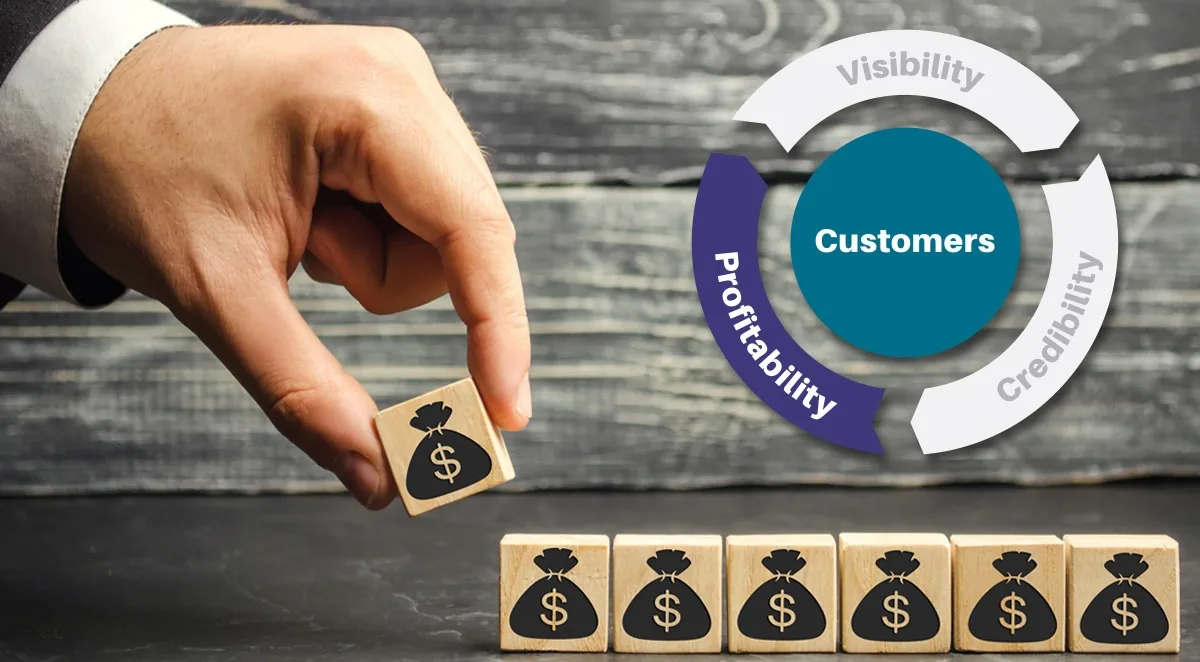
Over the last few months, I have written about Visibility and Credibility. In this post, I would like to dive into the last piece, that being, profitability.
Written By: Chad J. Treadway | March 18, 2020
Chad is our Chief Smarketing Officer. He will help you survey your small business needs, educating you on your options before suggesting any solution. Chad is passionate about rural marketing in the United States and North Carolina. He also has several certifications through HubSpot to better assist you with your internet and inbound marketing.
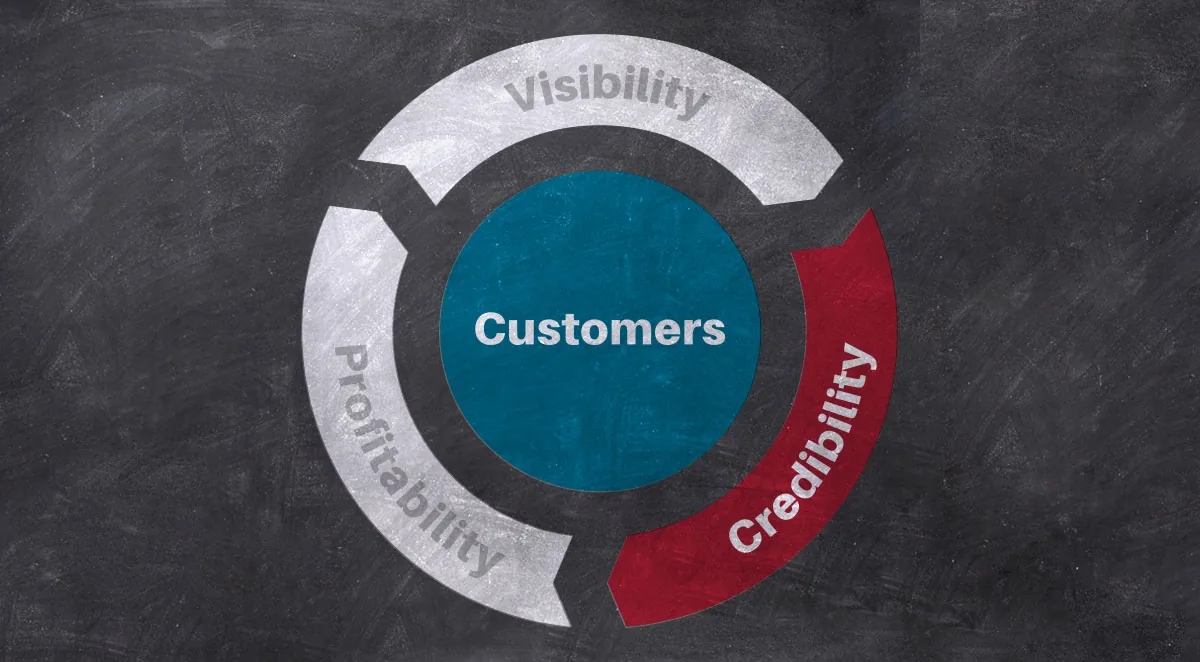
In a previous post, I wrote about visibility and the six principles of networking that will help you gain visibility. I encourage you to go back and take a look at that post because if you implement those, you are on your way to this post's topic, credibility.
Written By: Chad J. Treadway | March 03, 2020
Chad is our Chief Smarketing Officer. He will help you survey your small business needs, educating you on your options before suggesting any solution. Chad is passionate about rural marketing in the United States and North Carolina. He also has several certifications through HubSpot to better assist you with your internet and inbound marketing.

At Cube Creative, we get questions about websites, reviews, content marketing, and social media. In this post, I want to attempt to answer five of the more popular ones.
Written By: Chad J. Treadway | February 10, 2020
Chad is our Chief Smarketing Officer. He will help you survey your small business needs, educating you on your options before suggesting any solution. Chad is passionate about rural marketing in the United States and North Carolina. He also has several certifications through HubSpot to better assist you with your internet and inbound marketing.
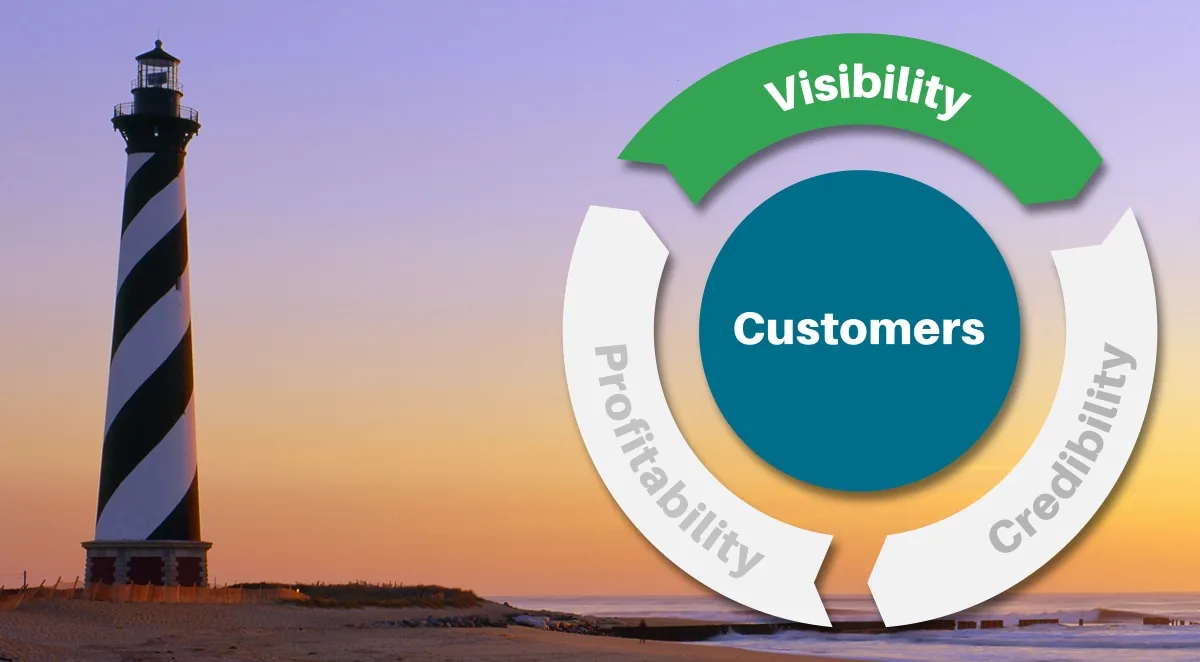
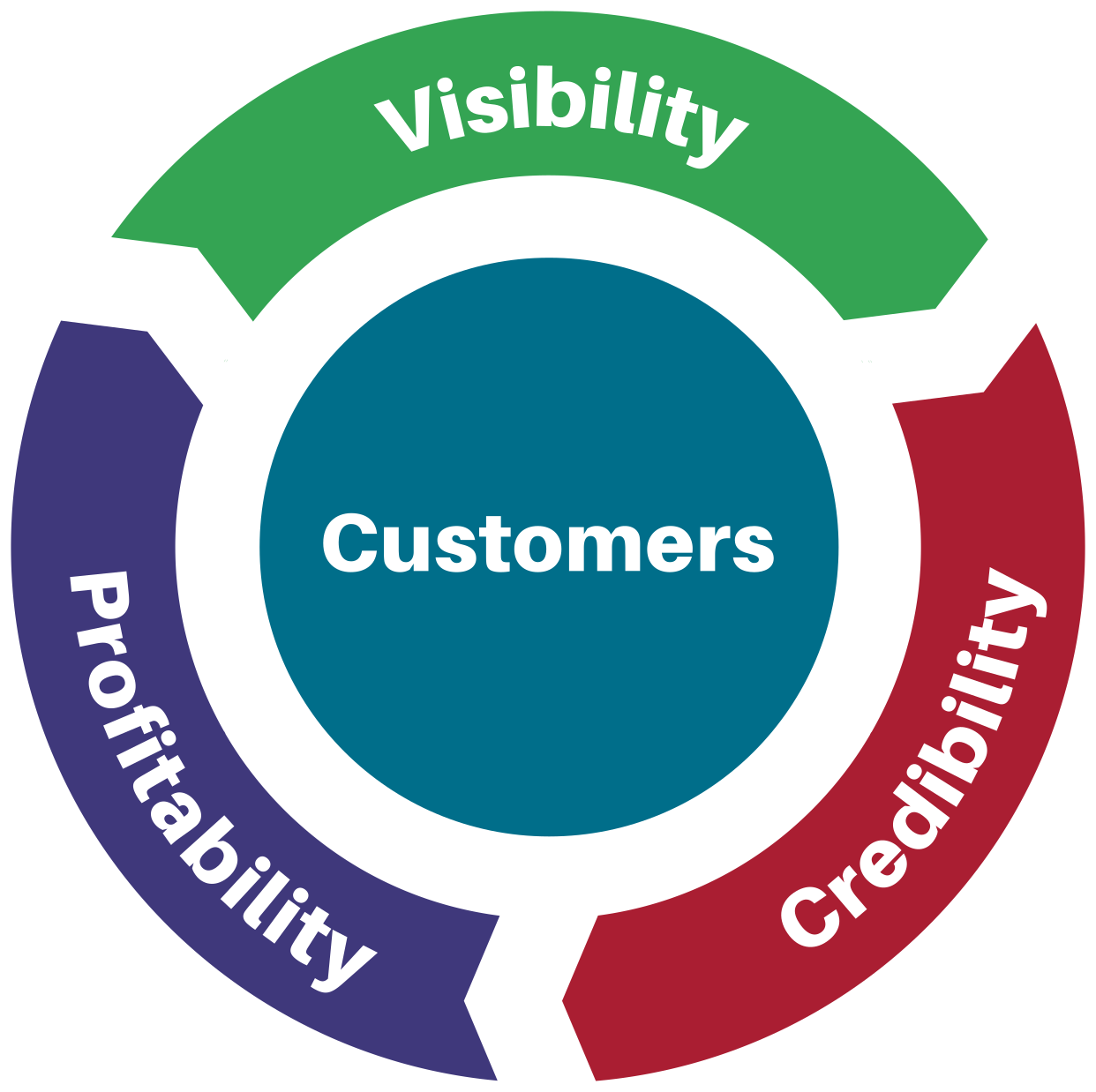
This is part one of a multi-part series on how to increase the visibility, credibility, and profitability of your business. As the new kid on the block, you will try anything to help get your name out in your community. See if this list rings any bells:
- Logo on your truck, car, or van (including your phone number and website address)
- Yard signs
- Ads in the phone book
- Billboards
- Radio ads
- TV ads
- Newspaper ads
- Business card on every bulletin board you can find
- Posts on social media
How many of those are actually working? Sure you may be getting some visibility, but is it the right kind? Are these bringing in the right kinds of customers? How do you know what is working and what isn’t? The answer is for the most part you don’t! Sure you can be told we have X number of readers, or it goes to X number of households, but what are the chances that that person is looking for you when your ad is running.
One of the hardest things when you first start out is getting your name out there – actually, it doesn’t matter how long you have been in business staying top of mind is hard. You may have been in business for two months or 20 years and if you aren’t visible then, the leads dry up like water in the desert.
I have found there are several ways to increase your visibility, those being:
- Networking in person
- Content Marketing
- Social Media
In-Person Networking
I am a firm believer that in-person networking will help a business grow. I have seen it happen locally with Cube Creative. Here are my thoughts on it:
- How important is it? It is really important!
- What can networking do for your relationships? It is going to help you build them!
- What can it do for your sales? It will help you make them!
- What about your success? It can help you make the right contacts and connections!
Personally I have forged some of the strongest relationships that have to lead to more business and more qualified leads than any form of advertising could buy.
Given, I try to be at every event I can. I understand it’s a balancing act, but if you want to be visible, you have to show up!
I have spoken with people at various events and in meetings, when the topic of networking comes up they either do it or have an excuse for why they don’t, some of which may be:
- “It takes to much time” or “I don’t have time”
- “They don’t pay me enough”
- “I tried joining X organization but I never got anything out of it”
If you plan to stay in business, you’ll have to learn to network. Jeffery Gitomer says it best, “Networking is life skills and social skills combined with sales skills.”
Showing up online by using content marketing
When I am at a networking event or I am casually asked by someone what I do, I typically say I help businesses get found on Google. If they inquire deeper I always explain that Google is the keystone to everything. They own 93% of the search market between all their own properties. Google is a business home page, like it or not.
I also go on to explain that in addition to helping a client configure and maintain their Google My Business (GMB) listing, we also write content for our clients that helps to answer searchers questions when they search for things online.
If your website has the answers a searcher is looking for your visibility naturally goes up.
Social Media
I often have a conversation with prospects similar to this:
Prospect: I want more of a social presence.
Me: Ok, that’s great! I can help you with that. But are you willing to do posts and interact with people?
Prospect: No I don’t have time to do that I just want you to make the posts.
Me: Well, the nature of social media is just that - social. People expect to be able to interact with you, and if you want to “be on <insert social platform>,” you have to be willing to interact with them.
Social media is a great way to communicate your message and communicate with people. But if you treat social like a bee looking for a flower versus being a flower that attracts and engages with the bee then you are wasting time and money.
Importance of Visibility
Visibility is important for all types of businesses offline, online and via social as it creates recognition and awareness. At Cube Creative we help businesses of all sizes increase their visibility online. If you are looking to grow your business then reach out and see how we can help you.
This Free Resource May Also Interest You!

Written By: Chad J. Treadway | January 21, 2020
Chad is our Chief Smarketing Officer. He will help you survey your small business needs, educating you on your options before suggesting any solution. Chad is passionate about rural marketing in the United States and North Carolina. He also has several certifications through HubSpot to better assist you with your internet and inbound marketing.