
When it comes to home service businesses, your website isn't just a digital brochure. It's a phone call-generating machine.
But let's be honest: while everyone's obsessing over social media strategies and keyword rankings, many home service business owners are overlooking their most powerful conversion tool: their website.
I'm not suggesting you should neglect your local SEO or forget about Google's latest algorithm update. However, your website remains your most reliable lead-generation asset when designed correctly, and you can't afford to ignore it.
Here, we'll talk about straightforward website design tactics specifically for home service businesses that you can implement to boost four key metrics that actually matter for generating phone calls.

Written By: Adam Bennett | September 22, 2025
Adam is the president and founder of Cube Creative Design and specializes in private school marketing. Since starting the business in 2005, he has created individual relationships with clients in Western North Carolina and across the United States. He places great value on the needs, expectations, and goals of the client.
Picture this: You've just wrapped up a stellar week in your pest control business. You've closed three major termite treatment contracts, your technicians completed every job ahead of schedule, and you've even implemented that new routing software everyone's been raving about. Life is good. Then you check your phone and see it—a scathing one-star review complete with ALL CAPS and enough exclamation points to punctuate a manifesto.
Suddenly, your perfect week feels like it's circling the drain.
If this scenario sends a shiver down your spine, you're not alone. For pest control businesses, online reviews are no longer just digital versions of traditional word-of-mouth—they've fundamentally rewired how consumers select professionals for everything from emergency bed bug treatments to preventative quarterly services.
As Scott Cook, co-founder of Intuit, famously said, "Your brand is no longer what you tell the consumer it is—it is what consumers tell each other it is." This perfectly captures this new reality where your online reputation has become your most valuable business asset.
With the Spiegel Research Center finding that 77% of local consumers report that they 'always' or 'regularly' read online reviews when researching a local business" and "93% of all consumers stating that reviews directly impact their purchase decisions, and Harvard Business School research showing that a one-star increase in ratings leads to a 5-9% revenue increase, the stakes have never been higher for pest control operators of all sizes.
But don't worry—this guide will transform review management from a source of anxiety into a powerful growth strategy for your pest control business. Get ready for a brutal truth: there are no shortcuts to review dominance. But with the right approach, you can build an authentic reputation that consistently drives new customers to your door while your competitors wonder what your secret is.
Written By: Adam Bennett | September 19, 2025
Adam is the president and founder of Cube Creative Design and specializes in private school marketing. Since starting the business in 2005, he has created individual relationships with clients in Western North Carolina and across the United States. He places great value on the needs, expectations, and goals of the client.
"My phone should be ringing more." As a home service provider, you've probably thought this while watching competitors with half your experience book jobs you should be getting. Why? Because 88% of consumers who perform a local search on their smartphone visit or call a business within 24 hours.
When a homeowner's basement is flooding at midnight or their AC dies during the summer's worst heatwave, they're not methodically researching who has the most experience—they're calling the first trustworthy service provider they can find online. If that's not you, you're losing thousands in potential revenue every month.
The good news? By fixing just five critical mistakes in your online business listings, home service providers like you typically see a 30-40% increase in qualified leads and a 24% improvement in conversion rates within just 60 days—all without spending an extra dollar on marketing.
Let's dive into these five business listing mistakes that are silently costing you money—and exactly how to fix them today.
Written By: Adam Bennett | September 19, 2025
Adam is the president and founder of Cube Creative Design and specializes in private school marketing. Since starting the business in 2005, he has created individual relationships with clients in Western North Carolina and across the United States. He places great value on the needs, expectations, and goals of the client.
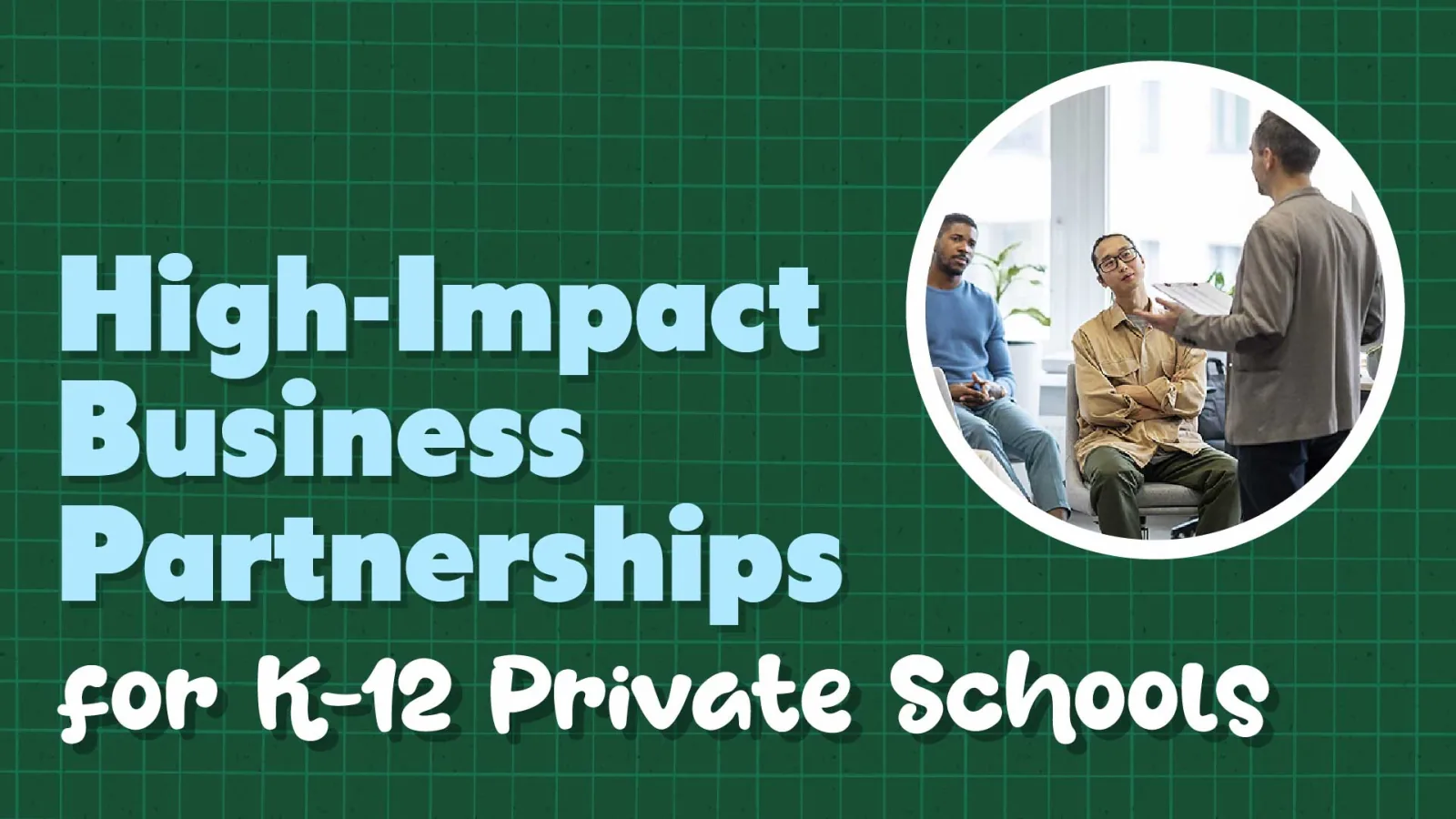
Let's be honest - running a small private school feels like being the ringmaster of a circus where you're also expected to be the lion tamer, trapeze artist, and ticket seller. All while balancing on a financial tightrope that seems to get thinner every year.
When larger schools roll out glossy partnership programs with Fortune 500 companies, complete with named facilities and six-figure sponsorships, it's tempting to file the whole "partnership strategy" concept under "nice for them, impossible for us."
But here's the truth: smaller private schools aren't just capable of building powerful partnerships – they're often better positioned to create authentic, nimble, and mission-aligned collaborations that deliver serious value without serious budgets. And no, that's not just motivational fluff to make you feel better about your microscopic marketing budget.
Written By: Adam Bennett | September 19, 2025
Adam is the president and founder of Cube Creative Design and specializes in private school marketing. Since starting the business in 2005, he has created individual relationships with clients in Western North Carolina and across the United States. He places great value on the needs, expectations, and goals of the client.

Ever stood in front of your service van wondering if that shade of blue really says "trusted plumber" or just "another guy with a wrench"? You're not alone. In the crowded world of home services, where every HVAC company, landscaper, and electrician is competing for attention, your potential customers are making snap judgments before you even knock on their door.
Here's the reality that most home service professionals miss: when a homeowner is scrolling through local service options or watching your truck drive by, they've formed 62-90% of their impression about your business based on colors alone—all within the first 90 seconds of seeing your brand, according to research from Management Decision. That split-second color impression could be the difference between getting the call or being scrolled past.
"But it's just color," you might think. "My quality work should speak for itself." The hard truth? In today's visually-driven marketplace, your exceptional service won't matter if your branding doesn't get you through the door first. While your competitors stick with industry-standard blues or throw together whatever colors their nephew thought looked "professional" in a logo maker, you're missing a powerful psychological tool that could be driving real business growth.
This isn't about following design fads or personal preferences—it's about leveraging the science of how color affects the human brain and influences purchasing decisions. Whether you're struggling to stand out in a sea of sameness, wondering why your website gets visitors but not conversions, or simply trying to build more instant trust with potential customers, strategic color psychology provides the competitive edge you've been looking for.
In this comprehensive guide, we'll unpack exactly how successful home service businesses are using evidence-based color strategies to:
- Build immediate trust and credibility in an industry where confidence is everything
- Drive measurable increases in website conversions and call volumes
- Create memorable brand differentiation that helps you charge premium rates
- Design cohesive experiences across every customer touchpoint—from trucks to technician uniforms
Forget vague design advice—we're diving into specific, actionable color strategies tailored for plumbers, HVAC technicians, electricians, landscapers, cleaning services, and every other home service professional ready to transform how customers perceive their business from the very first glance.

Written By: Chad J. Treadway | September 17, 2025
Chad is our Chief Smarketing Officer. He will help you survey your small business needs, educating you on your options before suggesting any solution. Chad is passionate about rural marketing in the United States and North Carolina. He also has several certifications through HubSpot to better assist you with your internet and inbound marketing.
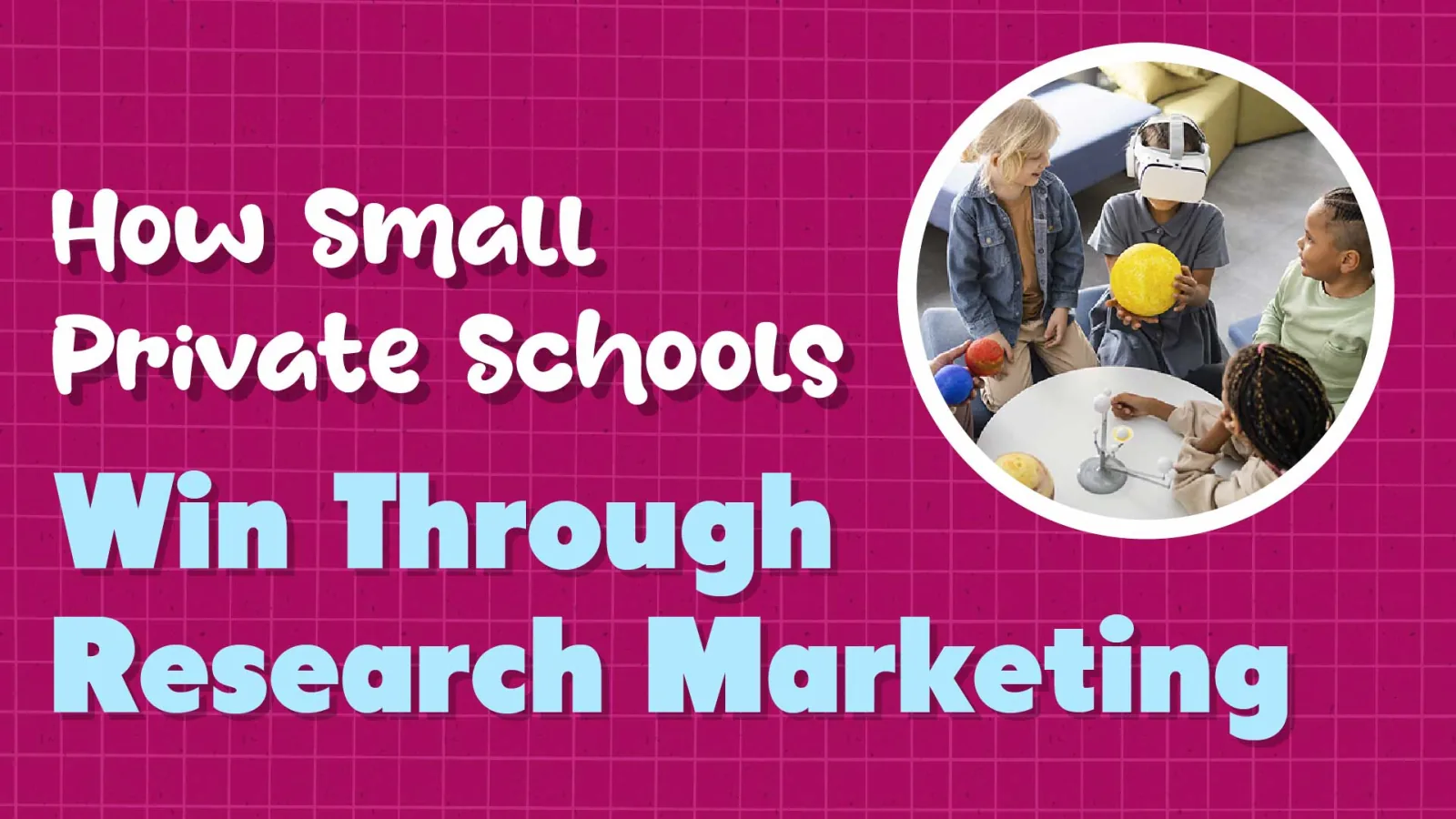
Let's address the elephant in the admin office: research promotion sounds like something for those $30,000-a-year prep schools with dedicated marketing departments and innovation labs named after wealthy donors. Meanwhile, you're wondering if you can stretch the budget to afford both printer ink AND paper this month.
Here's the reality, though – your small private school with its modest tuition is already conducting valuable educational research. You just don't call it that. Every time you try a new teaching approach, modify your curriculum to better serve your students, or implement a creative solution to a classroom challenge, you're engaging in action research. And that research might be your most underutilized marketing asset.
Why? Because while every school in your area claims to offer "excellence in education" (yawn), only yours can prove exactly how you're achieving those results through your unique approaches. This isn't just marketing fluff – it's about translating your educational innovations into compelling evidence that answers the fundamental question every prospective parent is asking: "Why should I choose your school for my child when tuition means financial sacrifice for my family?"
Written By: Adam Bennett | September 17, 2025
Adam is the president and founder of Cube Creative Design and specializes in private school marketing. Since starting the business in 2005, he has created individual relationships with clients in Western North Carolina and across the United States. He places great value on the needs, expectations, and goals of the client.

Ever noticed how most plumbing companies use blue in their logos? Or why emergency service vehicles tend to incorporate bright red? These aren't random choices—they're strategic decisions based on decades of research into how colors influence customer perception and behavior.
As a home service business owner, you're facing unique challenges that other industries don't. Your customers are literally inviting you into their most private spaces—their homes. Before they make that call, they need to feel an immediate sense of trust, reliability, and professionalism. And here's the surprising truth: up to 90% of their snap judgments about your business are based on color alone.
Whether you're a plumber, electrician, landscaper, run a cleaning service, or [insert your industry here], your color choices are silently communicating powerful messages to potential customers. The wrong palette can subconsciously signal unreliability or create unnecessary anxiety, while the right combination can instantly communicate exactly what makes your services special.
In this post, we'll explore the psychological impact of different colors across various home service sectors, provide industry-specific color recommendations with exact hex codes for immediate implementation, and reveal emerging color trends that can position your business for future success. You'll discover:
- Why blue dominates home service branding and how to use it effectively
- Strategic accent colors that can differentiate your business without sacrificing trust
- Regional color preferences that can give you a competitive edge in your specific market
- Practical implementation guidelines for vehicles, uniforms, and digital platforms
Let's transform your visual identity into your most powerful marketing asset.
Written By: Chad J. Treadway | September 17, 2025
Chad is our Chief Smarketing Officer. He will help you survey your small business needs, educating you on your options before suggesting any solution. Chad is passionate about rural marketing in the United States and North Carolina. He also has several certifications through HubSpot to better assist you with your internet and inbound marketing.
Let's start with a fundamental truth that the most successful pest control companies understand implicitly: you're not selling pest elimination. That's merely the functional task you perform. What you're truly selling is an emotional outcome — peace of mind, safety, security, and the restoration of the home as a sanctuary.
This isn't just marketing speak. Academic research in consumer behavior has consistently shown that service quality doesn't directly influence purchasing decisions on its own. Instead, service quality positively affects consumer trust, and it's this trust that "significantly affects buying decisions," according to a 2024 study published in the Journal of Consumer Behavior. This positions trust as the crucial mediating variable between your service claims and actual conversions.
Think about it: When someone discovers mice droppings in their pantry or termites eating away at their biggest investment (their home), they're not in a rational comparison-shopping mindset. They're in panic mode, looking for someone they can trust to solve their problem immediately.
Your brand needs to instantly communicate reliability, expertise, and reassurance at that precise moment of discovery. As one industry analyst puts it, "In these moments of high anxiety, validation must precede education." Your brand must first acknowledge and soothe the customer's emotional state before explaining your solution.
Every element of your brand—from its core promise and personality to its digital footprint and community involvement—must be meticulously aligned to deliver on this emotional value proposition, not just the technical one.
Written By: Chad J. Treadway | September 17, 2025
Chad is our Chief Smarketing Officer. He will help you survey your small business needs, educating you on your options before suggesting any solution. Chad is passionate about rural marketing in the United States and North Carolina. He also has several certifications through HubSpot to better assist you with your internet and inbound marketing.

Let's face it, when a homeowner discovers a wasp nest under their eaves, carpenter ants marching through their kitchen, or bedbugs making themselves comfortable in the master bedroom, they're not just looking for any pest control business. They're frantically searching for someone they can trust with their home, health, and hard-earned money. For small pest control businesses, building this trust online is essential for converting website visitors into customers—before they ever make that first call.
Trust isn't just a warm, fuzzy feeling for pest control businesses—it's your pipeline to profitability. According to PwC's Trust in US Business Survey, a staggering 60-percentage point trust gap exists between perception and reality—90% of business executives believe customers highly trust their companies, while only 30% of consumers actually report that level of trust. This disconnect is costing you business. The same research reveals that 46% of trusting consumers increase their purchases from companies they trust, and 28% willingly pay premium prices for their services. When potential customers trust you before they even pick up the phone, you've already exterminated half the sales barriers.
Everyone knows the basics of trust-building website design—showing reviews and listing your certifications. But if you want to truly stand out in the competitive market of pest control providers, you need to take your website's trust signals to the next level. It's time to roll up those sleeves and dig into design strategies that will make potential customers feel as comfortable calling you as they would their own family members (maybe more comfortable, depending on the family).
Let's explore how your pest control business can use strategic website design to build maximum credibility and turn anxious homeowners into loyal, lifetime customers. After all, in pest control, gaining trust isn't just a nice-to-have—it's the difference between prospects calling you or scurrying to your competitors.
Written By: Chad J. Treadway | September 15, 2025
Chad is our Chief Smarketing Officer. He will help you survey your small business needs, educating you on your options before suggesting any solution. Chad is passionate about rural marketing in the United States and North Carolina. He also has several certifications through HubSpot to better assist you with your internet and inbound marketing.

Let's be honest — if I asked you to name your school's most valuable marketing asset, what would you say? Your stunning new science center? That championship-winning sports program? Or perhaps your beautifully designed website that cost a small fortune?
Here's the thing: these are all valuable assets, but they're not your most valuable one.
Your most powerful marketing asset is currently teaching algebra to 7th graders in room 204.
For all the sophisticated digital strategies and polished websites we create as marketers, the most persuasive selling point often remains underutilized on school websites: the exceptional educators who deliver your product every single day. It's like having a Ferrari but never showing potential buyers what's under the hood. Your website should be the showcase for your school's greatest asset — your teachers — not just a pretty digital brochure.
Here's the cold, hard truth: No parent has ever written a $25,000 tuition check because they fell in love with your mission statement. They're investing in the people who will be shaping their child's mind for the next several years. Yet most schools relegate faculty to an afterthought in their marketing strategy — a sterile directory with awkward headshots and dry credentials that could put an insomniac to sleep.
It's time to stop the madness. This post will show you how to build a comprehensive "Faculty Expertise Showcase" strategy that drives enrollment, enhances your school's reputation, and even improves teacher retention. Whether you're a marketing director trying to hit ambitious enrollment targets, a principal looking to elevate your school's profile, or a parent leader hoping to see your school thrive, this approach delivers results where they matter most.
Written By: Adam Bennett | September 15, 2025
Adam is the president and founder of Cube Creative Design and specializes in private school marketing. Since starting the business in 2005, he has created individual relationships with clients in Western North Carolina and across the United States. He places great value on the needs, expectations, and goals of the client.
Let's face it—the last thing on your mind after eliminating a severe ant infestation or completing a comprehensive termite treatment is asking for a Google review. You're exhausted, your technicians are ready for the next job, and your client just wants to enjoy their newly pest-free home.
But here's the uncomfortable truth: those awkward review requests might be the difference between your pest control business thriving or merely surviving in today's digital marketplace.
According to recent data, a staggering 88% of consumers read online reviews to evaluate local businesses before making contact—and for pest control companies, where inviting a professional into one's home represents a significant act of trust, this number climbs even higher. Wiser Notify found that businesses with positive Google reviews can experience up to an 18% boost in revenue from search results alone. That's real money you're leaving on the table if your review strategy consists of "hope they remember to say something nice."
In this guide, we'll explore how to ethically and effectively generate powerful Google reviews for your pest control business without resorting to sketchy tactics that could land you in hot water with Google—or worse, the Federal Trade Commission. No fake reviews, no bribes, no begging—just proven strategies that work specifically for pest control operators.
Written By: Chad J. Treadway | September 12, 2025
Chad is our Chief Smarketing Officer. He will help you survey your small business needs, educating you on your options before suggesting any solution. Chad is passionate about rural marketing in the United States and North Carolina. He also has several certifications through HubSpot to better assist you with your internet and inbound marketing.
Let's be honest—the words "school marketing" make some educators break out in hives. They conjure images of slick sales pitches that feel completely at odds with your institution's noble educational mission. If you're nodding along, you're not alone.
In an era of heightened competition, expanding school choice, and fluctuating enrollment trends, K-12 school thought leadership is no longer a peripheral activity but a central strategic imperative. National Association of Independent Schools (NAIS) data shows that while median enrollment has surpassed pre-pandemic levels, this growth is not uniform; between 2018 and 2022, 36% of NAIS schools reported enrollment decreases. In this competitive environment, a strong intellectual brand serves as a critical differentiator for private school enrollment success.
The answer isn't more glossy viewbooks or another rebranding exercise. It's educational thought leadership—the art of positioning your school not just as a provider of education, but as a forward-thinking voice that shapes the very conversation about what education should be.
In this guide, I'll show you exactly how to build a K-12 school thought leadership strategy that doesn't just check a marketing box but becomes a powerful enrollment driver and brand differentiator. No marketing jargon, no vague platitudes—just a concrete blueprint for establishing your school as the intellectual leader it deserves to be recognized as.
Written By: Adam Bennett | September 12, 2025
Adam is the president and founder of Cube Creative Design and specializes in private school marketing. Since starting the business in 2005, he has created individual relationships with clients in Western North Carolina and across the United States. He places great value on the needs, expectations, and goals of the client.