 use Joomla\CMS\Uri\Uri;
You're comparing pest control marketing agencies, and these two names keep showing up.
Good. That means you're doing your homework before signing a contract, which puts you ahead of most pest control operators who pick an agency based on a sales call and a good slide deck, then spend the next 12 months wondering why their phone isn't ringing.
Coalmarch has been in pest control marketing for over 20 years. They have native PestPac integration that we don't. If that's your number one priority, hire them. I mean that.
Cube Creative Design has been a digital marketing agency since 2005, and pest control is where we've invested hardest in recent years. When we work with pest control companies, that's all we're thinking about. Not lawn care. Not HVAC. Not "home services." Every strategy we build starts and ends with what it takes to get your technicians booked and your routes full.
I'm Chad from Cube Creative, and this is the honest comparison I'd want to read if I were in your boots. I'm going to tell you where Coalmarch is stronger, where we're stronger, and where neither of us is the right fit if that sounds like the kind of conversation you'd rather have before a sales call than during one, keep reading.

Written By: Chad J. Treadway | April 17, 2026
Chad is our Chief Smarketing Officer. He will help you survey your small business needs, educating you on your options before suggesting any solution. Chad is passionate about rural marketing in the United States and North Carolina. He also has several certifications through HubSpot to better assist you with your internet and inbound marketing.
You're comparing Cube Creative Design and Scorpion. Good. You should. A 12-month marketing contract with either one is a real commitment, and the differences between us matter more than most comparison pages will tell you.
I'm Chad, Chief Smarketing Officer at Cube Creative Design. We specialize in marketing for pest control companies. Scorpion comes up in every prospect conversation we have, so I wrote down the full comparison. Where they're strong, where we're strong, and where the honest trade-offs are. Whether you end up hiring us, hiring Scorpion, or hiring someone else entirely, this page will save you hours of comparison research.
If you skip the parts that make us look bad, nothing else on this page is worth reading.
Table of Contents
Written By: Chad J. Treadway | April 17, 2026
Chad is our Chief Smarketing Officer. He will help you survey your small business needs, educating you on your options before suggesting any solution. Chad is passionate about rural marketing in the United States and North Carolina. He also has several certifications through HubSpot to better assist you with your internet and inbound marketing.
You're trying to figure out which pest control marketing agency is worth writing a check to every month, and you're tired of sales pages that won't give you a straight answer.
Pesty has been focused on pest control longer than we have. Their case studies name clients publicly. Their contracts are more flexible. And their one-client-per-city exclusivity model is simpler to understand than ours.
I work for Cube Creative, and I just told you four things Pesty does better. This post lays out where our model wins, where theirs wins, and how to figure out which one fits your business.
Kind of like choosing between a specialist exterminator and a full-service pest management company. Both solve problems. The question is which problems you actually have.
If you just want the short answer: skip to the Which Agency Actually Fits Your Business? section. If you want to understand the details behind the decision, keep reading.
If you're here because Pesty already has a client in your market, because you need more than SEO and PPC, or because you're not at $1M in revenue yet, you're in the right place. But even if none of those apply, this comparison will help you ask better questions of whatever agency you end up hiring. That includes us. That includes pest control marketing agencies you haven't found yet.
Written By: Chad J. Treadway | April 17, 2026
Chad is our Chief Smarketing Officer. He will help you survey your small business needs, educating you on your options before suggesting any solution. Chad is passionate about rural marketing in the United States and North Carolina. He also has several certifications through HubSpot to better assist you with your internet and inbound marketing.

Visuals drive fundraising. Text-heavy appeals struggle to hold attention, leaving money on the table. Building an email blast, landing page, or physical mailer requires compelling art to stop the scroll. Nonprofit teams face tight margins and brutal deadlines. They can't commission custom pieces for every single touchpoint.
Design leads face a pressing question. Can an off-the-shelf library actually support a coherent brand system? Or are you doomed to look like a patchwork of generic stock art?
Working with Ouch, a vector collection by Icons8, proves pre-made assets work beautifully. Success doesn't depend on custom origins. Depth matters most. A reliable library needs enough art within a single aesthetic to map an entire user journey. Thousands of files exist here, categorized into 101 distinct styles. Options range from minimal monochrome to playful line graphics. Lock into one specific visual language. Then maintain it across every single channel.
You've built a solid marketing engine. The leads are coming in. Your website works. Your Google ads are converting clicks. Your phone is ringing.
And then something happens between the lead arriving and the sale closing. Sometimes it's a whimper. Sometimes it's silence. Sometimes the prospect goes quiet for three days, and then you see they signed up with a competitor.
If you're running a pest control company, this isn't a feeling; it's a pattern. Coalmarch, a pest control-specialized marketing agency, reports that most PCOs estimate their sales close rate at 50%, meaning that for every 10 leads that come through the door, only five become customers. The other five disappear into the void, taking your marketing spend and your time with them.
For a company in the 31-50 employee range (the size where you're scaling operations and every conversion matters to your growth targets), that missing 50% is costing you real money. It's costing you twice as much in marketing spend per customer acquired. It's costing you routes that don't fill up, technicians with unscheduled days, and revenue that should be on your books.
The problem isn't your leads. The problem isn't your marketing. The problem is what happens after the lead arrives. The sales process happens in the 24 hours after a prospect first reaches out. And most pest control companies are getting that completely wrong.
Here's what we're covering in this post: the five reasons your close rate is stuck at 50%, and the specific systems that pest control companies use to move that number north.
Written By: Chad J. Treadway | April 16, 2026
Chad is our Chief Smarketing Officer. He will help you survey your small business needs, educating you on your options before suggesting any solution. Chad is passionate about rural marketing in the United States and North Carolina. He also has several certifications through HubSpot to better assist you with your internet and inbound marketing.

Every spring, the same ritual plays out at private schools across the country. The marketing director pulls together a stack of data, pours it into a presentation, and walks into the boardroom hoping that this year, someone will understand what "a 4.2% click-through rate" actually means. Spoiler: they will not.
The problem is not the data. At Cube Creative Design, we help private school marketing teams build reporting systems every year, and the pattern is consistent. The data is usually solid. The translation is where things fall apart. Board members think in enrollment numbers, revenue, and mission fulfillment. They do not think in impressions, bounce rates, or cost-per-click.
This post provides a framework for building a year-end marketing report that speaks your board's language while still documenting the work your team accomplished. If you need a primer on proving marketing ROI to your school board, we cover that in depth separately. It is not about dumbing things down. It is about making the data useful to the people who control your budget.

Written By: Adam Bennett | April 15, 2026
Adam is the president and founder of Cube Creative Design and specializes in private school marketing. Since starting the business in 2005, he has created individual relationships with clients in Western North Carolina and across the United States. He places great value on the needs, expectations, and goals of the client.
Spring hits every year at the same time. Yet most pest control companies treat mosquito and tick season like it's a surprise.
That's the gap where revenue lives.
The U.S. mosquito control market is worth approximately $1.87 billion and is projected to reach $2.9 billion by 2031, growing at a compound annual growth rate of 6.5%. That's not spare change. For a mid-size operation like yours, capturing even a fraction of seasonal demand can add 15-25% to annual revenue in just six months.
But here's what separates operators who profit from seasonal demand and those who don't: planning and execution. It's not enough to offer mosquito control. You need a marketing machine that starts three months before the first warm day.
This guide walks you through the playbook. We'll cover market sizing, service packaging, pre-season marketing timelines, digital and offline tactics, lead conversion, in-season retention, and how to bridge seasonal customers into year-round accounts. If you're running a pest control operation with multiple service lines and want to make mosquito and tick control a revenue driver rather than an afterthought, read on.
We work with pest control companies like yours to build seasonal marketing campaigns that turn demand spikes into predictable revenue. Let's break down how to do it yourself or with a partner who understands your vertical.
Written By: Adam Bennett | April 15, 2026
Adam is the president and founder of Cube Creative Design and specializes in private school marketing. Since starting the business in 2005, he has created individual relationships with clients in Western North Carolina and across the United States. He places great value on the needs, expectations, and goals of the client.
You've built something real over the last 25 years. Your pest control company isn't just generating revenue; it's an asset. And like any asset, its value isn't fixed. It's shaped by decisions you're making right now.
When you eventually decide to sell or transition out, your business will be valued by one of two formulas, depending on your size. Owner-operated shops use SDE multiples (Seller's Discretionary Earnings); companies in the $1 million to $5 million range move to EBITDA (Earnings Before Interest, Taxes, Depreciation, and Amortization) multiples. But here's what most pest control owners don't realize: the gap between a 2x valuation and a 5x valuation isn't luck. It's built.
And it starts with marketing.
Pest control companies that position themselves strategically before exit can increase their valuation multiples by 20-40% compared to operators who treat marketing as an afterthought. This guide walks you through exactly what sophisticated buyers are looking for, and how to build a marketing machine that makes your business more attractive to sales.
Written By: Chad J. Treadway | April 14, 2026
Chad is our Chief Smarketing Officer. He will help you survey your small business needs, educating you on your options before suggesting any solution. Chad is passionate about rural marketing in the United States and North Carolina. He also has several certifications through HubSpot to better assist you with your internet and inbound marketing.

Getting a negative Google review stings. You've worked hard to build your service business, and suddenly someone's bad experience is sitting right there where potential customers see it first. The worst part? You can't delete it. But here's what you can do: respond strategically.
The numbers are sobering. Research compiled by BrightLocal shows that 94% of people say reviews have made them avoid a business (originally reported by ReviewTrackers). BrightLocal's own 2026 consumer survey found that negative reviews deter 77% of consumers.
The good news? You have more control than you think. Your response to negative reviews sends a message to everyone reading those comments—including future customers. This guide shows you exactly how to handle negative reviews in a way that protects your reputation and can actually win back trust.
If you're running a home service company and want to build a strong brand, managing your online reputation is non-negotiable. Let's walk through how to do it right.
Written By: Chad J. Treadway | April 14, 2026
Chad is our Chief Smarketing Officer. He will help you survey your small business needs, educating you on your options before suggesting any solution. Chad is passionate about rural marketing in the United States and North Carolina. He also has several certifications through HubSpot to better assist you with your internet and inbound marketing.

Students do not browse career-focused education websites casually anymore. They visit with a goal, compare options quickly, and often decide within minutes whether a school feels credible. If key information is hard to find, they move on.
Both Gen Z and adult learners are practical and outcome-driven. They want proof of job-readiness, clear costs, and a fast path forward. Career-focused education websites must reflect that mindset from the first scroll.
It's March, and your phone's already ringing with homeowners asking about mosquito control. The question keeps coming up in conversations with your team: what should we actually be charging? You're not alone in thinking about this. According to Custom Market Insights, the global mosquito control market hit $7.86 billion in 2025 and continues to expand at a 5.72% annual rate through 2034. But those numbers don't tell you whether you should price your neighbor who owns a quarter-acre at $150 or $250 per treatment.
If you're a pest control company trying to expand your revenue, mosquito services represent one of the highest-value opportunities available right now. The challenge isn't demand; it's knowing how to price what you're selling, so you stay competitive while protecting your margins.
This post walks through the real-world pricing data from established pest control operators, the factors that determine what your market will actually pay, and how to structure your service packages so you're capturing value without leaving money on the table.
Written By: Chad J. Treadway | April 13, 2026
Chad is our Chief Smarketing Officer. He will help you survey your small business needs, educating you on your options before suggesting any solution. Chad is passionate about rural marketing in the United States and North Carolina. He also has several certifications through HubSpot to better assist you with your internet and inbound marketing.
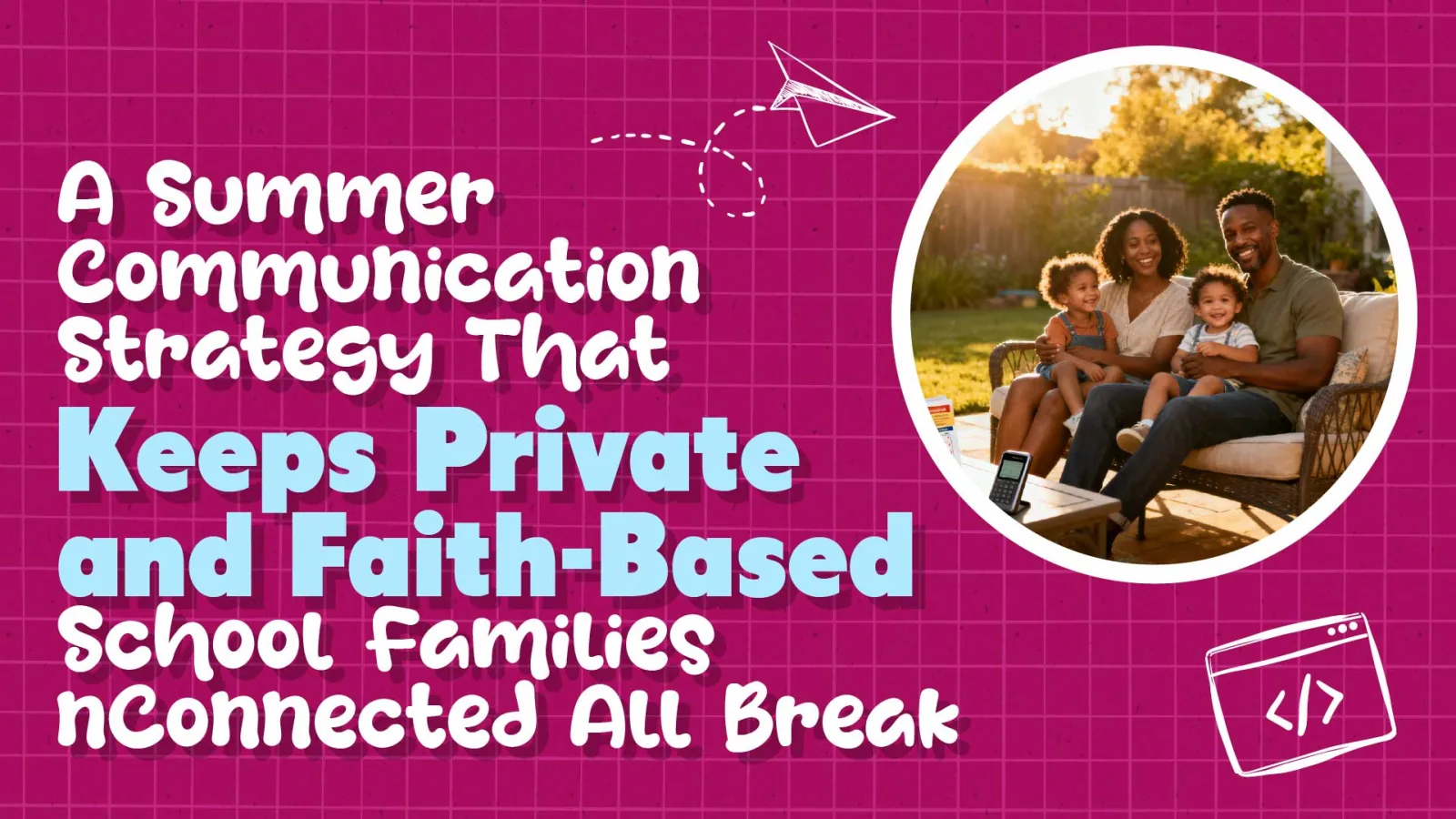
Every June, something predictable happens at schools across the country. The last bell rings, the hallways empty out, and the school's communication goes silent. No newsletters. No social media posts. No emails. Just three months of quiet, where the only reminder parents get that their school exists is the tuition payment coming out of their bank account.
That silence is more expensive than you think. At Cube Creative Design, we work with private and independent schools on their marketing year-round, and the pattern repeats itself every fall. Schools that stayed connected over the summer start the year with excited, committed families. Schools that went dark spend September re-selling parents on why they made the right choice. A solid year-round content strategy prevents that gap from forming in the first place.
This is not about sending a barrage of emails while families are trying to enjoy their vacation. It is about maintaining a consistent, low-effort presence that reminds families they belong to something worth coming back to. Think of it like watering a garden. You do not need to flood it every day. But if you ignore it for three months, do not be surprised when things look a little withered by September.
Written By: Chad J. Treadway | April 13, 2026
Chad is our Chief Smarketing Officer. He will help you survey your small business needs, educating you on your options before suggesting any solution. Chad is passionate about rural marketing in the United States and North Carolina. He also has several certifications through HubSpot to better assist you with your internet and inbound marketing.