 use Joomla\CMS\Uri\Uri;
Your Google Business Profile is the first thing most potential clients see when they search for pest control marketing services in their area. Not your website. Not your Facebook page. That little box on the right side of Google with your hours, reviews, and photos. If yours is half-filled out with a blurry logo and no reviews from the last six months, you're handing calls to the competitor whose profile actually looks like a real business.
The good news: fixing this costs nothing and takes less time than a single termite inspection. Here's how to turn your Google Business Profile into the hardest-working marketing tool your pest control company owns.

Written By: Chad J. Treadway | May 06, 2026
Chad is our Chief Smarketing Officer. He will help you survey your small business needs, educating you on your options before suggesting any solution. Chad is passionate about rural marketing in the United States and North Carolina. He also has several certifications through HubSpot to better assist you with your internet and inbound marketing.
A regional pest control owner I talked to recently was frustrated. Terminix had just opened a new branch in his town and started buying every Google Ad slot above his organic listing. Orkin was running television spots that he couldn't afford to match. He felt like he was being squeezed from above by ad spend he couldn't compete with.
Three months later, after rebuilding his Google Business Profile from the template-driven pattern his previous agency had used and launching a 90-day review velocity push, his profile was outranking both nationals in the Map Pack for his city. His Facebook page had become the place homeowners asked for pest recommendations. His phone was ringing off the hook for jobs the nationals were also bidding on. Same town. Same competition. Different strategy.
This post is about that strategy. It covers the structural weaknesses of national pest control chains, the specific advantages pest control companies can press as independent operators, and the tactics that move market share. I'll be specific about Terminix, Orkin, Rentokil, and Anticimex because those are the four biggest pieces of the national/regional consolidation, but the principles apply to any large competitor in your market.
Written By: Chad J. Treadway | May 06, 2026
Chad is our Chief Smarketing Officer. He will help you survey your small business needs, educating you on your options before suggesting any solution. Chad is passionate about rural marketing in the United States and North Carolina. He also has several certifications through HubSpot to better assist you with your internet and inbound marketing.

There is a particular kind of school website photo that every parent recognizes instantly: a student in a crisp uniform, perfect hair, smiling at a textbook they are definitely not reading, bathed in a light so soft it can only come from a stock library. Parents do not pause on that photo. They scroll past it. That single missed moment is why faith-based and independent schools spend thousands on enrollment marketing and still wonder why inquiry forms stay flat.
This guide is for principals and marketing coordinators at small private schools, especially faith-based K-8 institutions serving 150 to 200 students with a marketing budget in the $25,000-$50,000 range. It covers why photography is the highest-leverage content decision on a school website, how to plan a campaign-ready shot list, the consent and privacy rules you cannot skip, what professional photography actually costs in 2026, when DIY with a smartphone works, how to organize your photo library so it stays useful, and how to time shoots around the academic calendar. The goal is simple: photos that make the right families pause, picture their own child on your campus, and pick up the phone.

Written By: Adam Bennett | May 06, 2026
Adam is the president and founder of Cube Creative Design and specializes in private school marketing. Since starting the business in 2005, he has created individual relationships with clients in Western North Carolina and across the United States. He places great value on the needs, expectations, and goals of the client.
You finally crossed the line from owner-operator to actual business owner. You have eight, fifteen, maybe twenty technicians on the road, the phones are ringing, and the reviews are stacking up faster than you can read them. Every one of those reviews wants a reply, and the people leaving them are watching to see if you bother. So are the people reading them later trying to decide who to call? Tools that promise to automate pest control review responses with AI sound like the obvious fix until you see the output and realize half of it reads like a chatbot from 2017. This guide walks pest management companies through how to keep the speed without losing the voice that got you here.
Cube Creative builds digital marketing systems for pest management companies across the country, and review response is one of the first places we see scaling operators either get a real edge or quietly hurt themselves. The tools have improved a lot. The way most companies use them has not. So let's get into what actually works.
Written By: Chad J. Treadway | May 05, 2026
Chad is our Chief Smarketing Officer. He will help you survey your small business needs, educating you on your options before suggesting any solution. Chad is passionate about rural marketing in the United States and North Carolina. He also has several certifications through HubSpot to better assist you with your internet and inbound marketing.
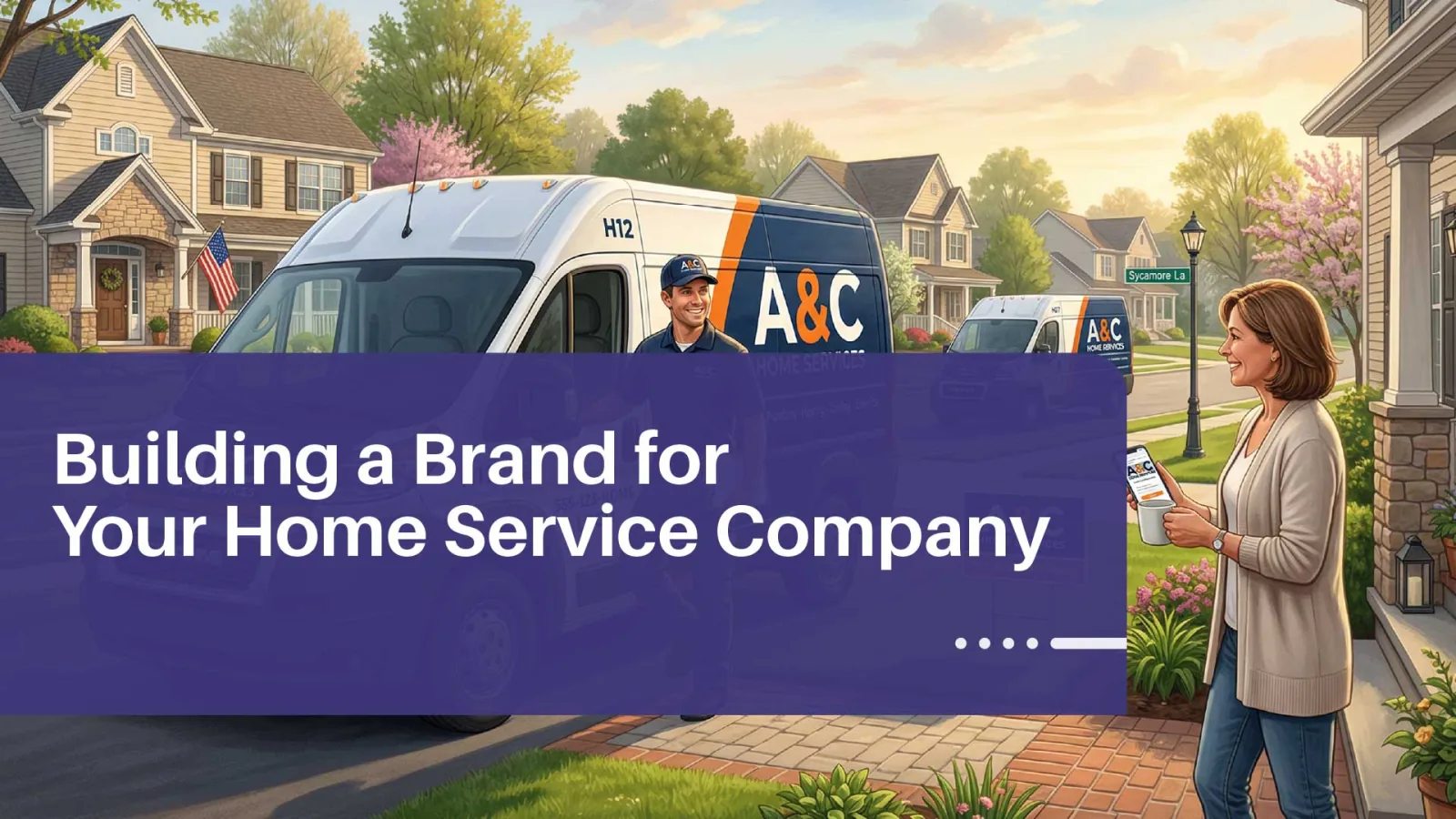
Think of your brand as your business's uniform. When your team shows up in mismatched outfits with different logos and colors, customers start wondering what you're about. That inconsistency costs you money.
Research by Lucidpress found that consistent brand presentation increases revenue by 23-33%. But here's the catch: according to Lucidpress and Demand Metric research, 95% of organizations have brand guidelines, but only 25% (1 in 4) consistently enforce them. A 2019 follow-up study found that 81% of companies still struggle with off-brand content sneaking into their marketing.
If you're running a home service business, every customer touchpoint matters. Your truck, your estimate, your Facebook post, your business card—they all tell your brand story. When that story changes depending on which employee is handling it, you lose trust. When customers see a polished, consistent brand, they see a professional business worth paying for.
This checklist helps you audit your visual brand right now. Print it out, grab a cup of coffee, and let's see what you're doing right and where the gaps are. As a small business owner, your brand is your most valuable asset. Let's make sure it's working as hard as you are.
Written By: Chad J. Treadway | May 05, 2026
Chad is our Chief Smarketing Officer. He will help you survey your small business needs, educating you on your options before suggesting any solution. Chad is passionate about rural marketing in the United States and North Carolina. He also has several certifications through HubSpot to better assist you with your internet and inbound marketing.
A brick-and-mortar school has a lobby, a front desk, a few brochures, and a campus tour that the building does most of the work for. A virtual academy has exactly one lobby, and it is the homepage on a prospective parent's phone at 9:47 p.m. For any private virtual academy, mobile-first school website design is not a best practice; it is the product. If the mobile experience is slow, hard to read, or cluttered, the parent never makes it into the classroom experience at all.
This guide is written for a Director of a K-12 virtual academy serving 250-500 students nationwide, with tuition between $8,000 and $15,000 and a marketing budget in the $50,000-$75,000 range. It covers the mobile traffic reality for school websites, the Core Web Vitals targets that affect Google rankings and conversions, the UX patterns that work on small screens, the conversion challenges specific to virtual schools, the mobile accessibility requirements you cannot skip, and the analytics setup that keeps mobile performance visible every month.
Written By: Adam Bennett | May 05, 2026
Adam is the president and founder of Cube Creative Design and specializes in private school marketing. Since starting the business in 2005, he has created individual relationships with clients in Western North Carolina and across the United States. He places great value on the needs, expectations, and goals of the client.
A homeowner sits on the edge of her bed at 2 a.m., staring at a small reddish-brown spot on the white sheet. She does not need a marketing funnel. She does not need a mid-funnel nurture sequence. She needs to know who to call. Whoever she finds, calls, trusts, and pays in the next 24 hours just won a $2,500 job. Most pest control owners I talk to are leaving money on this table because they treat bed bugs like a side service. They should be treating it like the flagship.
Bed bug marketing is not the same as ant marketing or roach marketing. The customer psychology is different. The treatment economics are different. The competitive set is different. Even the search behavior is different — emergency, mobile, deeply private, and ready to spend. For pest control companies willing to put in the work to position bed bug services correctly, the segment can become the most profitable line on the P&L. For companies that treat it as just another pest, it stays a margin sinkhole.
This guide walks through the strategy. We will cover pricing models, the consumer psychology you need to design around, the digital marketing tactics that actually convert (PPC, Local Services Ads, SEO, landing pages), the way to position bed bug services as premium without sounding gimmicky, and how to build the kind of operations workflow that lets you charge $2,500 without wincing. By the end, you should have a clear sense of where your bed bug program leaks revenue and how to fix it.
Written By: Chad J. Treadway | May 04, 2026
Chad is our Chief Smarketing Officer. He will help you survey your small business needs, educating you on your options before suggesting any solution. Chad is passionate about rural marketing in the United States and North Carolina. He also has several certifications through HubSpot to better assist you with your internet and inbound marketing.

If you are a Head of School running a private K-12 serving 260 students, you are probably not losing sleep over web accessibility. You should be. Web accessibility has moved from an IT footnote to a compliance risk with real teeth, and most private schools are still underinvested. The April 24, 2026 DOJ deadline for Title II entities has raised enforcement visibility across the sector, and legal counsel for independent schools now treat WCAG 2.1 AA as the operational standard for every school website, regardless of religious affiliation or size.
This guide is for a Head of School making decisions about a 260-student college-prep K-12 private school with a marketing budget in the $30,000-$75,000 range. It covers the legal frameworks that actually apply to your school, the technical standards you have to meet, the lawsuits and settlements shaping the enforcement landscape, the audit process, the CMS-specific challenges, the cost of remediation, and the governance model that keeps the site compliant after launch. It is written to give you the analysis you need to talk to counsel, the board, and your marketing and IT teams with confidence.
Written By: Adam Bennett | May 04, 2026
Adam is the president and founder of Cube Creative Design and specializes in private school marketing. Since starting the business in 2005, he has created individual relationships with clients in Western North Carolina and across the United States. He places great value on the needs, expectations, and goals of the client.
Bed bug emergency keywords can be costly, and most companies are sending that traffic to a landing page that was clearly designed by someone who has never been bitten at 3 a.m. The page loads in seven seconds. The phone number is buried in the header. The hero image is a stock photo of a magnified bed bug, which is not what a panicked homeowner wants to see at the top of the page she is currently sitting on. The form has eleven fields,lds including "How did you hear about us?" Predictably, the page converts at 4%, the cost per lead is $200, and the owner concludes that PPC does not work for bed bugs.
PPC works for bed bugs. The landing page does not. This post is about fixing the page so that the spend you are already running pays back.
The audience for pest control marketing sometimes treats landing page conversion as a nice-to-have on top of channel selection. With bed bug traffic, it is the entire game. The keyword is high-intent. The customer is in crisis. The conversion happens or does not happen in the first five seconds. Below is the structural playbook for what works, what kills the call, and how to test your way to a page that closes.
Written By: Adam Bennett | May 04, 2026
Adam is the president and founder of Cube Creative Design and specializes in private school marketing. Since starting the business in 2005, he has created individual relationships with clients in Western North Carolina and across the United States. He places great value on the needs, expectations, and goals of the client.

The phone rings at 8:47 a.m. on a Tuesday. Your CSR picks it up with the same bright hello she used for the first call at 8:43. "Smith Pest Control, how can I help you?" The voice on the other end is quieter. There's a pause. Then: "Um, hi. I think I might have bed bugs in my bedroom, and I really don't want anyone to know."
That call is worth $2,500 if your CSR handles it right. It's worth zero if she runs the ant script on it. Same phone, same CSR, completely different customer. She's in a different emotional state, comparing you against different competitors, and making a different kind of buying decision. Most pest control teams treat bed bug calls like every other call, and most of them lose the booking to the company that picked up the same lead 90 seconds later.
This post is about the script, the workflow, and the team training that turn bed bug inquiries into booked treatment jobs for pest control companies. Most of it is operational, not technical. The companies that handle bed bug calls well are not the ones running the fanciest CRM. They're the ones whose CSRs can work through a sensitive, high-stakes call without making the customer feel like a line item.
Written By: Chad J. Treadway | May 04, 2026
Chad is our Chief Smarketing Officer. He will help you survey your small business needs, educating you on your options before suggesting any solution. Chad is passionate about rural marketing in the United States and North Carolina. He also has several certifications through HubSpot to better assist you with your internet and inbound marketing.

If you have ever opened your school's website, read a faculty bio for a teacher who left two years ago, and quietly closed the tab, you already understand why a content audit matters. At faith-based and independent schools, the marketing job usually falls on a principal, an admissions director, or a single communications coordinator. The site drifts. Content piles up. And the next prospective family lands on a page about the 2023 book fair and forms an opinion that is hard to reverse.
This guide is a practical, DIY school website content audit framework for a principal at a K-8 school with 150 to 200 students and a marketing budget in the $25,000-$50,000 range. You do not need a big team or a consultant to run this. You need a spreadsheet, free access to Google Analytics and Google Search Console, an afternoon or two in early summer, and a simple scoring rubric. The result is a clear roadmap that tells you which pages to keep, which to rewrite, which to merge, and which to retire.
Written By: Adam Bennett | May 03, 2026
Adam is the president and founder of Cube Creative Design and specializes in private school marketing. Since starting the business in 2005, he has created individual relationships with clients in Western North Carolina and across the United States. He places great value on the needs, expectations, and goals of the client.

Every April, a Head of School looks at the old website, says "we should redesign this over the summer," and a marketing director quietly considers a career change. A summer website redesign is possible. It is also the single most common project that blows its deadline, budget, or SEO at private and independent schools. The difference between the schools that land a clean July launch and the ones that spend August explaining 404 errors is planning, not hustle.
This checklist is built for a Director of Admissions and Marketing at a mid-sized college-prep school with 400 to 800 students, a marketing budget in the $50,000 to $250,000 range, and a realistic summer window. It covers the audits you run in May, the stakeholder management that keeps the board out of the wireframes, the CMS and budget trade-offs, photography timing, the 301 redirect discipline that protects your SEO, the launch-week QA list, and the 30-60-90-day post-launch priorities. The goal is a website that hits the fall enrollment push with momentum, not apologies.
Written By: Adam Bennett | May 02, 2026
Adam is the president and founder of Cube Creative Design and specializes in private school marketing. Since starting the business in 2005, he has created individual relationships with clients in Western North Carolina and across the United States. He places great value on the needs, expectations, and goals of the client.