Visuals drive fundraising. Text-heavy appeals struggle to hold attention, leaving money on the table. Building an email blast, landing page, or physical mailer requires compelling art to stop the scroll. Nonprofit teams face tight margins and brutal deadlines. They can't commission custom pieces for every single touchpoint.
Design leads face a pressing question. Can an off-the-shelf library actually support a coherent brand system? Or are you doomed to look like a patchwork of generic stock art?
Working with Ouch, a vector collection by Icons8, proves pre-made assets work beautifully. Success doesn't depend on custom origins. Depth matters most. A reliable library needs enough art within a single aesthetic to map an entire user journey. Thousands of files exist here, categorized into 101 distinct styles. Options range from minimal monochrome to playful line graphics. Lock into one specific visual language. Then maintain it across every single channel.

Students do not browse career-focused education websites casually anymore. They visit with a goal, compare options quickly, and often decide within minutes whether a school feels credible. If key information is hard to find, they move on.
Both Gen Z and adult learners are practical and outcome-driven. They want proof of job-readiness, clear costs, and a fast path forward. Career-focused education websites must reflect that mindset from the first scroll.

A good budget-friendly growth strategy doesn’t cut corners or do less. It decides what actually moves the business forward, and ignores the rest.
Most small service business growth stalls because effort gets spread thin across too many channels that never had a real shot.
You don’t really need more tools. You need focus.
The upside is already there. Better cash flow. More predictable work. The ability to turn down the wrong clients. But getting there without overspending means making sharper choices with time and energy.
Businesses can grow without increasing spend at all, just by stopping doing things that don’t matter.
Let’s look at how you can be one of them.
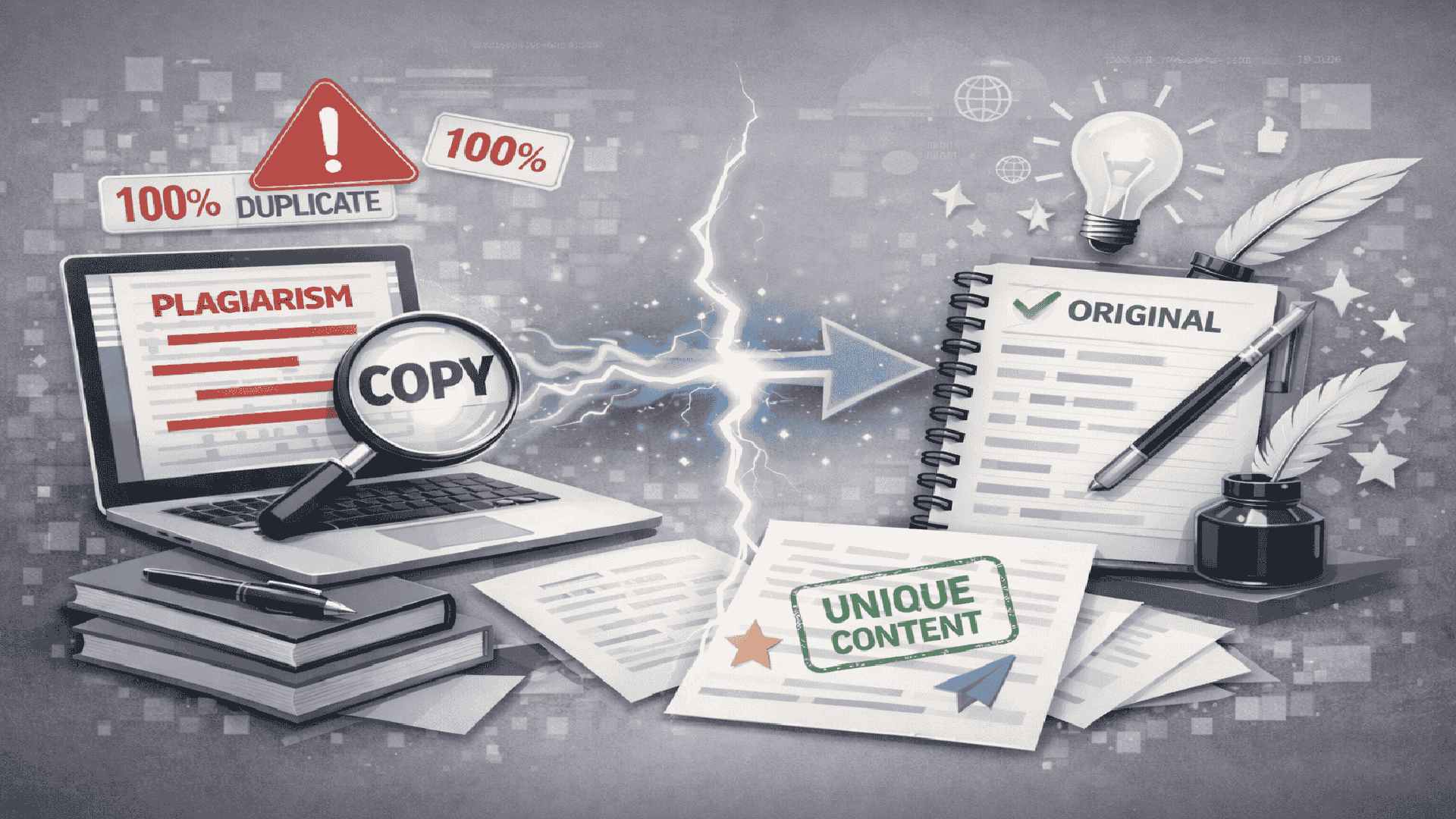
Creating content is very easy today. You can use AI tools to generate articles in seconds. Chatbots allow you to pull ideas from multiple sources and publish content at scale. But AI automation comes with some downsides. The first downside is that AI tools write plagiarized content, because they pull information from existing sources and the wording ends up overlapping the original text. The second downside is that the content is repetitive. It lacks engagement and feels robotic to read. And if you’re publishing it on search engines, they can detect the plagiarism and low-quality and penalize your content with low rankings.
AI content can be plagiarized, but avoiding AI tools altogether is not the solution because content written by humans can be plagiarized too.
The solution instead is to rewrite the AI content to remove plagiarism from it. And an easy way to remove plagiarism is through plagiarism remover tools, which is the focus of this article.
Continue reading to learn how these tools work and how they can help you remove plagiarism from content.