Picture this: It's 6:30 AM, and you need to announce an unexpected school closure. Your administrative team scrambles to update the website and craft an email while parents are already en route. Meanwhile, another school simply sends a text message that's read instantly by 98% of parents.
The difference? One school relies on communication channels parents might check "eventually," while the other reaches them directly on the devices they check 96 times daily.
According to Emitrr, with SMS messages boasting a 98% open rate (versus email's 20%) and average response times of 3 minutes (versus email's 90 minutes), text messaging offers unmatched effectiveness for time-sensitive school communications. According to SMS Comparison, 45% of text messages receive a response, which is eight times higher than email's 6% response rate.
In this guide, we'll walk you through implementing SMS marketing for your school:
- Why and when to use text messaging strategically
- How to stay compliant with regulations
- Setting up SMS through HubSpot
- Measuring success and calculating ROI
It's time to stop relying on flyers that mysteriously never make it out of backpacks and start communicating where parents actually pay attention.

Written By: Adam Bennett | July 31, 2025
Adam is the president and founder of Cube Creative Design and specializes in private school marketing. Since starting the business in 2005, he has created individual relationships with clients in Western North Carolina and across the United States. He places great value on the needs, expectations, and goals of the client.

Written By: Adam Bennett | July 30, 2025
Adam is the president and founder of Cube Creative Design and specializes in private school marketing. Since starting the business in 2005, he has created individual relationships with clients in Western North Carolina and across the United States. He places great value on the needs, expectations, and goals of the client.
AI isn't just changing how people search online—it's completely reshaping how your potential customers find pest control services. While you're busy handling termite inspections and rodent exclusions, the world has already changed faster than mosquitoes can reproduce in that forgotten kiddie pool behind the homeowner's neighbor's shed.
Here's what's happening: When homeowners ask, "How do I get rid of carpenter ants?" they're increasingly turning to AI assistants instead of traditional Google searches. In fact, 13 million Americans already use generative AI as their primary search tool, and that number will explode to over 90 million by 2027. "A survey of U.S. adults conducted by Statista revealed that 13 million people used generative AI as their primary tool for online searches in 2023." (Source: Semrush)
This shift matters to your pest control business because AI doesn't just display links—it provides complete answers and specific recommendations. Even more striking, Marketing AI Institute found that "84% of search queries on Google are impacted by SGE [Search Generative Experience]."
For pest control companies in places like Hickory and beyond, this creates both risk and opportunity. The businesses that adapt quickly will capture more leads while spending less on advertising. Those who ignore this trend will find themselves spending more to reach fewer customers.
Consider this: When a homeowner asks an AI assistant about a mouse infestation, will your business be the one it recommends? The answer depends on the actions you take today.
Let's explore how pest control businesses like yours can thrive in this new AI-first search world, without needing a computer science degree to make it happen.

Written By: Chad J. Treadway | July 30, 2025
Chad is our Chief Smarketing Officer. He will help you survey your small business needs, educating you on your options before suggesting any solution. Chad is passionate about rural marketing in the United States and North Carolina. He also has several certifications through HubSpot to better assist you with your internet and inbound marketing.
Let's face it—the last thing on your mind after unclogging a backed-up toilet or installing crown molding is asking for a Google review. You're covered in dust, sweat, or worse, and your client just wants you out of their hair so they can enjoy their newly functional home.
But here's the uncomfortable truth: those awkward review requests might be the difference between your business thriving or merely surviving in today's digital marketplace.
According to recent data, a staggering 88% of consumers read Google reviews to evaluate local businesses before making contact—and for home service providers, that number climbs even higher. Wiser Notify found that businesses with positive Google reviews can experience up to an 18% boost in revenue from search results alone. That's real money you're leaving on the table if your review strategy consists of "hope they remember to say something nice."
In this guide, we'll explore how to ethically and effectively generate powerful Google reviews for your home service business without resorting to sketchy tactics that could land you in hot water with Google—or worse, the Federal Trade Commission. No fake reviews, no bribes, no begging—just proven strategies that work.
Written By: Adam Bennett | July 30, 2025
Adam is the president and founder of Cube Creative Design and specializes in private school marketing. Since starting the business in 2005, he has created individual relationships with clients in Western North Carolina and across the United States. He places great value on the needs, expectations, and goals of the client.

Most blogs don’t generate leads because they’re built to publish, not to perform. People write, post, share, and hope something sticks. That’s not a strategy but a backlog of nice content collecting dust.
Meanwhile, the data is clear: Companies with active blogs pull in 67% more leads than those without. Not because they write more, but because they write with purpose.
If you want your blog to work, it needs to do more than show up in search results. It needs to meet people where they are and move them toward something useful, such as a conversation, a signup, or a hand-raise. That doesn’t happen by accident.
To do so, you need a clear process that connects the content you publish with the people you want to reach.
In this article, we’ll break down how to do exactly that, without making it weird or complicated.
"We have very satisfied parents!"
If I had a dollar for every time I've heard a school administrator confidently make this claim with zero data to back it up, I could start a scholarship at their institution. Let's be honest – your gut feeling about parent satisfaction is about as reliable as a weather forecast two weeks out.
In the high-stakes world of private education, where tuition rivals the GDP of small nations and parents expect returns that would make Wall Street jealous, simply assuming families are happy is educational malpractice. The truth is, measuring parent satisfaction isn't just good practice – it's survival.
This post will cut through the feedback fog to deliver actionable insights on digital tools and tactics that actually work for measuring parent satisfaction. Whether you're a tech-savvy marketing director or a principal who still prints emails to read them (we know who you are), you'll find practical approaches that can transform parent feedback from a dreaded annual chore into your school's secret enrollment weapon.
Written By: Adam Bennett | July 28, 2025
Adam is the president and founder of Cube Creative Design and specializes in private school marketing. Since starting the business in 2005, he has created individual relationships with clients in Western North Carolina and across the United States. He places great value on the needs, expectations, and goals of the client.
If your idea of "email marketing" is copying all your prospects into the BCC field and hitting send, we need to talk. Desperately.
Between your perpetually overworked staff, inconsistently followed-up leads, and interested families somehow falling through the cracks, you and your K-12 private school are leaving serious money on the table. With tuition ranging from $16,950 to $65,000 per student annually, these missed connections aren't just annoying—they're existential threats to your school's financial health. Education Data Initiative reports, "The national average private school tuition is $16,950 per year for K-12 schools, with elite private schools charging as much as $65,000 annually."
DID YOU KNOW? While you're still printing paper brochures like it's 1999, over 91% of prospective families now expect personalized communication, with more than half preferring email during the application process.
An automated email sequence—a series of pre-written messages triggered by specific actions or timing—is the secret weapon of those private schools that somehow always have "record enrollment numbers" (you know the ones). It's like cloning your admissions director: someone who never sleeps, never forgets to follow up, and never gets distracted by the latest cafeteria crisis.
The numbers don't lie: educational emails enjoy a 36.4% open rate—among the highest of any industry—and deliver an average ROI of $44 for every $1 spent. Campaign Monitor found that "education industry emails achieve an average open rate of 36.4%, significantly higher than the all-industry average." Even your board's most penny-pinching trustee would have a hard time arguing with that.
Written By: Adam Bennett | July 28, 2025
Adam is the president and founder of Cube Creative Design and specializes in private school marketing. Since starting the business in 2005, he has created individual relationships with clients in Western North Carolina and across the United States. He places great value on the needs, expectations, and goals of the client.
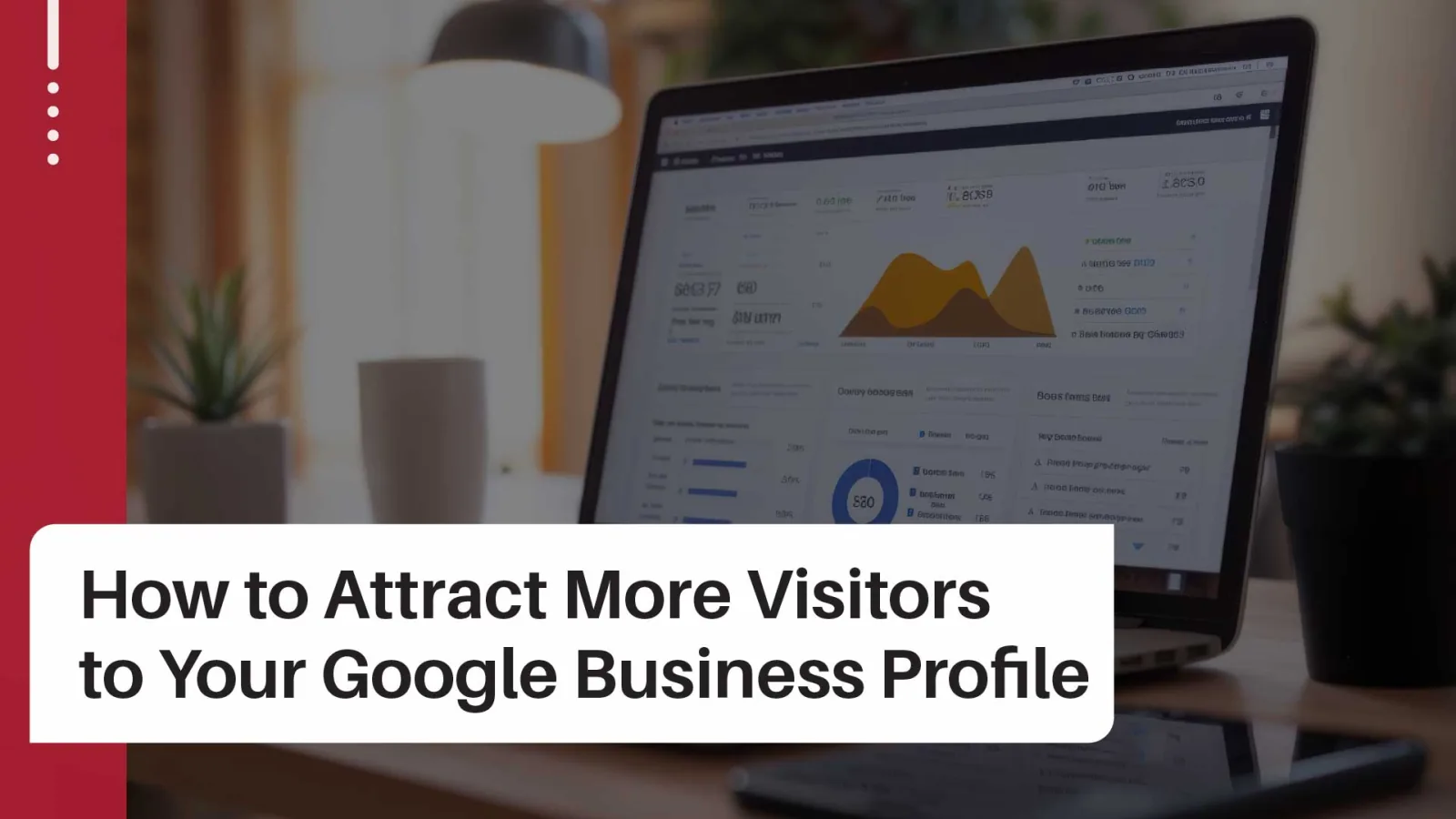
Let's face facts: homeowners aren't flipping through the Yellow Pages when their basement floods at 2 AM. They're frantically grabbing their phones and typing "emergency plumber near me" while standing ankle-deep in water. If your home service business doesn't appear in those critical search results, you might as well be invisible.
The brutal reality is that your Google Business Profile (GBP)—formerly known as Google My Business—has become the digital storefront that makes or breaks local home service businesses. While you're busy fixing leaky faucets, installing HVAC systems, or remodeling kitchens, your potential customers are making split-second decisions based on what Google shows them.
The difference between a mediocre and masterful Google Business Profile isn't just about showing up in search results—it's about converting those searches into actual phone calls, appointments, and paying customers. This isn't theoretical marketing fluff; this is about capturing those high-intent moments when property owners need exactly what you offer.
So why are so many home service businesses still treating their Google Business Profile like an afterthought? Perhaps it's the misguided belief that quality work speaks for itself. Spoiler alert: Your exceptional craftsmanship means absolutely nothing if potential customers can't find you in the first place.
Written By: Adam Bennett | July 28, 2025
Adam is the president and founder of Cube Creative Design and specializes in private school marketing. Since starting the business in 2005, he has created individual relationships with clients in Western North Carolina and across the United States. He places great value on the needs, expectations, and goals of the client.
Ever gazed enviously at those sprawling private school campuses with Olympic-sized pools and robotics labs that would make MIT jealous? Meanwhile, you're debating whether to fix the classroom air conditioner or upgrade decade-old science equipment.
Welcome to the David vs. Goliath scenario of private education. As a small school leader, you know the struggle all too well—limited resources, staff wearing multiple hats, and the constant pressure to match offerings from institutions charging five times your tuition. Parents comparing schools rarely factor in your budget constraints when making decisions.
But here's the refreshing truth that 20+ years in educational marketing has taught me: competing successfully against resource-rich institutions doesn't require matching their spending—it requires outsmarting them with strategic approaches that leverage your unique advantages.
Research consistently backs this up. According to a study by Craig Howley of Ohio University and Robert Bickel of Marshall University, "the correlation between poverty and low achievement was ten times stronger in larger schools than in smaller ones" across multiple states. Your smaller size isn't a disadvantage—it's often your greatest competitive edge.
In this practical guide, you'll discover battle-tested strategies to help your small school not just survive but thrive against bigger competitors, including:
- Transforming your size from a perceived limitation into your most powerful selling point
- Implementing marketing tactics that deliver maximum impact with minimal investment
- Creating distinctive programs that attract families without requiring massive resources
- Making strategic technology investments that actually improve educational outcomes
- Building premium experiences that don't demand premium spending
These aren't theoretical concepts—they're proven approaches that have helped numerous small private schools outperform their better-funded rivals in the areas that truly matter to families.
Written By: Adam Bennett | July 25, 2025
Adam is the president and founder of Cube Creative Design and specializes in private school marketing. Since starting the business in 2005, he has created individual relationships with clients in Western North Carolina and across the United States. He places great value on the needs, expectations, and goals of the client.

Modern businesses face massive competition in the market. Consumers have become very savvy and think nothing of spending hours researching and evaluating their options before purchasing. For this reason, brands have to work tirelessly to make themselves stand out.
A study from McKinsey & Company revealed that over 75% of consumers are willing to switch brands when presented with a compelling alternative, highlighting the need for crafting a unique selling proposition that knocks the competition out of the park. (Source: Researchgate)
In this guide, we’ll introduce the concept of a unique selling proposition, compare it with a value proposition, share some tips on creating a unique selling proposition of your own, and finish up with some killer USP examples.

Link building is still the cornerstone of SEO success. High-quality backlinks not only improve search engine rankings but also establish domain authority and drive referral traffic. However, executing an effective link-building strategy requires experience, creativity, and precision, which is why many businesses turn to specialized agencies to get the job done right.
Whether you're a startup looking for initial traction or a large enterprise aiming to dominate your niche, here's a curated list of the top ten link building agencies in the world, known for their results-driven strategies and industry expertise.

Service-based businesses aim to deliver great work, but the reality is that their daily routines often get consumed by endless tasks and deliverables. Teams often become bogged down with administrative tasks such as client calls and scheduling, rather than focusing on core operations. This time-consuming workload can lead to constant burnout, stripping you of the time needed to innovate, grow, or simply maintain a healthy work-life balance.
Fortunately, you can still deliver great customer experiences, energize your team for innovative operations, and reclaim valuable time. With a combination of focused habits and smart software, you can break free from this cycle. This guide will walk you through strategies to help your team escape unproductive busywork and reclaim their most valuable asset: time.