
When a homeowner discovers termites destroying their foundation or bed bugs invading their bedroom, they're not browsing websites—they're desperately seeking immediate answers. Is your pest control business positioned to be that answer?
The pest control industry's online battleground has undergone a seismic shift. While traditional Search Engine Optimization (SEO) remains important, Answer Engine Optimization (AEO) has emerged as the make-or-break strategy for connecting with customers at their moment of urgent need.

Written By: Chad J. Treadway | July 18, 2025
Chad is our Chief Smarketing Officer. He will help you survey your small business needs, educating you on your options before suggesting any solution. Chad is passionate about rural marketing in the United States and North Carolina. He also has several certifications through HubSpot to better assist you with your internet and inbound marketing.
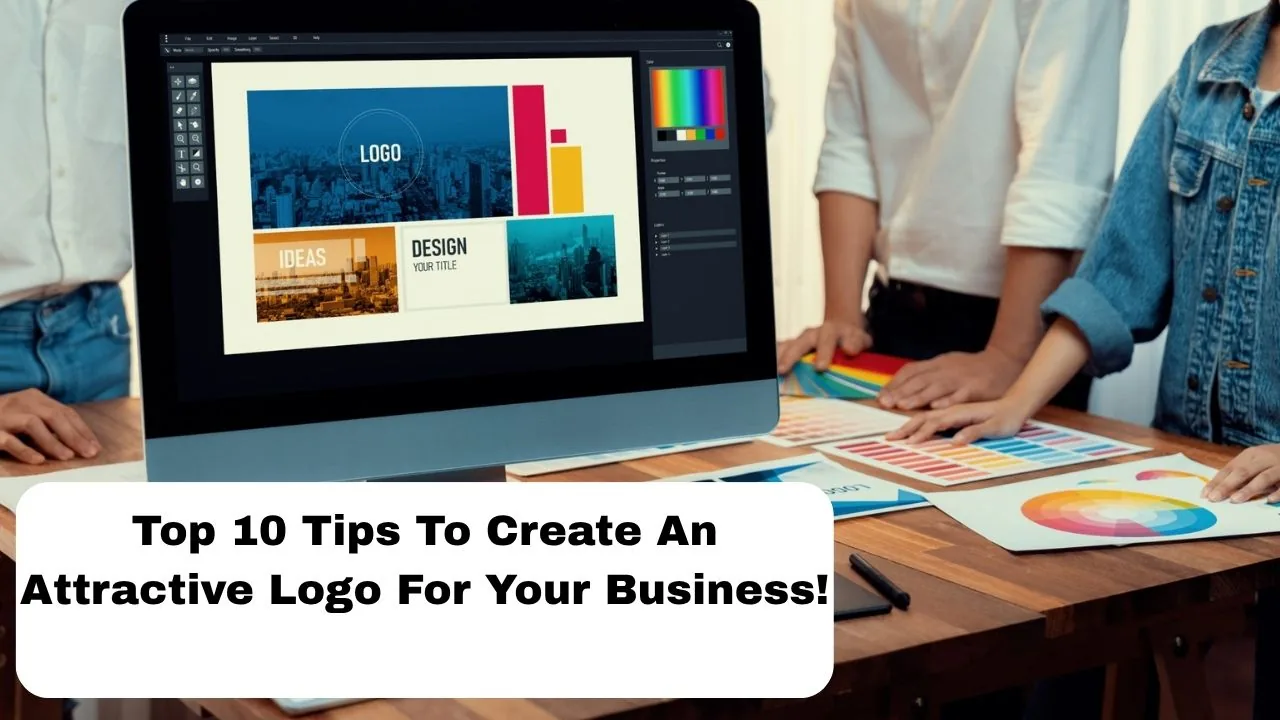
A logo is, most of the time, the first impression your brand leaves on its customers, so you have to make sure that it is properly designed and aligns with the nature of your brand.
You must understand that a great logo isn’t just a visual; it is an asset for your business. This is mainly because it communicates your identity, helps you build trust, and most importantly, gets stuck in your customer’s memory.
If you don’t know how to create an attractive logo or don’t have the budget to hire a professional designer, it is best to read this post, as here in this guide we are going to discuss ten helpful tips that would help you grab the attention of your target audience and build brand loyalty.
Without any delay, let’s get down to the details…

There's a prevailing narrative that AI-produced content is inherently generic, low-quality, and detrimental to the digital landscape. This perspective, frankly, misses the mark. It's akin to blaming a paintbrush for a bad painting; the issue isn't the tool itself, but its misuse or the lack of skill of the person wielding it. When done right, AI-driven content is not just good, it’s actively improving the internet and, by extension, making us better off.

Nowadays, for small and medium-sized enterprises looking to grow organically, investing in expert-led link-building strategies can significantly improve search engine rankings and long-term brand visibility. Hiring a link-building manager is a step that requires careful planning, especially if you're aiming to see measurable ROI and sustained performance.
Picture this: You've spent months wooing a prospective family through your meticulously crafted admissions funnel, invested countless hours in tours and interviews, and celebrated when they finally enrolled. Fast forward to August, and their seats sit empty on the first day of school. No warning, no exit interview—just another statistic in your attrition report and a mysterious LinkedIn update about "new beginnings."
If your K-12 private school loses just 9% of students annually (the current industry average), a mid-sized academy with 180 students is hemorrhaging approximately $232,000 in tuition revenue every single year. "The average annual tuition among all private schools nationwide is $12,790," reports Education Data Initiative, with high school tuition averaging higher at $16,420 per year. That's not just a financial wound—it's a reputation killer that requires expensive recruitment Band-Aids to patch.
Here's the harsh reality: By the time a family announces they're leaving, you've already missed dozens of warning signs that could have saved the relationship. These signals aren't invisible—they're hiding in plain sight across your existing systems and data, quietly waving red flags while you're busy planning next year's curriculum night.
In this guide, I'll show you how to implement early warning systems that can identify at-risk families long before they reach for the exit door. You'll discover the specific metrics, automation rules, and intervention strategies that leading private schools use to boost retention rates.

Written By: Adam Bennett | July 17, 2025
Adam is the president and founder of Cube Creative Design and specializes in private school marketing. Since starting the business in 2005, he has created individual relationships with clients in Western North Carolina and across the United States. He places great value on the needs, expectations, and goals of the client.

Speed is the name of the game. Whether you're launching a new product, optimizing conversion flows, or overhauling your site before a campaign push, today's digital teams need to move fast—without breaking things.
But here’s the challenge: when design, development, and marketing all move at different speeds, alignment falls apart. Features get scoped incorrectly. Pages go live with copy placeholders. Design reviews turn into retrospectives.
That’s where a strong UX design process makes the difference. It’s not just a box to check—it’s the structure that holds fast-moving teams together.

The home services industry isn't just growing—it's exploding. If you're a business owner in this space, you're sitting on a potential gold mine, but only if you know where to dig. Let's cut through the noise and get straight to what matters for your bottom line in 2025 and beyond.
Written By: Chad J. Treadway | July 16, 2025
Chad is our Chief Smarketing Officer. He will help you survey your small business needs, educating you on your options before suggesting any solution. Chad is passionate about rural marketing in the United States and North Carolina. He also has several certifications through HubSpot to better assist you with your internet and inbound marketing.
You just spent $2,500 on Google Ads last month. Your phone rang more than usual. You've got some new customers. Was it worth it? Shrug
If that scenario sounds painfully familiar, you're not alone. Most pest control operators I talk to have only the vaguest idea whether their marketing dollars are actually working, or if they're just feeding cash into a digital shredder.
Here's the reality: in an industry where a single residential customer can be worth $3,000+ over their lifetime, knowing exactly which marketing efforts bring in those golden customers isn't just nice to have—it's the difference between scaling profitably and wondering why your revenue stays flat while your marketing budget keeps growing.
Written By: Chad J. Treadway | July 16, 2025
Chad is our Chief Smarketing Officer. He will help you survey your small business needs, educating you on your options before suggesting any solution. Chad is passionate about rural marketing in the United States and North Carolina. He also has several certifications through HubSpot to better assist you with your internet and inbound marketing.

While your students are perfecting their cannonballs at the pool, your school website could be performing some impressive dives of its own, right into better conversion rates. Summer isn't just for faculty professional development and facility upgrades; it's the perfect low-traffic season to conduct website experiments without disrupting your peak admissions cycle.
Let's face it—private school marketing directors are juggling a dozen priorities with a budget that wouldn't cover a public school's paper clip expenses. Meanwhile, you're trying to showcase educational excellence through a CMS that sometimes feels like it's running on an Apple IIe.
The good news? A/B testing doesn't need enterprise-level tools to yield meaningful results. This guide will show you how to implement practical tests during the summer months that can significantly boost your enrollment numbers, even if your website platform makes you want to enroll in a meditation class.
Written By: Adam Bennett | July 16, 2025
Adam is the president and founder of Cube Creative Design and specializes in private school marketing. Since starting the business in 2005, he has created individual relationships with clients in Western North Carolina and across the United States. He places great value on the needs, expectations, and goals of the client.
Picture this: It's August 1st, and you've just realized that none of your new families know what time the first day of school starts, where to park, or that you've changed the lunch provider. The admin phone is ringing off the hook, your inbox resembles a digital landfill, and somewhere in the building, a teacher is having a meltdown because "nobody told me we had new students!"
Sound familiar? If you're nodding so hard your glasses just fell off, welcome to the club of private school leaders who've learned the hard way that "winging it" with parent communication is about as effective as teaching algebra to kindergartners.
As a principal running a school on a shoestring budget where "marketing department" means "you, late at night, with a laptop balanced on your knees," communication timelines aren't just nice-to-have organizational tools—they're lifelines. They're the difference between projecting "prestigious educational institution" and "chaotic establishment where your child's future goes to die."
In my years of helping private schools stop the madness, I've found that even the most resource-strapped institutions can transform their communication approach without hiring a PR firm or sacrificing the supply closet budget. This guide will walk you through:
- Creating a structured timeline that makes families feel supported (without requiring you to work 24/7)
- Mapping out essential messages that actually get read (not immediately deleted)
- Implementing templates that save countless hours (and prevent those embarrassing typos)
- Setting up simple systems that work even when you're covering for an absent teacher while simultaneously unclogging a toilet
So grab that lukewarm coffee you've reheated three times today, and let's turn your school's communication from "where's the information?" to "wow, they've thought of everything!"
Written By: Adam Bennett | July 16, 2025
Adam is the president and founder of Cube Creative Design and specializes in private school marketing. Since starting the business in 2005, he has created individual relationships with clients in Western North Carolina and across the United States. He places great value on the needs, expectations, and goals of the client.

Technology is changing the way we work—and that includes industries you might not expect. One surprising leader in the world of automation? Healthcare.
While it may seem like a hands-on, people-focused field, healthcare has quietly embraced automation to make systems more efficient, improve service, and reduce human error. From appointment scheduling to diagnostics, automation is helping professionals save time and focus on what matters most: patient care.

Brand storytelling is all about building an emotional connection with your audience and positioning your brand as the solution they didn’t know they needed. But it’s not enough to just tell your brand’s story; you need to show it.
To achieve this, visual content will be your strongest storytelling tool.
As attention spans continue to shrink, visual content is becoming increasingly relevant. It grabs people’s attention, helps them process information quickly, and evokes emotional responses that build loyalty and trust.
Whether it’s a video, an infographic, or an image, the right visuals will take your brand storytelling to new heights.
So, stick around. This article shows you how to enhance your brand storytelling through visual content. You’ll find out what visual content is, why it ties in for strong brand storytelling, and how to use it to make your brand unforgettable.