
Did you know that 88% of online consumers are less likely to return to a website after a bad experience? (Source: Think with Google) For private schools, this isn't just an interesting statistic—it's a silent enrollment killer. Your prospective parents are making judgments faster than a cafeteria food fight spreads across the lunchroom.
Picture this: It's 9:30 p.m. on a Tuesday. Michael, a successful professional and father of two, has finally gotten the kids to bed and sits down to research private schools in your area. He navigates to your school's website and... waits. And waits. After 6 seconds (remember he isn’t on dial-up), your homepage is still loading. Strike one. When it finally appears, he's greeted by a photograph of your 2019 graduation ceremony and announcements for last year's Spring Fling. Strike two. He tries to find tuition information, but after three clicks through a navigation labyrinth that would make Daedalus proud, he gives up entirely. Strike three—and you never even knew he was considering your school.
Here's the uncomfortable truth many educational institutions don't want to hear: your website isn't just a digital brochure—it's your hardest-working admissions counselor, working 24/7, and it might be driving away prospective families before they ever schedule a tour or make a phone call.
In my years working with private schools across the country, I've identified 15 website mistakes that consistently sabotage enrollment efforts. These aren't minor design preferences or aesthetic quibbles—they're critical functional and strategic errors that create barriers between your exceptional educational experience and the families who would value it.
In this post, I'll walk you through these enrollment-killing website mistakes and, more importantly, show you how to fix them with practical solutions that have generated measurable results for other schools. Whether you're a marketing director trying to boost application numbers or a Head of School looking to understand why your digital presence isn't generating the expected interest, these insights will help transform your website from an enrollment obstacle into a powerful recruitment asset.

Written By: Adam Bennett | July 09, 2025
Adam is the president and founder of Cube Creative Design and specializes in private school marketing. Since starting the business in 2005, he has created individual relationships with clients in Western North Carolina and across the United States. He places great value on the needs, expectations, and goals of the client.
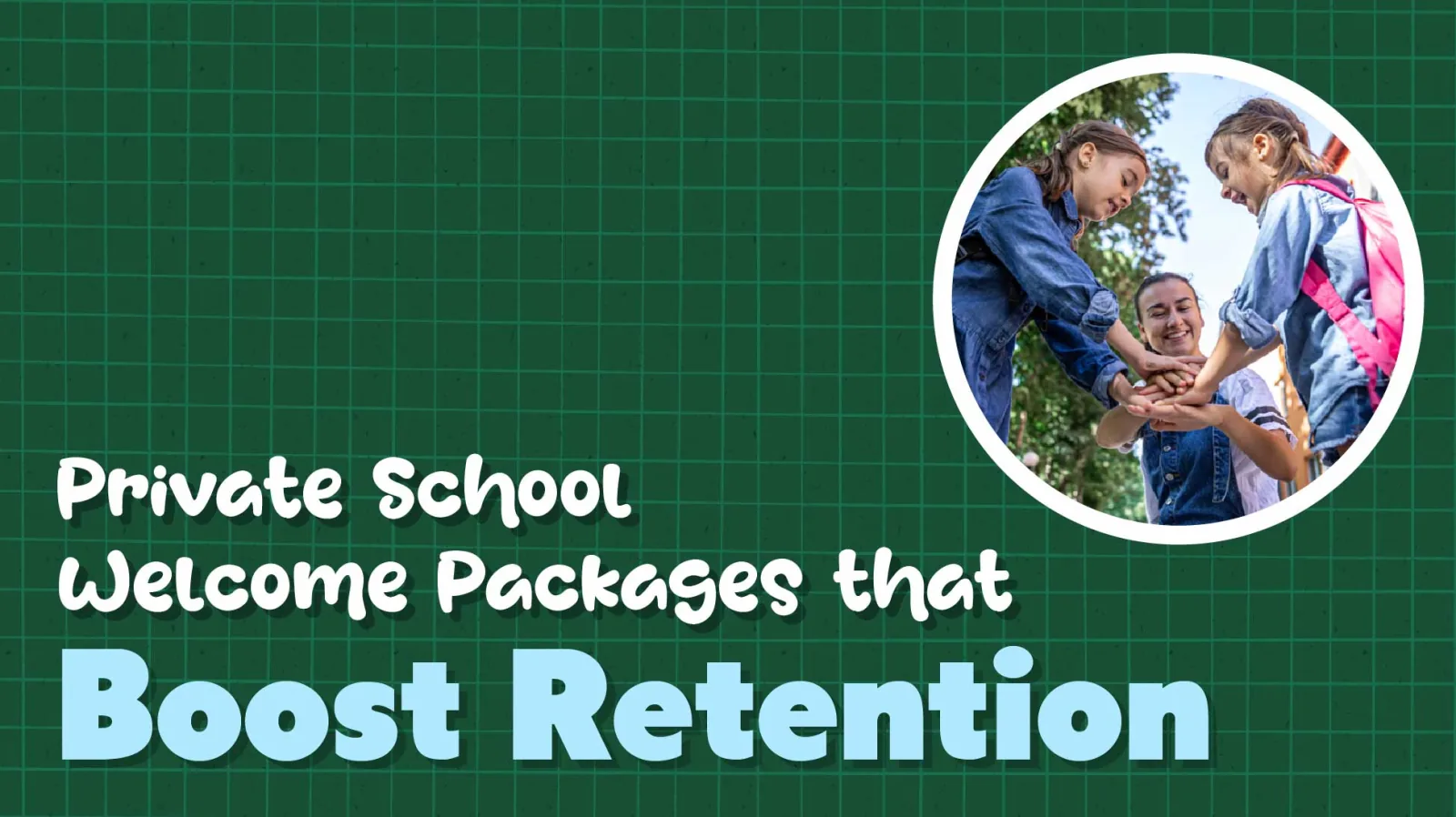
Let's face it—you never get a second chance at a first impression, and in the private school world, that first impression can make the difference between a fully enrolled campus and empty seats that haunt your budget meetings.
As a private school principal juggling more responsibilities than an octopus bartender, you're expected to create a warm, engaging welcome experience for new families while simultaneously managing faculty, handling discipline issues, teaching classes when needed, and somehow finding time to eat lunch (usually while standing).
The humble welcome package—that first tangible connection between your school and new families—often becomes an afterthought, cobbled together with whatever brochures haven't faded in the supply closet and possibly a pen with your school's name spelled incorrectly. Sound familiar?
But here's the good news: creating an exceptional welcome package doesn't require unlimited resources or a dedicated marketing team. With strategic planning and creative resourcefulness, you can develop welcome materials that not only impress new families but also streamline your administrative workload, improve retention, and strengthen your school community—all without breaking your already stretched budget.
According to Ravenna Solutions, "the average industry attrition rate was 10% between 2020 and 2021, meaning 90% student retention." A well-designed welcome process isn't just good hospitality—it's good business. Nielsen reports, "84% of consumers say they either completely or somewhat trust recommendations from family, colleagues, and friends about products." (Source: Roster) This makes those crucial first impressions with new families even more important for your school's word-of-mouth reputation.
In this guide, we'll explore the essential components of an effective welcome package, develop a distribution strategy that maximizes impact, establish practical metrics to measure success, and outline an implementation approach designed specifically for resource-conscious schools. Because when you're trying to provide quality education at an accessible price point, every enrollment interaction matters.
Written By: Adam Bennett | July 09, 2025
Adam is the president and founder of Cube Creative Design and specializes in private school marketing. Since starting the business in 2005, he has created individual relationships with clients in Western North Carolina and across the United States. He places great value on the needs, expectations, and goals of the client.

Are your service pages working as hard as your technicians? If you're using generic pest control content across multiple geographical regions, the answer is probably a resounding "nope."
Generic service pages are like using the same trap for every pest — sometimes they work, but mostly they miss the mark. When potential customers search for pest control in their specific area, they're looking for solutions to their unique regional problems, not a bland nationwide approach that doesn't address their particular pest nightmares.
Creating geographical service pages isn't just about slapping a different city name into the same template. It's about developing targeted content that addresses the distinct pest challenges, seasonal patterns, and regulatory requirements in each region you serve. This approach doesn't just satisfy search engines — it connects with customers who recognize you understand their specific situation.
This guide will walk you through the process of creating high-performing, region-specific service pages that attract more qualified leads, build trust with local customers, and help you comply with the complex web of local regulations in the pest control industry.

Written By: Chad J. Treadway | July 09, 2025
Chad is our Chief Smarketing Officer. He will help you survey your small business needs, educating you on your options before suggesting any solution. Chad is passionate about rural marketing in the United States and North Carolina. He also has several certifications through HubSpot to better assist you with your internet and inbound marketing.
Did you know that 88% of consumers who perform a local search on their smartphone visit or call a business within 24 hours? That's right – almost 9 out of 10 local searchers are ready to take immediate action.
As a home service business owner, your success depends on being visible exactly when local customers need you. Whether they're dealing with a burst pipe at 2 AM or planning a kitchen renovation, your ability to appear in those critical "near me" searches can make or break your growth.
In this comprehensive guide, we'll explore over 50 eye-opening local SEO statistics organized into key categories that will transform how you approach your digital marketing strategy. More importantly, we'll show you exactly how to leverage these insights to attract more leads, book more jobs, and outshine your competition.
Written By: Chad J. Treadway | July 09, 2025
Chad is our Chief Smarketing Officer. He will help you survey your small business needs, educating you on your options before suggesting any solution. Chad is passionate about rural marketing in the United States and North Carolina. He also has several certifications through HubSpot to better assist you with your internet and inbound marketing.
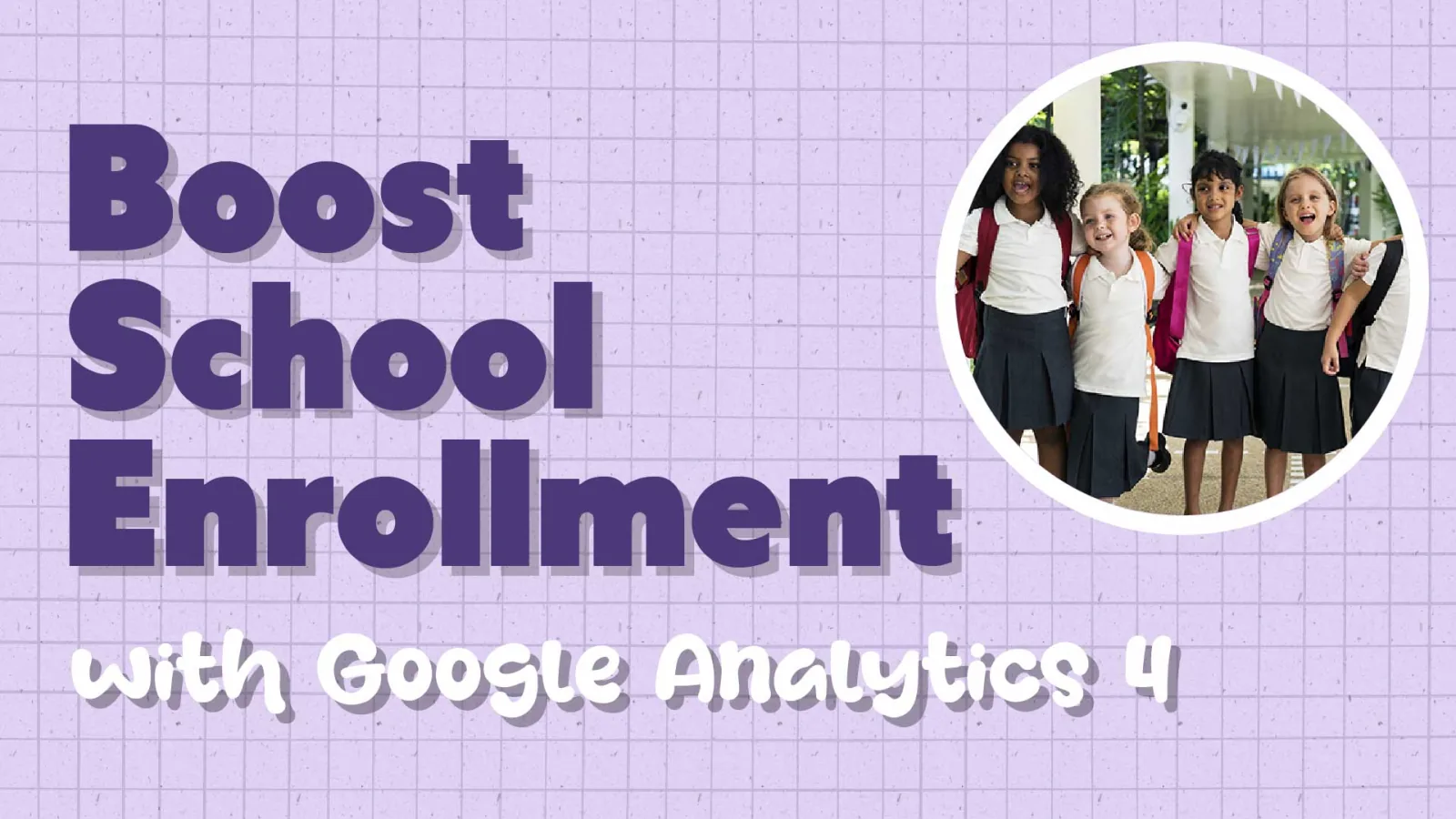
Did you know that over 8 out of 10 parents research schools online before ever making contact? In other words, your school website is an important element when parents are searching for a school. For private schools competing for enrollment, your digital presence isn't just a brochure—it's the front door to your campus. And let's be honest, most visitors are judging your school before they ever set foot on your carefully manicured grounds.
Yet here's the uncomfortable truth: most private schools are flying blind when it comes to understanding how their websites influence enrollment. They've installed Google Analytics but rarely venture beyond the basic dashboard. It's like having a Ferrari and only using it to drive to the grocery store. You paid for 700 horsepower, but you're using about 12 of them to buy milk.
Enter Google Analytics 4 (GA4)—Google's completely revamped analytics platform that officially replaced Universal Analytics in July 2023. While the transition may have felt abrupt (and perhaps painful), GA4 offers private school marketers unprecedented insights into the enrollment journey.
In this guide, I'll walk you through the essential GA4 reports that directly impact your enrollment efforts, without drowning you in technical jargon or expecting you to become an analytics guru overnight. I'll focus on practical strategies that work for small marketing teams and provide clear paths to outsource the technical heavy lifting when needed.
Whether you're a one-person marketing department juggling a dozen responsibilities or you have a dedicated team, this post will help you leverage GA4 to make better enrollment decisions (without needing to get yet another degree that you don't have time for).
Let's face it: your competition is already digging into their data. "50 percent of parents who chose to send their youngest child to a private school in the United States said that a safe environment was the main reason." (Source: Statista) Are you ready to get ahead of the curve, or would you prefer to keep throwing spaghetti at the wall and hoping some of it sticks?
Written By: Adam Bennett | July 07, 2025
Adam is the president and founder of Cube Creative Design and specializes in private school marketing. Since starting the business in 2005, he has created individual relationships with clients in Western North Carolina and across the United States. He places great value on the needs, expectations, and goals of the client.

Ever notice how some home service professionals seem to attract more clients, command higher rates, and build lasting businesses while others struggle to get off the ground? It's not just luck or a fancy truck wrap (though that certainly doesn't hurt). Often, the difference comes down to something that might be sitting in a frame on their office wall: professional certifications.
As someone who's spent years in the trenches of the home services industry, I've seen firsthand how certifications can transform careers and businesses. They're like having a secret key that unlocks doors to better opportunities, higher earnings, and greater customer trust. And no, I'm not just trying to hammer this point home—the data actually backs it up!
Written By: Chad J. Treadway | July 07, 2025
Chad is our Chief Smarketing Officer. He will help you survey your small business needs, educating you on your options before suggesting any solution. Chad is passionate about rural marketing in the United States and North Carolina. He also has several certifications through HubSpot to better assist you with your internet and inbound marketing.
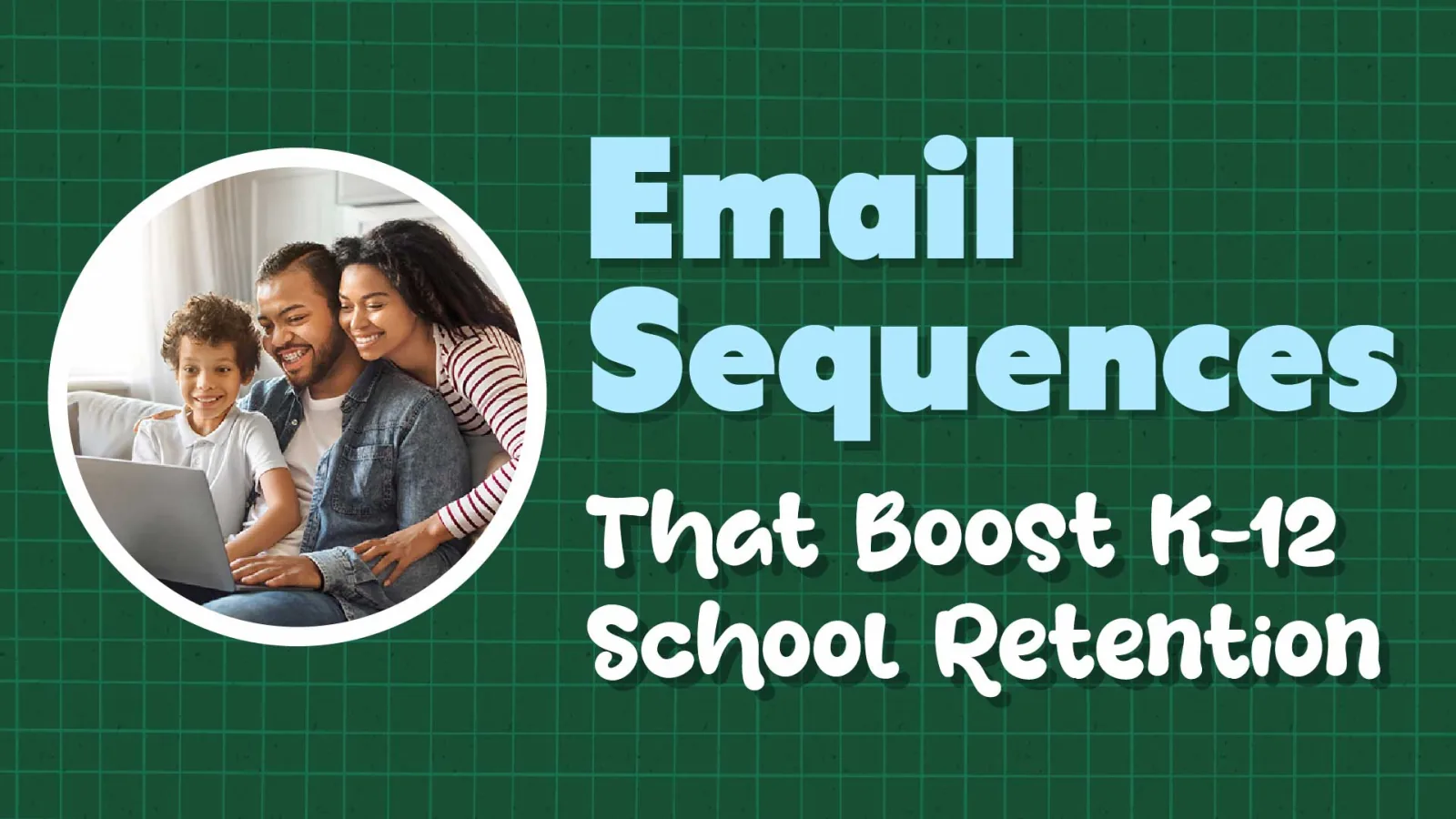
Let me guess: you unlocked the building at 6:45 AM, covered morning traffic duty, taught a class for an absent teacher, gave two campus tours, wrote next month's newsletter, and now, at 8:30 PM, you're finally tackling your actual to-do list. Welcome to the glamorous life of a private school principal, where "marketing director" is just one of the seventeen hats you wear daily.
Here's a radical thought: what if your student retention marketing could run on autopilot while you're busy putting out the daily fires? What if you could create email sequences once and have them work year-round to keep families engaged and committed to returning next year?
The unfortunate truth is that most private schools with limited resources abandon systematic marketing somewhere between "survival mode" and "maybe next semester." With tuition barely covering operational costs and marketing budgets that would make a public school administrator laugh, it's no wonder retention often comes down to crossed fingers and hopeful thinking.
But here's the good news: email marketing sequences can be your secret weapon. In this guide, I'll show you how to create powerful, automated email campaigns that keep families connected, informed, and excited about returning—without requiring a marketing department or technical wizardry. We'll cover the essential sequence structures you need, content frameworks that actually convert, and step-by-step implementation you can handle yourself with limited time and resources.
Written By: Adam Bennett | July 07, 2025
Adam is the president and founder of Cube Creative Design and specializes in private school marketing. Since starting the business in 2005, he has created individual relationships with clients in Western North Carolina and across the United States. He places great value on the needs, expectations, and goals of the client.
Ah, application season—that magical time of year when admissions directors transform into document-hunting detectives, spreadsheet-juggling acrobats, and email-writing machines all at once. If your office resembles a paper hurricane with Post-it notes serving as emergency communication systems, you're not alone in the private school application chaos.
Let's be honest: your traditional application process might be driving away the very families you're hoping to attract. While you're drowning in half-completed forms and playing email tag with prospective parents, your competitors are streamlining their workflows and creating frictionless experiences that make parents say, "Now THAT'S a school that has its act together."
But before you consider a career change to something less stressful (air traffic control, perhaps?), there's hope. HubSpot's forms and workflows aren't just for corporate marketing departments—they're the secret weapon forward-thinking private schools are using to transform their application processes from administrative nightmares into enrollment-generating machines.
I've implemented these systems for private schools nationwide, with remarkable results: significant reductions in processing time, fewer "lost" documents, and impressive increases in completion rates.
In this guide, I'll walk you through exactly how to set up a friction-free application process using HubSpot's powerful tools—no computer science degree required (though a sense of humor helps). By the end, you'll have a roadmap to create an application system that saves your sanity, impresses prospective families, and turns your enrollment process into a competitive advantage.
Ready to leave paper cuts and manual data entry in the past? Let's transform your private school application process.
Written By: Adam Bennett | July 07, 2025
Adam is the president and founder of Cube Creative Design and specializes in private school marketing. Since starting the business in 2005, he has created individual relationships with clients in Western North Carolina and across the United States. He places great value on the needs, expectations, and goals of the client.
The pest control industry is facing a transformative shift in how customers find and choose their service providers.
With Google's AI Overviews now appearing in over 1.5 billion searches monthly (Source: Search Engine Journal), the traditional pathways connecting customers to your pest control business have fundamentally changed. This isn't just another marketing trend—it's a complete rewiring of the customer discovery process.
For pest control professionals, the stakes couldn't be higher. When homeowners discover ants streaming into their kitchen or hear scratching in their attic, they're not casually browsing—they're seeking immediate solutions. And increasingly, AI is determining which pest control companies they call.
This begs the question of how visible is your pest control business when customers use voice search or AI-powered devices?
What You'll Learn in This Guide:
- How AI search engines evaluate and recommend pest control businesses
- Practical strategies to optimize your online presence for voice search and AI Overviews
- Ways to leverage your local expertise to outperform larger competitors
- Step-by-step tactics to implement Answer Engine Optimization for your pest control business
- Future trends that will shape pest control marketing in 2025 and beyond
Written By: Chad J. Treadway | July 07, 2025
Chad is our Chief Smarketing Officer. He will help you survey your small business needs, educating you on your options before suggesting any solution. Chad is passionate about rural marketing in the United States and North Carolina. He also has several certifications through HubSpot to better assist you with your internet and inbound marketing.
Running a pest control business means you're already good at targeting. After all, you find and eliminate pests with precision every day. But when it comes to finding new customers, are you applying that same targeted approach to your advertising?
Pay-per-click (PPC) advertising offers pest control businesses a direct path to connect with homeowners and commercial property managers at the exact moment they're searching for help. While organic SEO plays the long game, PPC helps you show up immediately when someone frantically types "get rid of wasps today" into their phone.
Most pest control businesses face three major marketing challenges: unpredictable seasonal demand, increasing customer acquisition costs, and fierce competition from both national chains and local operators. These challenges create a perfect storm where every marketing dollar needs to work harder. PPC advertising, when executed properly, addresses all three by delivering targeted visibility exactly when potential customers need your services most.
Written By: Chad J. Treadway | July 07, 2025
Chad is our Chief Smarketing Officer. He will help you survey your small business needs, educating you on your options before suggesting any solution. Chad is passionate about rural marketing in the United States and North Carolina. He also has several certifications through HubSpot to better assist you with your internet and inbound marketing.

It's 2:27 PM on a Friday. Your administrative assistant transfers a call from a frustrated parent who insists they never received the field trip permission form due today. Meanwhile, your development director needs to know which families attended last year's fundraising gala (information buried somewhere in last year's spreadsheets), and your admissions team is wondering why the Johnsons, who seemed so enthusiastic during their tour, haven't responded to the last three follow-up emails.
Welcome to the daily chaos of private school family communications – where your office has become the clearinghouse for every student-related interaction while operating on systems designed when "cloud storage" still meant keeping papers in the attic.
Every school administrator knows the feeling: that sinking sensation when faced with a flood of unread emails, missed phone calls from concerned parents, and staff members frantically searching for critical family information right before an important meeting. If your system for managing family data resembles the academic equivalent of the Bermuda Triangle – where information enters but is never seen again – you're not alone. According to Freshworks, 73% of businesses are now using CRM software in 2024, recognizing that scattered information creates operational inefficiencies across organizations.
The consequences of fragmented family communication aren't just administrative headaches – they threaten the very relationships that distinguish your private school:
- Your development office approaches a family for a major donation, unaware that they just expressed serious concerns about their child's academic experience
- The front desk staff has no record that Dad isn't authorized for Thursday pickups due to his new work schedule
- The Spanish-speaking family receives all communications in English – again
- Three different staff members sent nearly identical emails to the same parent group within an hour
Ready to transform your school's approach to family communication? This comprehensive guide will show you how implementing a proper family relationship management system revolutionizes not just how you communicate with families but also how you build lasting relationships that support student success, staff sanity, and ultimately, school growth.
Written By: Adam Bennett | July 07, 2025
Adam is the president and founder of Cube Creative Design and specializes in private school marketing. Since starting the business in 2005, he has created individual relationships with clients in Western North Carolina and across the United States. He places great value on the needs, expectations, and goals of the client.

Let's face it – most school admissions pages leak potential families faster than a chemistry lab sink. Creating a high-converting admissions landing page isn't about design flair or creative whimsy – it's about following a methodical process based on proven conversion principles that actually work in the real world.
While your competitors are still debating font choices in committee meetings, you could be systematically capturing most of the inquiries they're losing with outdated approaches. The difference between mediocre and exceptional landing pages isn't subjective design preferences – it's a strategic formula that transforms casual browsers into excited applicants.
Let's break down this process into manageable steps that will take you from blank slate to conversion powerhouse. No fluff, no theory – just battle-tested tactics that have generated millions in tuition revenue for schools that implemented them correctly.
Written By: Adam Bennett | July 04, 2025
Adam is the president and founder of Cube Creative Design and specializes in private school marketing. Since starting the business in 2005, he has created individual relationships with clients in Western North Carolina and across the United States. He places great value on the needs, expectations, and goals of the client.