
The modern-day home service industry has become extremely competitive, which means capturing every potential client is critical. A common problem is that website visitors often don’t book. Luckily, there is a way you can mitigate such issues, and that’s where the power of remarketing comes in.
In IAB Australia’s survey, 74% of marketers reported that remarketing campaigns increased online conversions, and 55% saw an increase in mobile conversions. (Source: IAB Australia) Such figures only go to show how important remarketing strategies can be for your home service business.
In this post, we’ll help you understand the concept of remarketing, explain why it matters for your home service business, introduce some easy-to-apply strategies, and share some effective tips.

Thank you for contributing a guest post to our platform. To ensure your submission is processed quickly and appears correctly, please follow these guidelines carefully:
Search engine optimization (SEO) and content marketing are often discussed as distinct strategies. In fact, they're interdependent—you can't succeed at content marketing without search visibility, and SEO can't work without valuable content. Together, they form the foundation of a successful digital marketing strategy, drive quality traffic to your site, and convert visitors into repeat customers.
In this article, we demystify SEO and content marketing, explain how they complement each other, and highlight their key differences.

Machine learning has changed many industries, from finance to healthcare and transportation to online search. When machine learning algorithms advance, they need careful use and reliable data to work at their best. That’s where web design and digital marketing take machine learning projects to the next level. By making websites easy to use and bringing in users, web designers and marketers give people the chance to work with quality data and applications. We get improved simulations, stronger products, and companies that are smart about taking care of customers.
In this guide, we will explore key ways web design and marketing complement machine learning initiatives. We’ll uncover how these disciplines work synergistically to enhance machine learning projects through:
- User-centric design principles
- Traffic, engagement, and data collection
- Explainability and trust building
- Accessibility and inclusion
- Education and managing expectations
Along the journey, we’ll highlight relevant statistics, examples from industry leaders, and actionable recommendations for organizations exploring how web design and marketing can maximize their machine learning investments. Let’s get started
Crafting Intuitive Interfaces with User-Centric Design

A model is only as accurate as the data used to train it. For many machine learning in healthcare projects, much of this vital data comes from users interacting with web and mobile applications. Thoughtfully designed interfaces that embrace user-centric principles are essential for collecting quality data.
What exactly is user-centric design? The approach is to deeply understand target users and their goals, behaviors, needs, and limitations before designing an interface. As a result, this empathetic orientation results in intuitive digital experiences that seem easy. Useful data is generated when users can easily provide input to the interface, whether browsing content, entering data, rating, or providing feedback.
Let’s look at some user-centric design strategies that elevate the data collection of machine learning:
Simplifying Complex Tasks
The more variables we are dealing with, the better machine learning is at solving complex problems. Humidity, temperature, wind patterns, and others need to be forecasted over locations and time for weather forecasting. This means that document classification must interpret tone, writing style, keywords, and semantics. Breaking down these complex tasks into simpler steps for the users is what user-centric design does. Do users want to label training documents? One last thing to do is design clear categories and provide annotation guidelines. Want to train users to train an image classifier? Help them trace out important areas and objects. User-centered design allows people to build on top of complex machine learning tasks.
Prioritizing Relevant Information
Not all user inputs are created equal. User-centric design research identifies the most useful data needed to solve a problem. This data is then prominently featured in the interface design. For example, an e-commerce site relying on machine learning for product recommendations must understand user preferences. The information architecture explicitly asks users about favorite brands, categories, and prices while allowing seamless browsing and purchasing. Over time, these relevant inputs strengthen recommendations.
Designing for Accessibility
Ensuring accessibility broadens the user pool and generates more diverse training data. User-centric design is about how people with auditory, visual, motor, and cognitive disabilities will interact with an interface. Best practices include writing alt text for images, having good color contrast around form fields, labeling form fields correctly, and allowing navigation via keyboard or voice. By designing for accessibility right from the beginning, we ensure that more users get to make use of an interface and give input.
Overall, embracing user-centric design means machine learning systems are trained on higher quality, more relevant data from a wider population of users. But crafting an intuitive interface is only the first step. We still need users themselves. This is where digital marketing enters the picture.
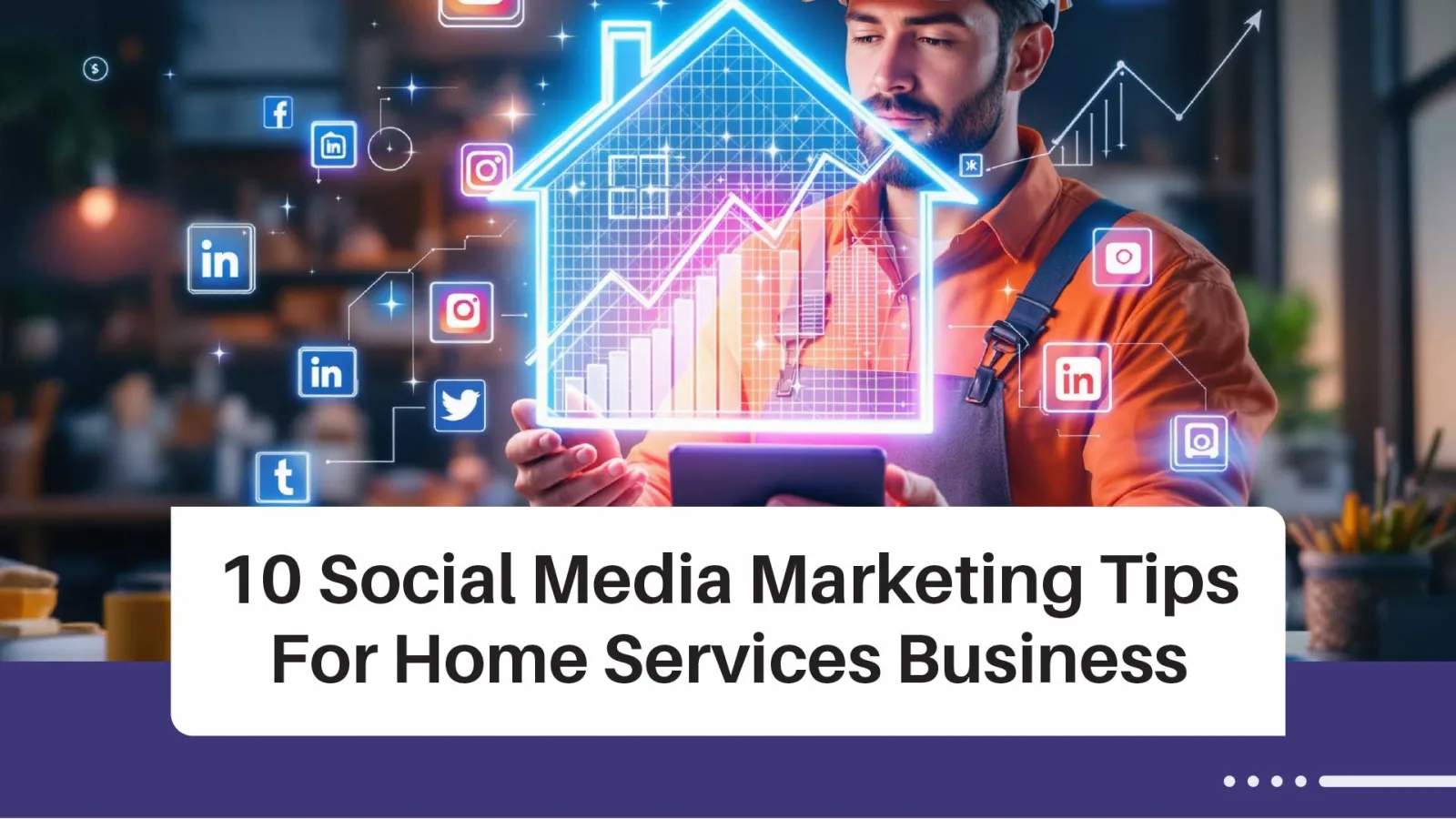
First, identify your target audience in your service area. Start by creating buyer personas - they're essential for successful inbound marketing. With 88% of social media usage now happening on mobile devices, understanding how and where your potential customers interact with social media is crucial.
Use social platforms as research tools to:
- Track relevant local hashtags
- Monitor competitor activities
- Follow industry leaders
- Engage with community groups

Written By: Hannah Kilpatrick | May 28, 2025
Hannah Kilpatrick Cube Creative DesignHannah Kilpatrick graduated from Western Carolina University in 2021 with a Bachelor of Science in Communication with a Minor in Marketing and a Concentration in Public Relations. She has been around social media since its creation. (Meaning, she was in the first grade when Facebook became available to the general public.) As our very own professional Gen-Z, Hannah is a whiz when it comes to social media creation and paid advertising.

Let's be honest – those alumni of yours aren't just former students with fond memories and potentially deep pockets. They're walking, talking billboards for your school's success. The problem? Most private schools treat alumni relations like that awkward cousin at family reunions – acknowledged but rarely engaged in meaningful conversation.
Time to change that narrative. Your alumni are arguably your most valuable marketing asset – living proof that your educational approach works. So, why are so many schools struggling to keep these golden geese engaged? Probably because planning and marketing alumni events requires more strategy than sending out a "Hey, remember us?" email once a year.

Written By: Adam Bennett | May 28, 2025
Adam is the president and founder of Cube Creative Design and specializes in private school marketing. Since starting the business in 2005, he has created individual relationships with clients in Western North Carolina and across the United States. He places great value on the needs, expectations, and goals of the client.
Are pesky competitors outranking you on Google faster than termites through old wood? You're not alone! In the pest control industry, local search visibility can be the difference between a calendar crawling with appointments and one that's as empty as a roach trap in a clean kitchen.
Let's face it—the pest control market is swarming with competition. In every service area, multiple exterminators are battling for the same customers who frantically search "termite inspection near me" or "emergency wasp nest removal." And just like how those clever rodents find new ways into homes, your competitors are finding new ways to climb up the search rankings.
But there's a powerful solution that many pest control companies haven't yet discovered: Semantic SEO. It's not just about stuffing your website with keywords like "best pest control" or "ant extermination" anymore. Today's search engines are smarter than that—they understand context, user intent, and the relationships between topics, much like how you understand the relationship between moisture problems and termite infestations.
For pest control businesses, mastering semantic SEO means you'll not only boost your visibility when desperate homeowners search for emergency service, but you'll also establish yourself as the local authority on everything from preventative treatment to specific pest identification. By the end of this article, you'll understand how to implement a semantic strategy that helps your pest control business rise through the rankings faster than flies to a forgotten fruit bowl.

Written By: Chad J. Treadway | May 28, 2025
Chad is our Chief Smarketing Officer. He will help you survey your small business needs, educating you on your options before suggesting any solution. Chad is passionate about rural marketing in the United States and North Carolina. He also has several certifications through HubSpot to better assist you with your internet and inbound marketing.

Let's face it – when your potential customers need a plumber at 2 AM because their toilet is overflowing or an HVAC specialist during the hottest day of summer, they're not exactly thrilled about inviting strangers into their homes. Building a credible and trustworthy reputation for your home service business isn't just nice to have – it's essential for generating service calls, long-term clients, and actual revenue.
And if you're not entirely convinced that trust plays a role in helping organizations thrive, check out the latest research.
According to the 2024 PWC Trust in US Business Survey, 95% of business executives agree that organizations have a responsibility to build trust – up from 92% in 2023. The numbers for consumers and employees are nearly as high, at 92% and 94%, respectively. There isn't just a moral case for building trust – there's a business case as well, with 93% of business executives agreeing that the ability to build and maintain trust improves the bottom line.
For home service businesses specifically, the stakes are even higher:
- 9 out of 10 consumers (about 90%) say they consider reviews when making a purchase decision (Source: PowerReviews)
- 88% of buyers pick a business that responds to all of its reviews, while just 47% would pick one that doesn't reply to reviews at all. (Source: Synup)
- According to GatherUp, “Businesses that respond to reviews are seen as 1.7X more trustworthy than businesses that don't.”
So, if you're looking for strategies that will allow you to build trust, you might want to invest in design tactics that will achieve the desired results.
Everyone knows about trust-building design strategies like using customer testimonials or displaying your BBB rating. But, if you wish to maximize your home service brand's credibility, you must take a more advanced approach to developing service pages in a way that will effectively communicate dependability and expertise.
So, if you're ready to go the extra mile with trust-inspiring design, the following tactics will help you generate maximum credibility for your plumbing, HVAC, electrical, or other home service business.
Written By: Adam Bennett | May 26, 2025
Adam is the president and founder of Cube Creative Design and specializes in private school marketing. Since starting the business in 2005, he has created individual relationships with clients in Western North Carolina and across the United States. He places great value on the needs, expectations, and goals of the client.

Let's face it—the digital marketing world is always buzzing with news of "catastrophic" changes that will supposedly exterminate your online visibility overnight. As someone who's been in the pest control marketing trenches, I've seen more algorithm "apocalypses" than a pest technician has seen cockroaches. And yet, here we are, still connecting quality pest services with homeowners in need.
The recent Google algorithm changes in 2024 have certainly created quite a stir in the SEO community. From the complex March 2024 core update affecting multiple systems to the August 2024 update that caused significant ranking fluctuations, it's been a year of adjustment for many websites. Add in the swirling rumors about Chrome's privacy changes and emerging AI-generated search results, and it's enough to make any pest control business owner feel like they're dealing with a digital infestation of uncertainty.
But here's the good news: Amid all this change, one strategy remains rock-solid—creating high-quality, relevant pest control content that genuinely helps your potential customers. This approach isn't just resistant to algorithm shifts; it actively benefits from them. And that's what we're going to explore today.
Written By: Chad J. Treadway | May 26, 2025
Chad is our Chief Smarketing Officer. He will help you survey your small business needs, educating you on your options before suggesting any solution. Chad is passionate about rural marketing in the United States and North Carolina. He also has several certifications through HubSpot to better assist you with your internet and inbound marketing.

Let's face it – your alumni are walking, talking advertisements for your school. They've lived the experience you're selling to prospective families, and unlike your beautifully designed viewbook, they can answer the question, "But what's it really like there?" with hard-earned authenticity.
Yet, according to recent research, 90% of alumni professionals admit they do a "poor job" or "need to do more" to engage their young alumni. (Source: Alumniaccess) That's like owning a Ferrari and letting it collect dust in your garage while you take the bus to work.
Alumni ambassador programs represent one of the most underutilized weapons in a private school's marketing arsenal. Done right, they create a powerful network of advocates who can influence prospective families, mentor current students, and even boost your fundraising efforts. Let's explore how to build and maintain an alumni ambassador program that delivers real results.
Written By: Adam Bennett | May 26, 2025
Adam is the president and founder of Cube Creative Design and specializes in private school marketing. Since starting the business in 2005, he has created individual relationships with clients in Western North Carolina and across the United States. He places great value on the needs, expectations, and goals of the client.
Ever feel like your home service business website is playing an endless game of hide and seek with potential customers—except they never actually find you? You're not alone. While you're out unclogging pipes, fixing furnaces, or patching roofs, your website might be stuck in the dark corners of page 2 (or worse, page 10) of local search results. And we all know what they say about page 2 of Google—it's the best place to hide a dead body!
For home service businesses, being invisible online isn't just annoying—it's downright expensive. Every day, your website doesn't connect with local homeowners in need, you're missing out on service calls, emergency repairs, and those sweet, sweet repeat customers who keep your business flowing (pun absolutely intended for you plumbers out there).
But here's the good news: with the right content strategy and local SEO approach, your service business can rise through the rankings faster than a backed-up sink during a holiday dinner party. In this guide, we'll break down exactly how to craft content that not only ranks well in local searches but actually converts those "help, my toilet is overflowing!" panic-googlers into loyal, paying customers.
So grab your digital toolbox—it's time to fix your website's visibility problem once and for all.
Written By: Chad J. Treadway | May 21, 2025
Chad is our Chief Smarketing Officer. He will help you survey your small business needs, educating you on your options before suggesting any solution. Chad is passionate about rural marketing in the United States and North Carolina. He also has several certifications through HubSpot to better assist you with your internet and inbound marketing.
Are pests the only thing your marketing efforts are exterminating? In a world where every pest control company is frantically competing for the same digital real estate, traditional marketing techniques are crawling back into the spotlight – and for good reason.
The pest control industry is booming, projected to reach a staggering $42.5 billion by 2032 with a steady growth rate of 5.7% annually, according to Allied Market Research. This growth isn't just because pests are becoming more problematic – it's because smart pest control companies are discovering that the most effective marketing strategies don't just live online.
While digital marketing has dominated the conversation for years, many successful pest control operators are finding that offline marketing techniques provide unique advantages that digital simply can't match. From establishing local trust to creating tangible brand experiences, traditional marketing methods are experiencing a renaissance in the pest control industry.
In this article, we'll explore how offline marketing for pest control is making a powerful comeback and why the most successful companies are adopting a hybrid approach that leverages the best of both traditional and digital strategies. We'll uncover proven techniques that help you create meaningful connections with your local community and turn prospects into long-term customers. After all, when it comes to building a thriving pest control business, you don't want to leave any stone (or marketing channel) unturned.
Written By: Adam Bennett | May 21, 2025
Adam is the president and founder of Cube Creative Design and specializes in private school marketing. Since starting the business in 2005, he has created individual relationships with clients in Western North Carolina and across the United States. He places great value on the needs, expectations, and goals of the client.

Let's face it—your alumni are walking, talking advertisements for your school, yet most private institutions treat these golden geese like they're one-hit wonders, good for the occasional donation and not much else. If that sounds painfully familiar, you're not alone.
The achievements and success stories of your alumni are direct reflections of your school's excellence in holistic education. Their names are forever linked with your school's brand and their successes. In today's competitive educational landscape, parents aren't just looking at your fancy new science lab or soccer field—they're looking at outcomes. And your alumni? They are your outcomes..
The statistics paint a sobering picture. According to TeamWorks Media, “100% of the alums we’ve asked view an email, phone call or direct mail piece from their alma mater as an ask for money BEFORE they even open it.” Talk about a relationship killer. It's the educational equivalent of only calling your friend when you need to borrow cash—eventually, they stop picking up.
What if, instead, you built a framework that transformed your graduates from occasional donors into passionate advocates? What if your alumni success stories became your most powerful marketing tool, recruitment strategy, and community-building engine?
That's exactly what we're going to explore.
Written By: Adam Bennett | May 21, 2025
Adam is the president and founder of Cube Creative Design and specializes in private school marketing. Since starting the business in 2005, he has created individual relationships with clients in Western North Carolina and across the United States. He places great value on the needs, expectations, and goals of the client.