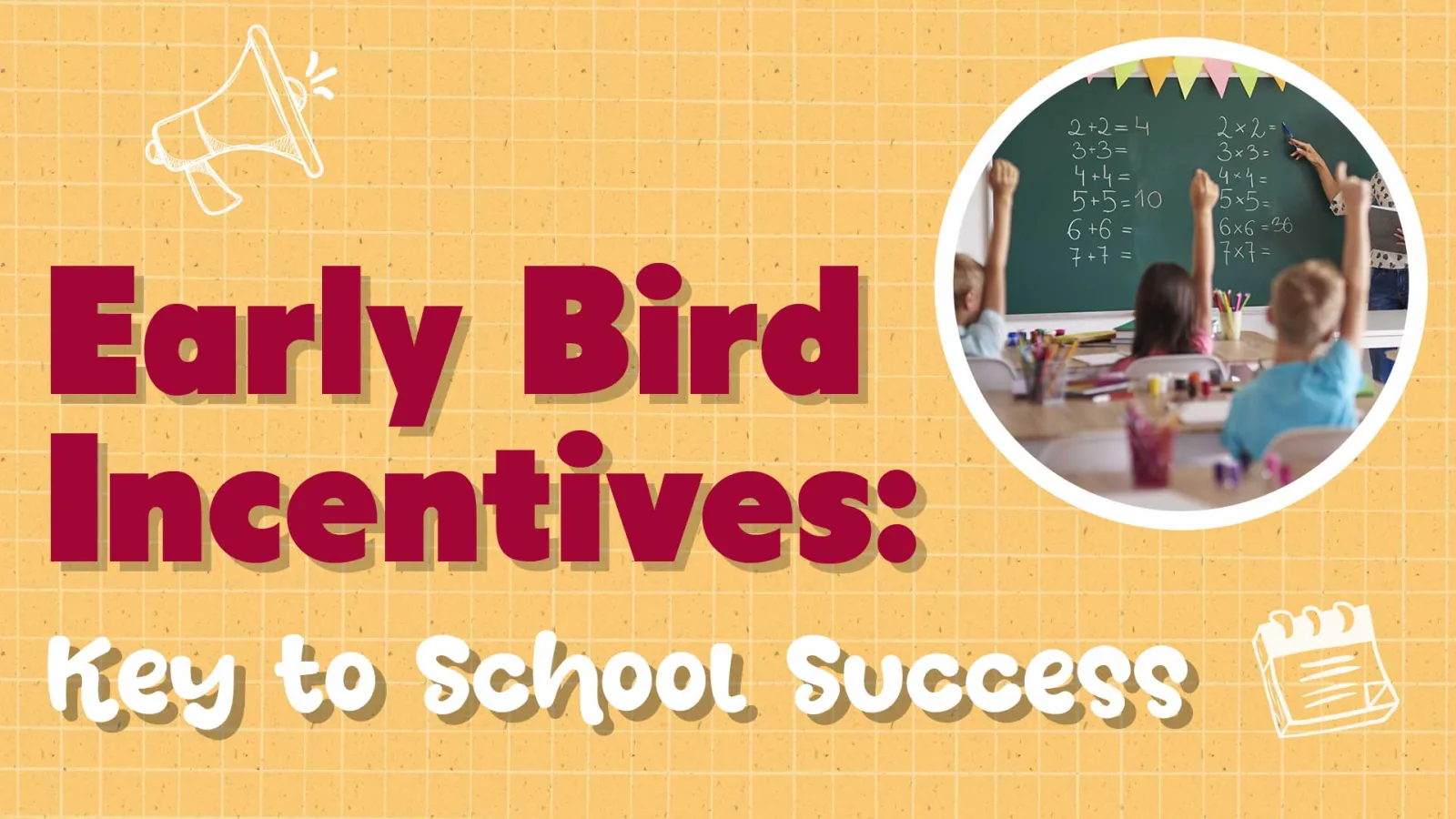
Let's face it—private school admissions aren't getting any easier. Between rising costs, increased competition, and parents who've suddenly become expert negotiators (thanks, internet), securing strong enrollment numbers early can feel like herding cats... in the rain... uphill. Enter early bird incentive programs: strategic discount structures designed to motivate families to commit sooner rather than later.
But wait, you might ask, "Why would I discount tuition when we're already struggling with budgets?" Fair question. The answer lies in the financial psychology that drives decision-making. Early commitments reduce uncertainty, improve cash flow projections, and create momentum in your enrollment funnel. Plus, they transform your typical last-minute enrollment scramble into a more dignified, predictable process—something your admissions team will thank you for when they're not surviving on coffee and anxiety during the summer months.

Picture this: You're an exceptional plumber, roofer, or HVAC specialist. Your work is top-notch, your customers love you, and your rates are fair. There's just one tiny problem – when potential customers in your service area search online, your website is buried deeper than a water main in January. Meanwhile, those big national chains with their flashy commercials and generous marketing budgets are hogging the spotlight like a leaky faucet hogs your attention at 2 AM.
Sound familiar? If you're nodding so hard that you're risking whiplash, you're not alone. For small service area businesses, getting found online often feels like trying to fix a complex electrical issue with nothing but a butter knife and good intentions – frustrating and unlikely to end well.
But here's the good news: You don't need the massive marketing budget of those national competitors to climb the rankings ladder. What you need is a strategic approach to Search Engine Optimization (SEO) that's specifically tailored to home service businesses operating in defined service areas.
In this guide, we'll uncover practical, actionable SEO strategies that will help your business rise through the ranks and get found by the people who actually need your services. From optimizing your Google Business Profile to building a network of local backlinks, we've got you covered with approaches that won't require a second mortgage to implement. Let's turn those search engines from gatekeepers into doormen who usher customers straight to your digital doorstep.

Written By: Chad J. Treadway | April 21, 2025
Chad is our Chief Smarketing Officer. He will help you survey your small business needs, educating you on your options before suggesting any solution. Chad is passionate about rural marketing in the United States and North Carolina. He also has several certifications through HubSpot to better assist you with your internet and inbound marketing.

Since ChatGPT and other generative AI models burst onto the scene in late 2022, SEO has witnessed a seismic shift. We have yet to see people's sci-fi fantasies of human-like machines, but what we do have is changing the SEO game completely.
These tools don't just automate tedious tasks; they fundamentally change how we approach search optimization. The AI-powered SEO landscape of 2025 goes far beyond basic keyword matching. Today's tools understand context, user intent, and content quality almost as well as humans do.
While ChatGPT and Claude might have been your first step into AI-assisted SEO, their skyrocketing popularity comes with good reason. These models do more than just generate text. They help with keyword-rich content creation, content structuring, and even metadata optimization.
With the right prompts and integrations, ChatGPT can assist in keyword research, internal linking, and search intent analysis, while Claude AI is excellent at producing well-organized, high-quality content that aligns with user queries.
While these tools are powerful, if you're looking for AI tools that go beyond content creation and focus on ranking strategies, competitor analysis, and real-time optimization, here are five worth your time this year.
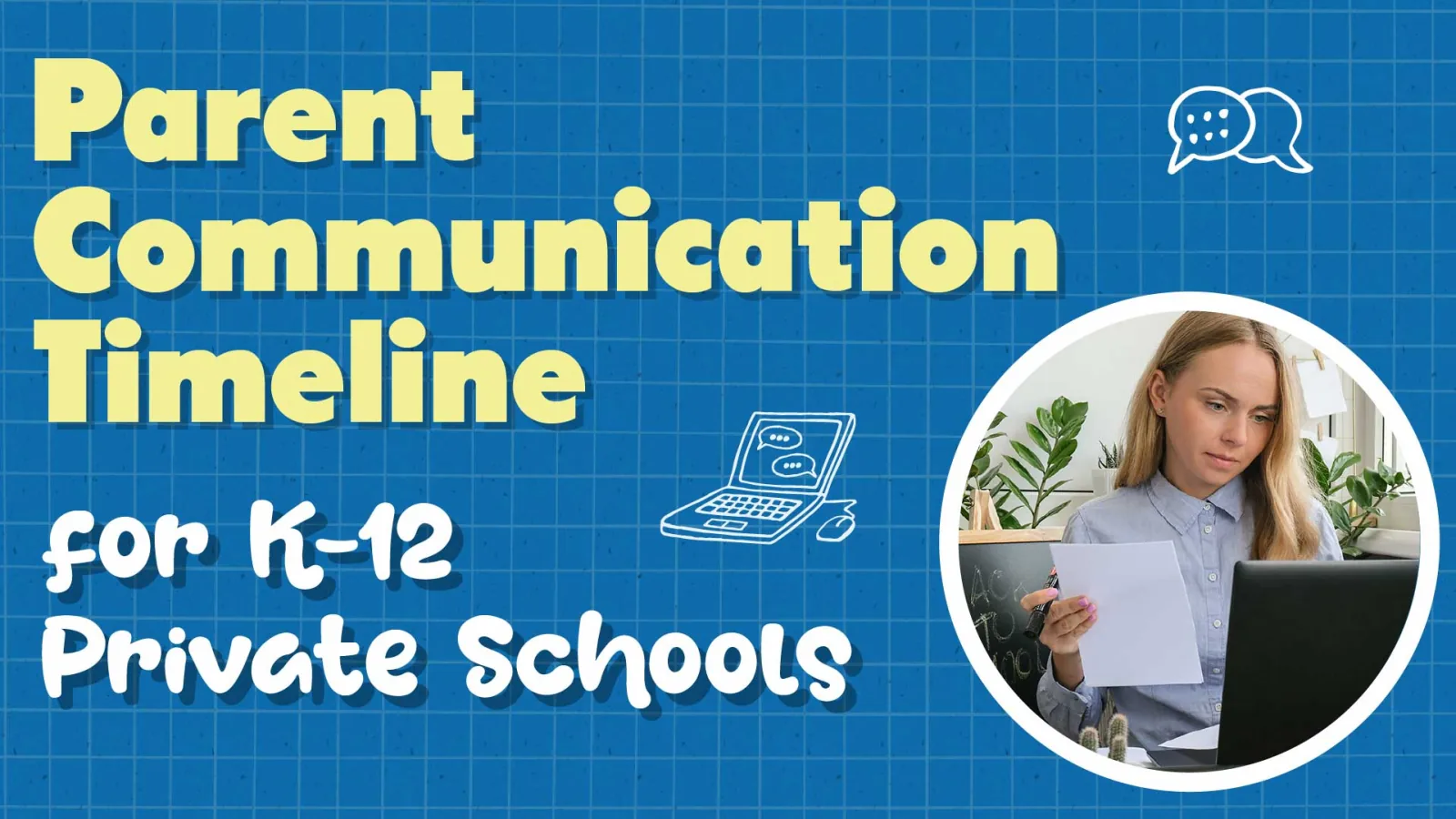
Let's face it - most private schools have mastered the art of education but remain surprisingly awkward when communicating with prospective parents. As if reaching out to potential customers (yes, that's what they are) requires some ancient ritual only the admissions team understands. The truth? A strategic parent communication timeline is the difference between a thriving enrollment funnel and watching families ghost you faster than a middle schooler avoiding homework.
Research shows that families considering private education typically interact with a school 7-12 times before making an enrollment decision. Yet, many institutions operate with a communication strategy that consists of "respond when contacted" and "send that one email we wrote in 2017." Not exactly a recipe for success in today's competitive landscape.
This guide breaks down the essential elements of an effective parent communication timeline - from initial awareness through the final decision - with practical strategies any private school can implement. Let's transform your parent outreach from random acts of communication to a strategic enrollment driver.

If pests took vacations, your job would be easier—but they don't, they just change their habits! Every successful pest control operation understands that Mother Nature doesn't follow a simple calendar, and neither should your business strategy. Seasonal planning isn't just beneficial—it's essential for pest control companies looking to maintain consistent revenue, optimize resource allocation, and deliver exceptional service year-round.
When temperatures rise or fall, pest activities shift dramatically. Rodents that weren't a problem in summer suddenly seek warm shelter in autumn. Mosquitoes that dominated your service calls in July become scarce by October. Without proper planning, these natural cycles can leave your business scrambling to adjust, potentially missing revenue opportunities or wasting resources on unnecessary preparations.
This guide will walk you through creating a comprehensive seasonal operations plan that keeps you one step ahead of both the pests and your competition. When it comes to pest control, those who fail to plan might as well plan to fail—and that's a situation no business wants to get "bugged" by.
Written By: Chad J. Treadway | April 16, 2025
Chad is our Chief Smarketing Officer. He will help you survey your small business needs, educating you on your options before suggesting any solution. Chad is passionate about rural marketing in the United States and North Carolina. He also has several certifications through HubSpot to better assist you with your internet and inbound marketing.

Let's talk about the elephant in your admissions office: your tuition page has one of the highest bounce rates on your entire school website. In fact, studies show that while tuition pages are among the most visited pages, they're also where you're hemorrhaging potential applicants faster than a freshman trying to escape math class.
The problem isn't that you're sharing tuition information—it's how you're sharing it. Most schools treat tuition pages as purely transactional, missing golden opportunities to convert information-seekers into serious inquirers. It's like setting up a lemonade stand but forgetting to mention that your lemons are organic, hand-picked, and come with free refills.
The good news? With strategic school tuition page optimization, you can transform this high-traffic page from a conversion killer into an enrollment-generating machine. These five proven strategies will help you reframe cost concerns, demonstrate value, and guide prospects toward meaningful next steps.

Written By: Adam Bennett | April 16, 2025
Adam is the president and founder of Cube Creative Design and specializes in private school marketing. Since starting the business in 2005, he has created individual relationships with clients in Western North Carolina and across the United States. He places great value on the needs, expectations, and goals of the client.
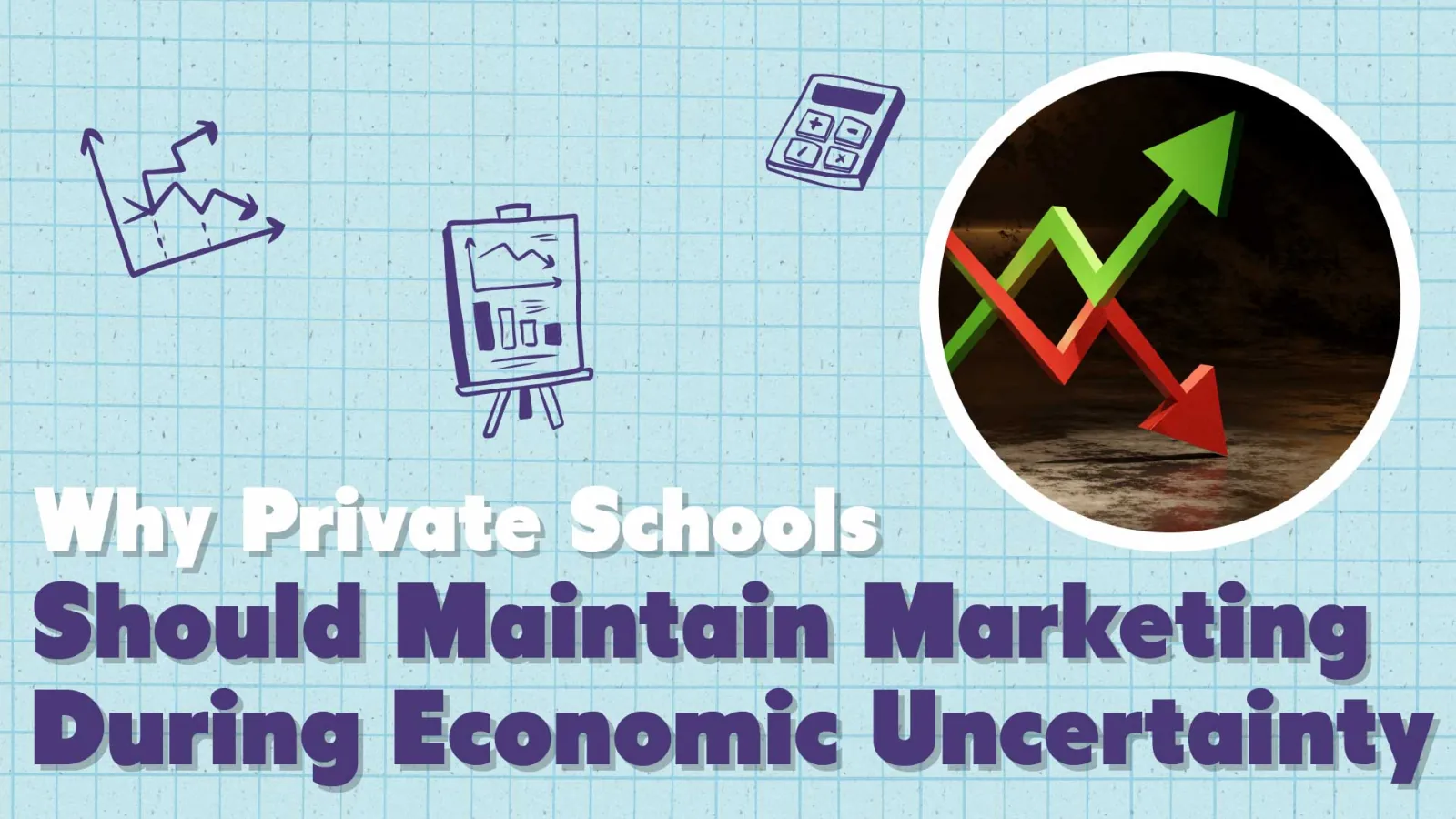
Private schools across the nation are facing a challenging economic landscape in 2025. Recent tariff implementations, international trade tensions, and lingering inflationary pressures have created market uncertainty affecting all sectors of the economy—including education. As school administrators review budgets, marketing expenses often become an easy target for cuts.
But is reducing your school's marketing presence the right move during economic uncertainty? History, market data, and the blood-stained ledgers of institutions that made this fatal mistake all suggest otherwise.
The typical reaction during economic uncertainty is to batten down the hatches and cut "non-essential" spending. Marketing budgets are often first on the chopping block. But here's the contrarian truth: economic downturns are precisely when your marketing should be maintained—or even expanded. It's like deciding to remove your car's headlights just because you're driving into fog.
Written By: Adam Bennett | April 14, 2025
Adam is the president and founder of Cube Creative Design and specializes in private school marketing. Since starting the business in 2005, he has created individual relationships with clients in Western North Carolina and across the United States. He places great value on the needs, expectations, and goals of the client.
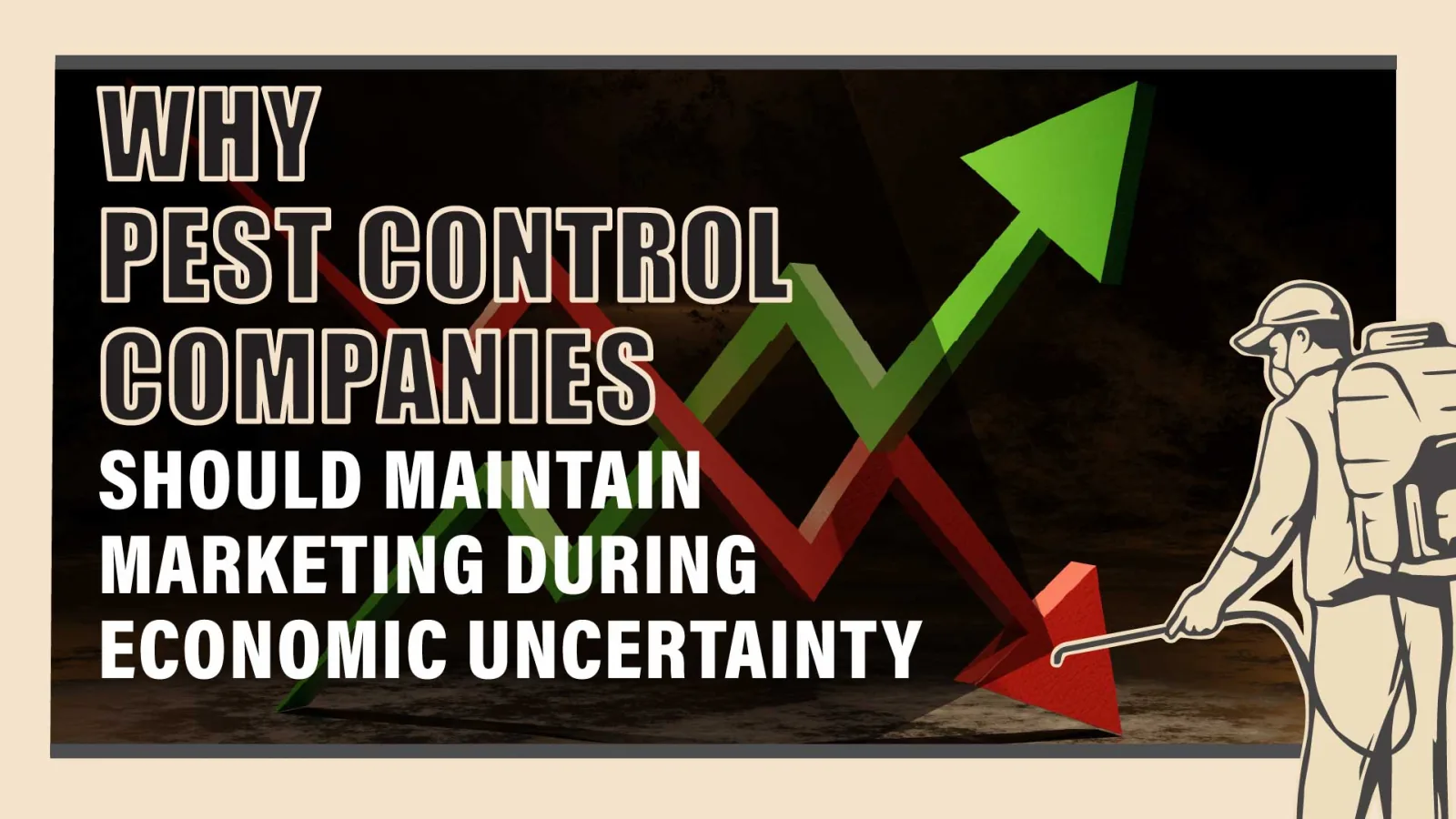
Pest control companies across the nation are facing a challenging economic landscape. Recent tariff implementations and international trade tensions have created market uncertainty that affects all sectors of the economy, including the home services industry. As pest control business owners review budgets, marketing expenses often become an easy target for cuts.
But is reducing your pest control company's marketing presence the right move during economic uncertainty? History and market data suggest otherwise.
Written By: Adam Bennett | April 14, 2025
Adam is the president and founder of Cube Creative Design and specializes in private school marketing. Since starting the business in 2005, he has created individual relationships with clients in Western North Carolina and across the United States. He places great value on the needs, expectations, and goals of the client.

You just left a potential client's home after giving them a quote for that bathroom remodel, HVAC installation, or other service they desperately need. The conversation went smoothly—they nodded at all the right times, asked good questions, and even mentioned how their neighbor used a "subpar competitor" who left them disappointed. All signs point to a win, right?
Then you get back to your truck, stare at your phone, and the paralysis sets in. What now? Follow up immediately and risk looking desperate? Wait a week and potentially lose their interest to the three other service providers they're probably calling? Send an email? Text? Carrier pigeon?
If this anxiety-inducing scenario sounds familiar, you're in good company. The follow-up game is where even the most skilled home service professionals often fumble the ball. According toMTD Sales Training, 80% of successful sales require FIVE follow-up contacts before closing, yet most service providers give up after just one or two attempts. This aligns with our findings oneffective marketing strategies for small businesses, where consistent follow-up is key to success.
In the home service industry, where competition is fierce and homeowners can easily get multiple quotes with a few taps on their smartphone, mastering the art of the follow-up isn't just helpful—it's the difference between a thriving business and one that's barely making payroll. Consider this: without effective follow-up, you're potentially missing out on 98% of your possible sales.
In this post, I'll walk you through exactly how to transform your follow-up process from an awkward afterthought into a systematic sales machine that keeps your schedule full and your business growing. No fluff, no generic advice—just battle-tested strategies specifically for home service professionals who want to convert more of those promising meetings into paying clients.
Written By: Chad J. Treadway | April 14, 2025
Chad is our Chief Smarketing Officer. He will help you survey your small business needs, educating you on your options before suggesting any solution. Chad is passionate about rural marketing in the United States and North Carolina. He also has several certifications through HubSpot to better assist you with your internet and inbound marketing.
"The sky is falling! SEO is dead!" Every few months, the digital marketing world erupts with apocalyptic predictions about the latest Google update. Remember when mobile-first indexing was going to destroy rankings? Or when voice search was supposedly making traditional SEO obsolete? How about when Chrome announced privacy changes that had marketers panicking?
Yet here we are, with SEO still standing—and still driving valuable traffic and customers for home service businesses across the board.
While it's true that Google's latest algorithm updates have made the search landscape more dynamic than ever (with four core updates and three spam updates in 2024 alone!), one constant remains: Quality content continues to be the foundation of sustainable SEO success.
SEO expert Barry Schwartz, with Search Engine Land, said, "Google launched seven official and confirmed algorithmic updates in 2024, four core updates and three spam updates." Despite this constant evolution, businesses with strong content foundations have continued to thrive.
For home service businesses—whether you're in landscaping, house cleaning, renovation, painting, window installation, interior design, or any other home-related field—understanding this principle isn't just academically interesting; it's essential for survival in competitive local markets where visibility can make or break your business.
Written By: Chad J. Treadway | April 14, 2025
Chad is our Chief Smarketing Officer. He will help you survey your small business needs, educating you on your options before suggesting any solution. Chad is passionate about rural marketing in the United States and North Carolina. He also has several certifications through HubSpot to better assist you with your internet and inbound marketing.
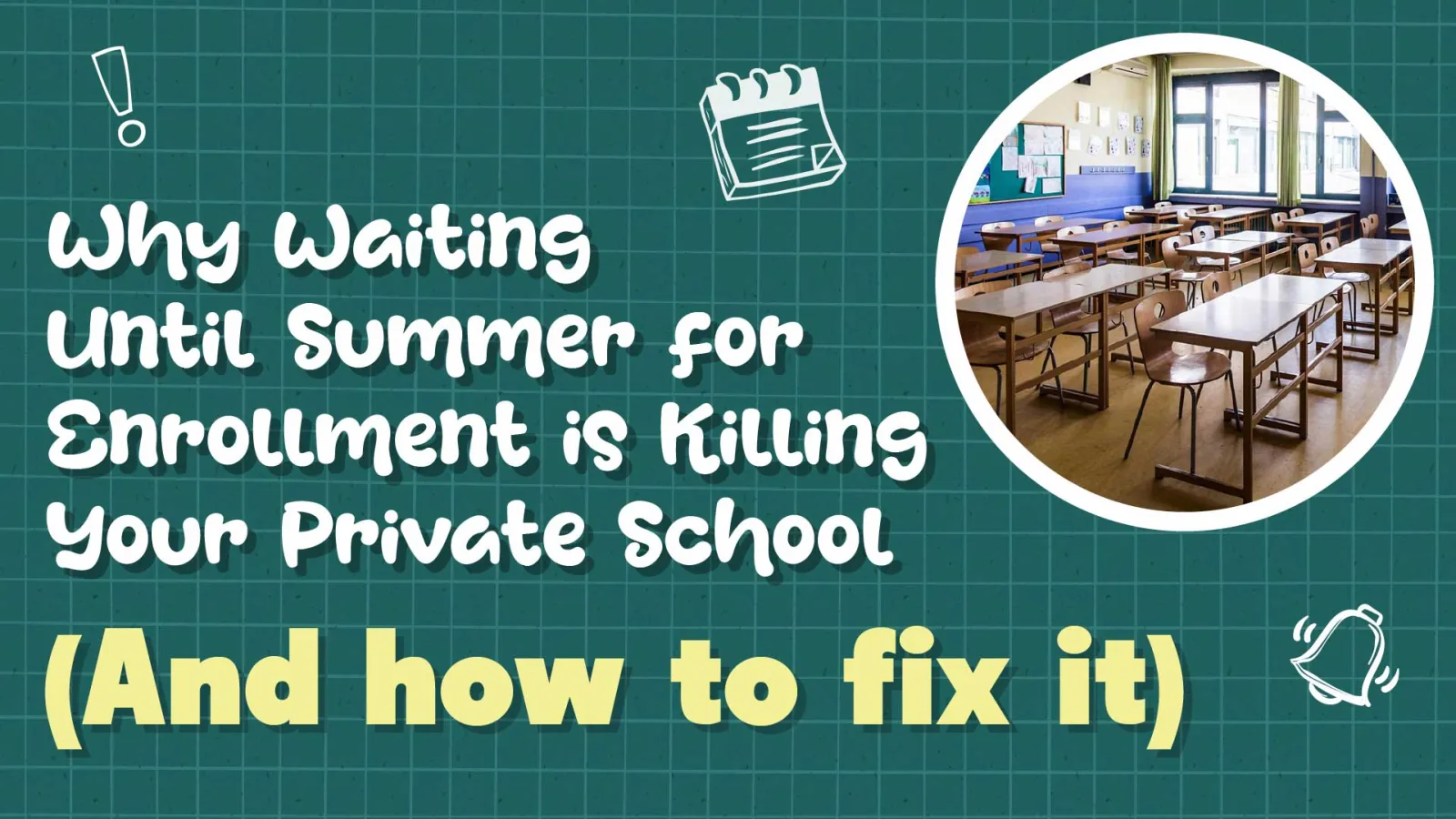
In the increasingly competitive landscape of private education, the early enrollment period isn't just a procedural formality—it's a strategic goldmine. Schools that master the art of early enrollment don't just fill seats; they create momentum, stabilize finances, and build a foundation for sustainable growth.
Let's be honest: waiting until summer to wonder if you'll have enough students come fall is about as strategic as hoping for rain during a drought. You could get lucky, but wouldn't you rather have an irrigation system in place? That's what an effective early enrollment strategy provides.
The statistics tell the story: private schools with structured early enrollment programs typically secure most of their student body by early spring, compared to just less than half for schools without such strategies. This enrollment certainty doesn't just ease administrative anxiety—it translates to concrete benefits:
- Financial stability through predictable revenue streams
- Strategic hiring based on confirmed enrollment numbers
- Curriculum planning with real student numbers in mind
- Marketing resources that can be redirected to other initiatives
- Competitive advantage in markets with multiple private school options
This playbook isn't about incremental improvements to your existing enrollment process. It's about fundamentally reimagining how you approach the enrollment cycle to create a system that drives results year after year.
Written By: Adam Bennett | April 14, 2025
Adam is the president and founder of Cube Creative Design and specializes in private school marketing. Since starting the business in 2005, he has created individual relationships with clients in Western North Carolina and across the United States. He places great value on the needs, expectations, and goals of the client.

In today’s crowded marketplace, customers have an almost limitless array of options when it comes to home services. With such an abundance of choices, consumers now expect home service businesses to consistently deliver a high level of service. What happens if they don’t? The customer has no problem finding another provider.
Salesforce Research surveyed 14,300 consumers and business buyers globally and found that 80% of customers now consider the experience a company provides to be as important as its products and services.
If you want to know what you can do to meet customer expectations, keep reading for top tips.