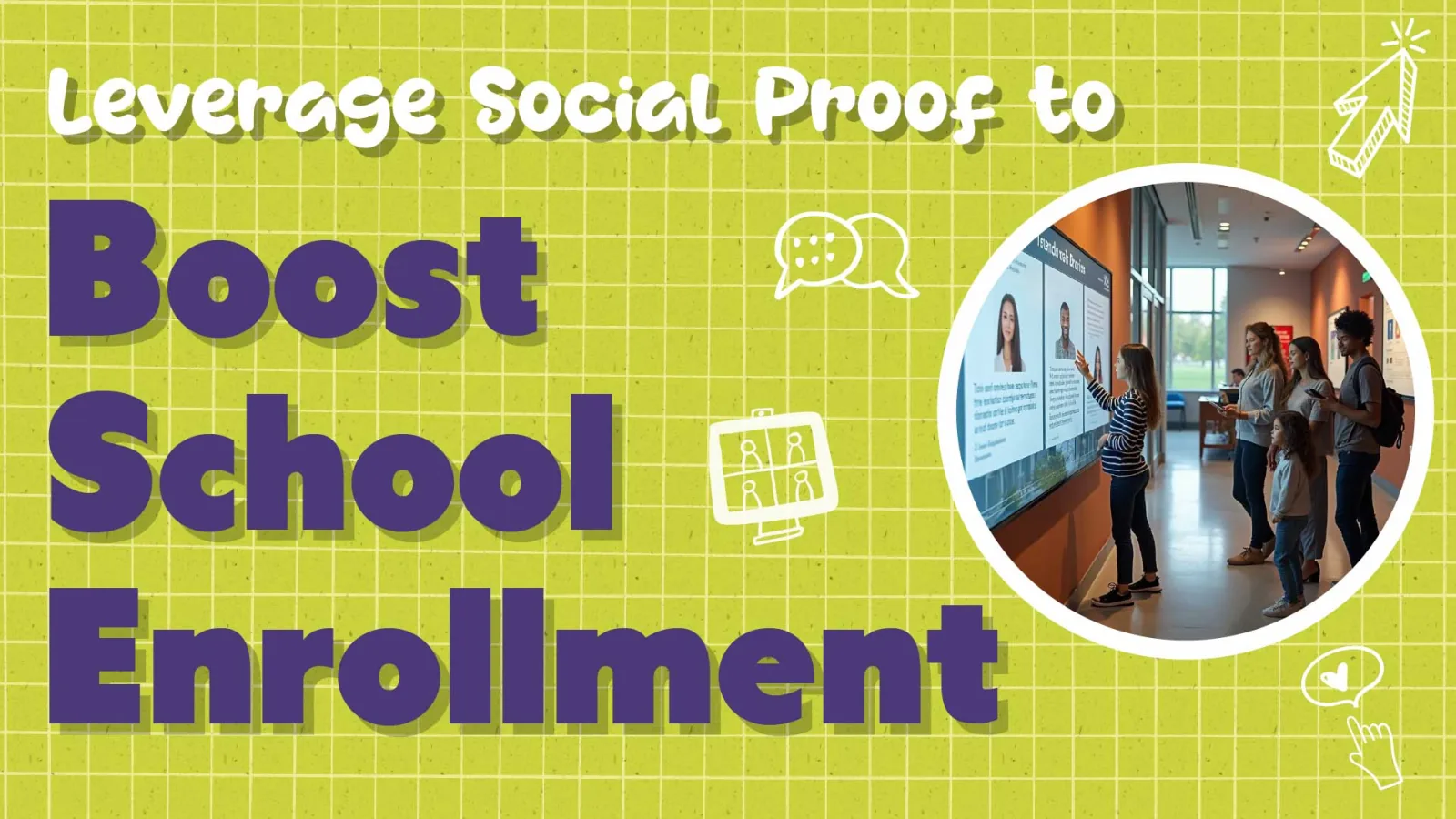
Let's face it—if your school marketing strategy still hinges on simply declaring, "We're the best!" you might as well be shouting into the void. Today's education consumers—both decision-makers and parents—have developed a sophisticated filter for marketing hyperbole. What they want instead is evidence. Social proof has become the gold standard for establishing credibility in the education market, serving as the digital equivalent of word-of-mouth recommendations that schools have traditionally relied upon.
As one experienced admissions director put it, "We can make claims about academic excellence all day, but when prospective families hear actual success stories from our community, that's when applications surge." This observation highlights a fundamental truth: in school marketing, showing is infinitely more effective than telling.

Written By: Adam Bennett | March 24, 2025
Adam is the president and founder of Cube Creative Design and specializes in private school marketing. Since starting the business in 2005, he has created individual relationships with clients in Western North Carolina and across the United States. He places great value on the needs, expectations, and goals of the client.
You've mastered termite treatments and can handle wasp nests with your eyes closed, but is your pest control business growing as fast as those ant colonies you eliminate? If you're spending more time battling stagnant revenue than battling pests, you're not alone. Many pest control owners find themselves trapped in the same cycle—plenty of expertise in eliminating unwanted critters but unsure how to eliminate the barriers to business growth.
Every day, you watch potential customers call your competitors while your phone remains quieter than a mouse in a cat sanctuary. You've tried random marketing tactics that promised to "exterminate" your growth problems, but the results were about as effective as using a fly swatter against a termite infestation.
The truth is, successful pest control companies don't grow by accident. They implement strategic growth plans that work as systematically as your most effective pest elimination protocols. With the right growth strategy, your business can transform from a small local operation to a dominant force in your market—without requiring you to work 80-hour weeks or invest your life savings in risky ventures.
In this comprehensive ultimate guide, we'll uncover how to develop a growth strategy specifically tailored for pest control businesses. You'll learn how to identify your competitive advantages, analyze your market effectively, implement digital marketing tactics that actually generate leads, and measure your results to ensure continuous improvement. By the end, you'll have a blueprint for sustainable growth that works as reliably as your favorite pesticide formula.

Written By: Chad J. Treadway | March 24, 2025
Chad is our Chief Smarketing Officer. He will help you survey your small business needs, educating you on your options before suggesting any solution. Chad is passionate about rural marketing in the United States and North Carolina. He also has several certifications through HubSpot to better assist you with your internet and inbound marketing.

It's 8:42 PM on a Friday when Sarah discovers a massive spider infestation in her garage while getting set up for her child's birthday party. Panicking, she grabs her phone and frantically searches "emergency pest control near me." Your company appears in the results, but when she clicks your website, it takes 15 seconds to load, the phone number is buried three clicks deep, and the emergency contact form doesn't work on mobile.
Sarah's already clicked back to Google and called your competitor.
Every day, pest control companies lose potential customers like Sarah because their websites fail at the exact moment someone needs them most. Your website isn't just a digital brochure—it's often the difference between a new customer and a missed opportunity.
If you're struggling with low conversion rates (industry average is just 2 - 16% for pest control), poor visibility in local searches, or a website that repels rather than attracts customers, you're not alone. The good news? These problems are fixable, and the ROI is substantial—pest control companies with optimized websites report higher monthly revenue compared to competitors with outdated sites.
In this guide, we'll explore exactly how to transform your pest control website from a digital liability into your most powerful customer acquisition tool.
Written By: Chad J. Treadway | March 24, 2025
Chad is our Chief Smarketing Officer. He will help you survey your small business needs, educating you on your options before suggesting any solution. Chad is passionate about rural marketing in the United States and North Carolina. He also has several certifications through HubSpot to better assist you with your internet and inbound marketing.

Here's a fact that might surprise you: The most effective strategy for ranking higher on Google isn't buying ads or hoping for the best - it's creating quality content. In fact, according to HubSpot, businesses that consistently publish content have 434% more indexed pages on search engines than those that don't. For home service businesses competing with national chains and big-box stores, that's not just a nice statistic - it's your secret weapon.
Let's face it: as a home service business owner, you're already wearing multiple hats. You're the expert technician, the customer service department, and often the marketing team all rolled into one. The last thing you need is another complicated marketing strategy. But what if I told you that SEO and content marketing could be your most cost-effective tools for reaching new customers in your service area and keeping your current ones coming back?
Written By: Chad J. Treadway | March 24, 2025
Chad is our Chief Smarketing Officer. He will help you survey your small business needs, educating you on your options before suggesting any solution. Chad is passionate about rural marketing in the United States and North Carolina. He also has several certifications through HubSpot to better assist you with your internet and inbound marketing.
Picture this: It's 7:30 AM on a Monday. Three customers are already calling about scheduling mix-ups, your technician can't find the Johnson residence because nobody wrote down the gate code, and Mrs. Peterson is leaving a one-star review because "nobody told her" about the additional parts fee. Sound painfully familiar? Welcome to the communication crisis quietly sabotaging home service businesses everywhere.
The numbers don't lie: Most customers stop doing business with a company after a poor communication experience. For home service businesses, where the average customer lifetime value exceeds $10,000, losing a single customer to poor communication is like throwing a stack of cash into a running garbage disposal.
Written By: Chad J. Treadway | March 24, 2025
Chad is our Chief Smarketing Officer. He will help you survey your small business needs, educating you on your options before suggesting any solution. Chad is passionate about rural marketing in the United States and North Carolina. He also has several certifications through HubSpot to better assist you with your internet and inbound marketing.
Let's face it – running a home service business isn't exactly a walk in the park (or a stroll through someone's perfectly maintained backyard, for that matter). Between juggling emergency calls, seasonal fluctuations, and keeping your customer base growing, you've got your hands full. But what if I told you there's a marketing tool so powerful it could practically pay for your next work truck?
Enter email marketing – the unsung hero of the home service industry that's about to become your new best friend. According to The Direct Marketing Association, email marketing generates an average return of $42 for every $1 spent. That's better than finding a forgotten $20 in your work pants! (Though, let's be honest, that's pretty great too.)
Written By: Adam Bennett | March 24, 2025
Adam is the president and founder of Cube Creative Design and specializes in private school marketing. Since starting the business in 2005, he has created individual relationships with clients in Western North Carolina and across the United States. He places great value on the needs, expectations, and goals of the client.

Are TikTok hashtags still relevant? Do they hold any importance? Once you decide to adopt TikTok as a significant marketing platform, these questions are likely to cross your mind.
Well, TikTok hashtags have a crucial role to play in the overall TikTok strategy. If you haven't yet adopted TikTok marketing, you're probably lagging behind a lot. In 2023 itself, 120.5 million users used TikTok in the United States.
Implementing the right strategies and TikTok hashtag analytics can go a long way to ensure the target audience easily finds you. It also helps in creating relevant content so that the audience feels connected to it.
Let's learn how to level up your TikTok strategy online with the right hashtags.
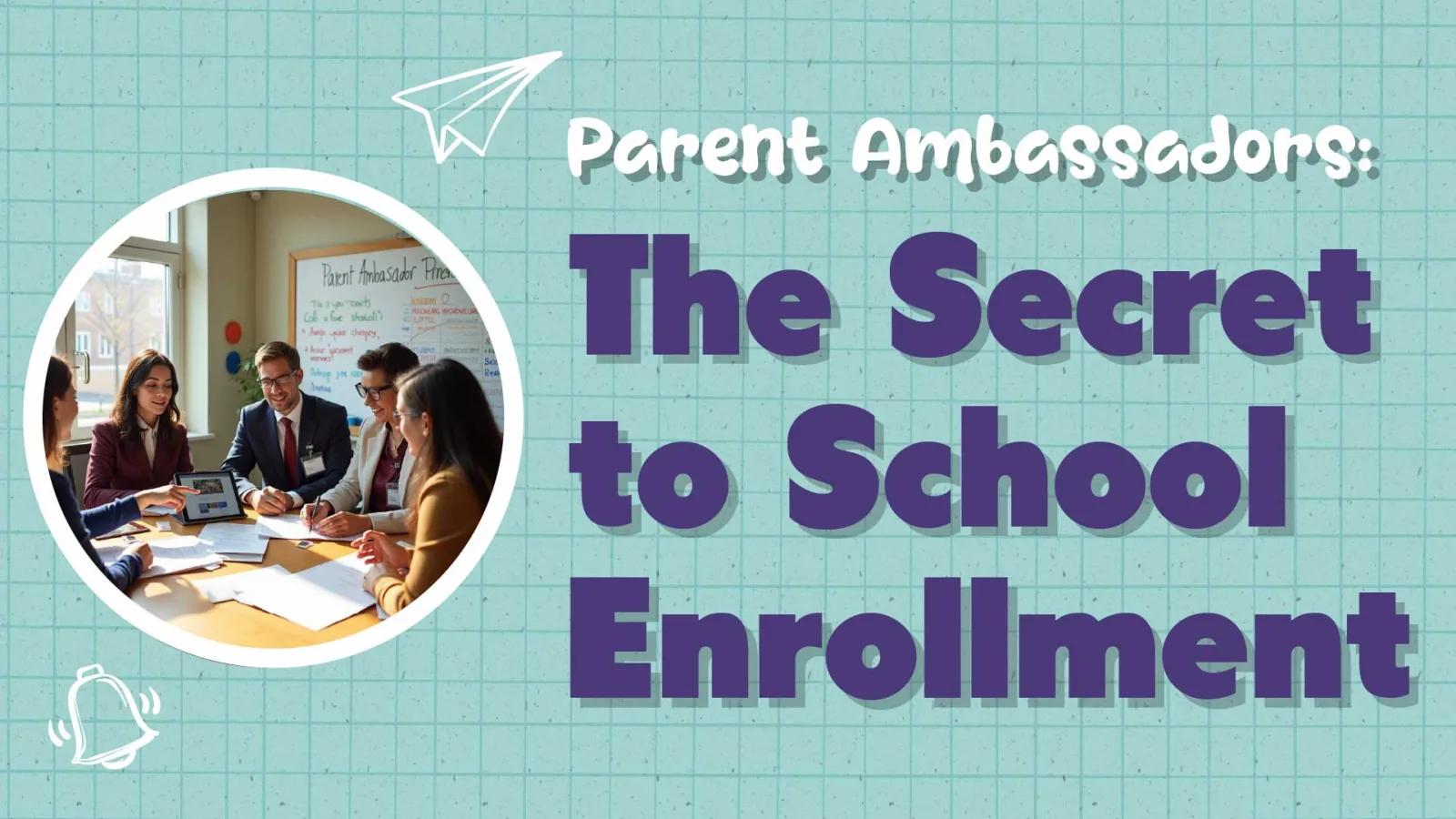
Let's face it—no marketing campaign, glossy brochure, or perfectly crafted website can compete with the authentic enthusiasm of a satisfied parent. In the competitive landscape of private education, word-of-mouth remains the gold standard for enrollment marketing. Parent ambassador programs formalize this powerful channel, transforming your most enthusiastic families into strategic partners in your school's growth.
At the fictional Greenfield Academy, Director of Admissions Jordan Grayson saw a substantial increase in applications after implementing a structured parent ambassador program. "Parents trust other parents far more than they trust us," Grayson admits with refreshing candor. "Our ambassadors provide that crucial peer perspective that resonates with prospective families."
Whether you're launching a new program or revitalizing an existing one, this guide provides the framework for success. And for private schools engaged in school marketing in Seattle, WA, where educational options abound, a strong ambassador program can be the competitive edge you need.
Written By: Adam Bennett | March 19, 2025
Adam is the president and founder of Cube Creative Design and specializes in private school marketing. Since starting the business in 2005, he has created individual relationships with clients in Western North Carolina and across the United States. He places great value on the needs, expectations, and goals of the client.

Did you know it's up to five times cheaper to sell to existing pest control customers than to attract new ones? When your technicians are already in a customer's home, they have the perfect opportunity to spot additional pest problems needing attention.
Many pest control businesses want to grow revenue without hiring more staff. The solution is right under your nose: train your existing technicians to recommend additional services during their regular visits.
Your technicians are your frontline observers who see exactly what's happening in each customer's home. By training them to identify selling opportunities, you create a win-win situation where customers receive better protection while your business increases profitability without raising overhead costs.
Let's explore how to transform your technicians from pest eliminators to service-selling experts.
Written By: Chad J. Treadway | March 19, 2025
Chad is our Chief Smarketing Officer. He will help you survey your small business needs, educating you on your options before suggesting any solution. Chad is passionate about rural marketing in the United States and North Carolina. He also has several certifications through HubSpot to better assist you with your internet and inbound marketing.
Let's talk about a numbers game that every North Carolina home service business owner knows all too well: the cost of finding new customers versus keeping the ones you've got. If you're spending your marketing budget like it's going out of style just to replace customers who've wandered off to the competition, well, you're probably feeling a bit like an HVAC system in July - overworked and not as efficient as you could be.
Here's a truth bomb for you: it costs anywhere from 5 to 25 times more to attract a new customer than to keep an existing one. (Source: Harvard Business Review) That's not just a number I pulled out of a clogged drain - it's backed by solid research. For NC service businesses, from Charlotte's bustling suburbs to Asheville's mountain communities, customer loyalty isn't just a nice-to-have; it's the difference between thriving and merely surviving.
Think about it this way: every time a satisfied customer in Raleigh needs their pipes fixed or a homeowner in Greensboro wants their HVAC serviced, they're either calling you back or starting their search from scratch. Which scenario would you prefer?
In this guide, we're going to dive into proven strategies that North Carolina service businesses are using right now to turn one-time customers into lifetime advocates. We're talking about real methods and systems that are transforming local service businesses across the state. And trust me, these strategies are more reliable than a properly installed water heater.
Ready to transform your customer base from a revolving door into a VIP lounge? Let's get started with some strategies that are more solid than a foundation poured by your most experienced concrete guy.
Written By: Chad J. Treadway | March 19, 2025
Chad is our Chief Smarketing Officer. He will help you survey your small business needs, educating you on your options before suggesting any solution. Chad is passionate about rural marketing in the United States and North Carolina. He also has several certifications through HubSpot to better assist you with your internet and inbound marketing.
Picture this: You've just spent a small fortune on advertising your plumbing business, but the phone isn't exactly ringing off the hook. (Remember when phones actually had hooks? Neither do your customers, and that might be part of the problem.) Your ads are reaching people, sure, but they're not reaching the right people – like that time you advertised your emergency pipe repair services in a retirement community where every resident had a full-time maintenance staff.
If you're a home service business owner, you've probably experienced the frustration of marketing mismatches. Maybe you're a high-end HVAC contractor whose ads keep attracting bargain hunters or a "green" pest control service getting calls from people who want the strongest chemicals known to mankind.
Here's the truth: Marketing to everyone means marketing to no one, and it's draining your budget faster than a clogged drain empties a wallet. Without targeted marketing, attracting new customers becomes an expensive guessing game.
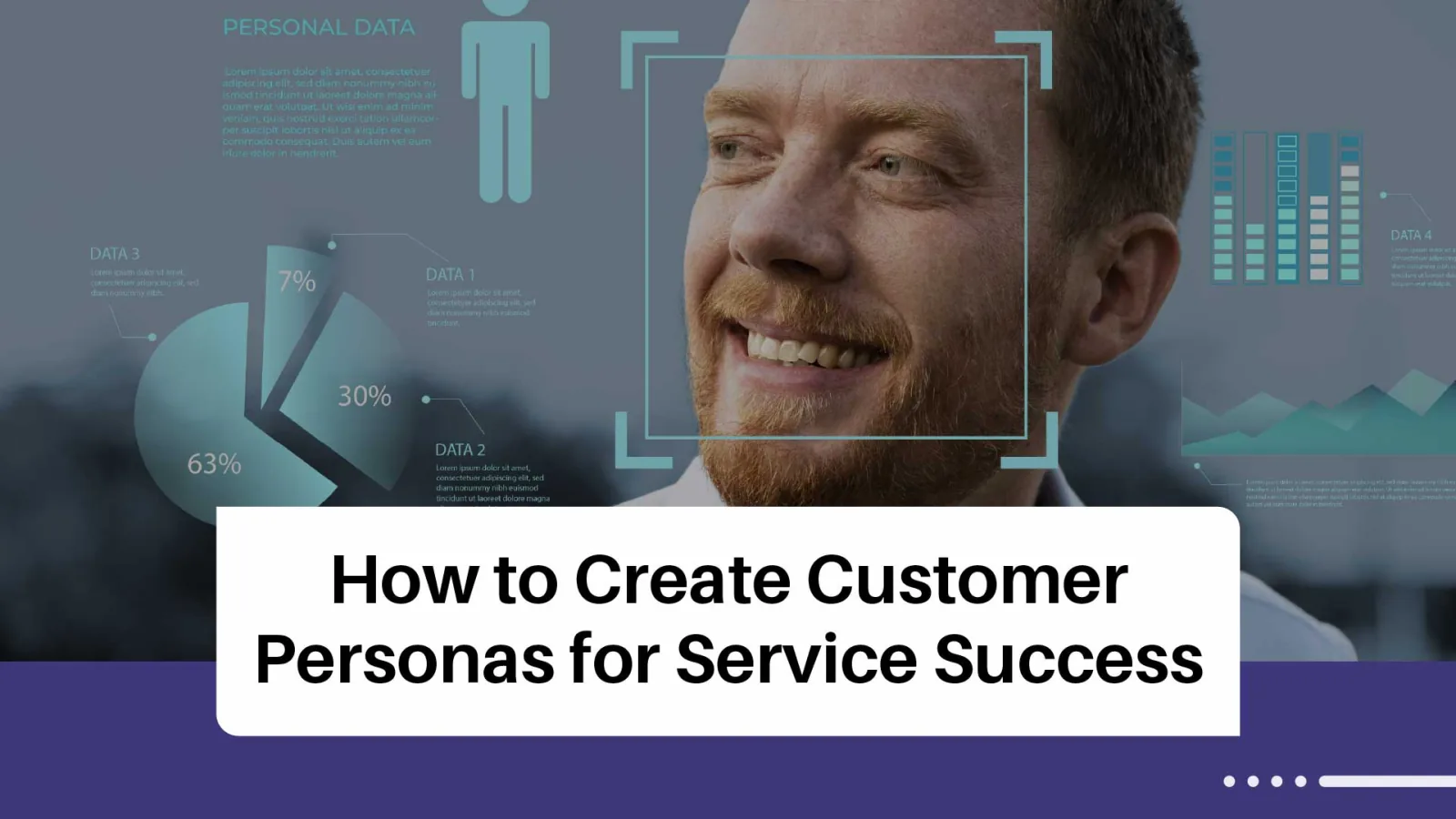
That's where customer personas come in. Think of them as your ideal customer's biography – minus the childhood pet names and favorite breakfast cereals (unless those are somehow relevant to your services, in which case, we need to talk about your business model).
In this guide, we'll show you how to create and use customer personas that will transform your home service marketing from a shot in the dark to a precision strike. We'll cover:
- What customer personas are (and why they matter more than that "free estimate" sign you've been hanging onto since 1999)
- How to create personas that actually help your business
- Real ways to use these personas to attract better clients
- Common mistakes to avoid (because learning from others' mistakes is better than learning from your own)
Written By: Chad J. Treadway | March 17, 2025
Chad is our Chief Smarketing Officer. He will help you survey your small business needs, educating you on your options before suggesting any solution. Chad is passionate about rural marketing in the United States and North Carolina. He also has several certifications through HubSpot to better assist you with your internet and inbound marketing.

In an era where a child's first introduction to technology often happens before their first day of school, educational institutions face a curious paradox: Despite our unprecedented connectivity, building meaningful community connections has become increasingly challenging. The digital revolution that promised to bring us closer together has, in many ways, created new barriers between schools and their most important stakeholders.
Let's be honest—maintaining school community engagement through traditional methods alone is about as effective as teaching calculus with an abacus. It works, technically, but you're missing out on some rather significant innovations.
The statistics speak volumes: schools with strong online communities report almost a 1.4x higher parent satisfaction rates and nearly a 1.3x 28% increased alumni engagement. These aren't just feel-good metrics; they translate directly to enrollment stability, fundraising success, and institutional reputation. In competitive educational markets, from suburban districts to schools in New York City, NY, digital community building has become a non-negotiable aspect of educational excellence.
This guide will walk you through the essential frameworks, digital spaces, and engagement tactics that transform disconnected stakeholders into vibrant online communities. Whether you're starting from scratch or looking to revitalize existing efforts, you'll find actionable strategies that balance educational gravitas with the authentic connection that today's families expect.

Written By: Hannah Kilpatrick | March 17, 2025
Hannah Kilpatrick Cube Creative DesignHannah Kilpatrick graduated from Western Carolina University in 2021 with a Bachelor of Science in Communication with a Minor in Marketing and a Concentration in Public Relations. She has been around social media since its creation. (Meaning, she was in the first grade when Facebook became available to the general public.) As our very own professional Gen-Z, Hannah is a whiz when it comes to social media creation and paid advertising.